 Librería Samer Atenea
 Kálamo Books
 Librería Elías (Asturias)
 Librería Kolima (Madrid)
 Librería Proteo (Málaga)
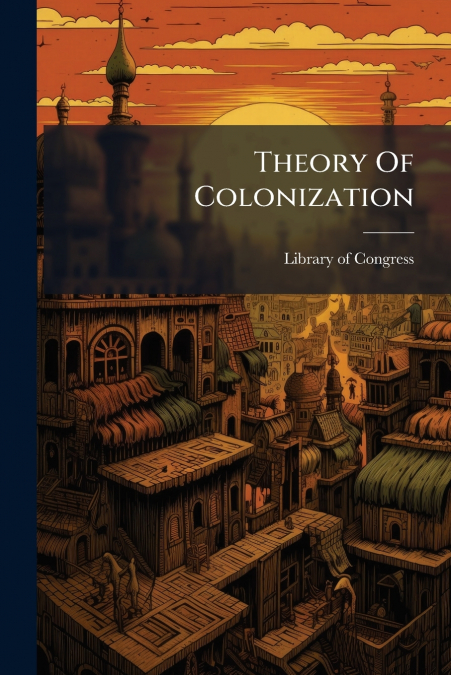
Theory Of Colonization: List Of Books With References To Periodicals, Relating To The Theory Of Colonization, Government Of Dependencies, Protectorates, And Related Topics is a comprehensive bibliography compiled by the Library of Congress. This meticulously researched list provides an invaluable resource for scholars, researchers, and anyone interested in the historical and theoretical aspects of colonization. The book catalogs a wide range of publications, including books and periodical articles, offering a detailed overview of the literature available on the subject. It covers various facets of colonization, from its theoretical underpinnings to the practical governance of dependencies and protectorates. Researchers will find this bibliography an indispensable tool for navigating the vast body of knowledge on this complex and enduring topic, enabling them to delve deeper into the historical, political, and social dimensions of colonization.This work has been selected by scholars as being culturally important, and is part of the knowledge base of civilization as we know it. This work was reproduced from the original artifact, and remains as true to the original work as possible. Therefore, you will see the original copyright references, library stamps (as most of these works have been housed in our most important libraries around the world), and other notations in the work.This work is in the public domain in the United States of America, and possibly other nations. Within the United States, you may freely copy and distribute this work, as no entity (individual or corporate) has a copyright on the body of the work.As a reproduction of a historical artifact, this work may contain missing or blurred pages, poor pictures, errant marks, etc. Scholars believe, and we concur, that this work is important enough to be preserved, reproduced, and made generally available to the public. We appreciate your support of the preservation process, and thank you for being an important part of keeping this knowledge alive and relevant.