Inicio > Humanidades > Filosofía > Ética y filosofía moral > Theological Ethics Through a Multispecies Lens
Theological Ethics Through a Multispecies Lens

Theological Ethics Through a Multispecies Lens

Celia E. Deane-Drummond

173,67 €
IVA incluido
Consulta disponibilidad
Editorial:
Oxford University Press
Año de edición:
2020
Materia
Ética y filosofía moral
ISBN:
9780198843344

Selecciona una librería:

  • Librería Samer Atenea
  • Librería Aciertas (Toledo)
  • Kálamo Books
  • Librería Perelló (Valencia)
  • Librería Elías (Asturias)
  • Donde los libros
  • Librería Kolima (Madrid)
  • Librería Proteo (Málaga)

There are two driving questions informing this book. The first is where does our moral life come from? It presupposes that considering morality broadly is inadequate. Instead, different aspects need to be teased apart. It is not sufficient to assume that different virtues are bolted onto a vicious animality, red in tooth and claw. Nature and culture have interlaced histories. By weaving in evolutionary theories and debates on the evolution of compassion, justice and wisdom, it showa a richer account of who we are as moral agents. The second driving question concerns our relationships with animals. Deane-Drummond argues for a complex community-based multispecies approach. Hence, rather than extending rights, a more radical approach is a holistic multispecies framework for moral action. This need not weaken individual responsibility. She intends not to develop a manual of practice, but rather to build towards an alternative philosophically informed approach to theological ethics, including animal ethics. The theological thread weaving through this account is wisdom. Wisdom has many different levels, and in the broadest sense is connected with the flow of life understood in its interconnectedness and sociality. It is profoundly theological and practical. In naming the project the evolution of wisdom Deane-Drummond makes a statement about where wisdom may have come from and its future orientation. But justice, compassion and conscience are not far behind, especially in so far as they are relevant to both individual decision-making and institutions.

Artículos relacionados

  • Ka Ab Ba Building The Lighted Temple
    Dr Terri R. Nelson / Dr Terri RNelson
    The book KaAbBa Building The Lighted Temple/Metaphysical Keys to the Tree of Life draws a circle that is inclusive of the Afrikan origin of the Ancient Kemetic/Egyptian wisdom. It reveals the undeniable root and link of Ancient Africa to all the religious systems that would develop worldwide. This book is explosive in its power to convey the meaning of KaAbBa, the Medu Neter  (...
    Disponible

    37,41 €

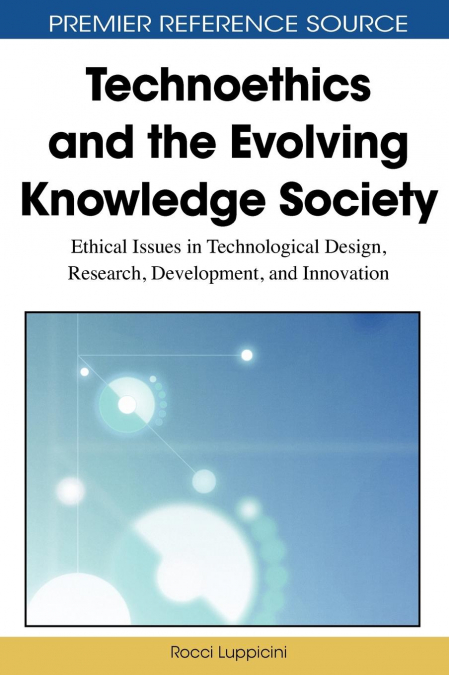
  • Technoethics and the Evolving Knowledge Society
    Rocci Luppicini
    Recently, there has been a major push to rediscover the ethical dimension of technology across the sciences, social sciences, and humanities. Technoethics and the Evolving Knowledge Society: Ethical Issues in Technological Design, Research, Development, and Innovation examines human processes and practices connected to technology embedded within social, political, and moral sph...
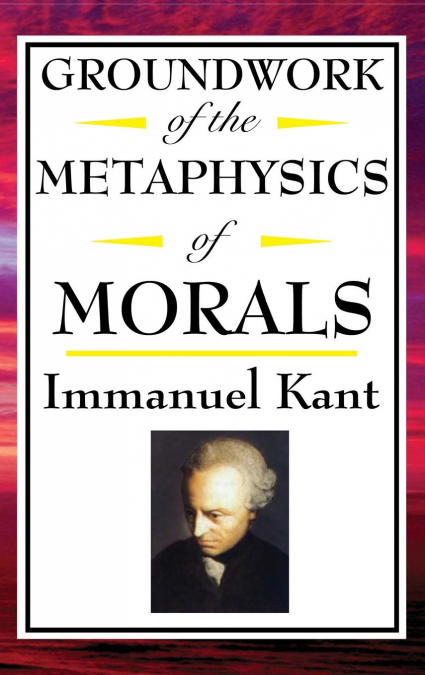
  • Kant
    Immanuel Kant
    Kant’s Groundwork of the Metaphysics of Morals is one of the most important works in modern moral philosophy. It belongs beside Plato, Aristotle, Machiavelli, and Hobbes. Here Kant sets out to articulate and defend the Categorical Imperative - the fundamental principle that underlies moral reasoning - and to lay the foundation for a comprehensive account of justice and human vi...
  • On the Duty of Civil Disobedience
    HENRY DAVID THOREAU
    Civil Disobedience argues that citizens should not permit their governments to overrule their consciences, and that they have a duty to avoid allowing their acquiescence to enable the government to make them the agents of injustice. Thoreau was motivated in part by his disgust with slavery and the Mexican-American War, but the sentiments he expresses here are just as pertinent ...
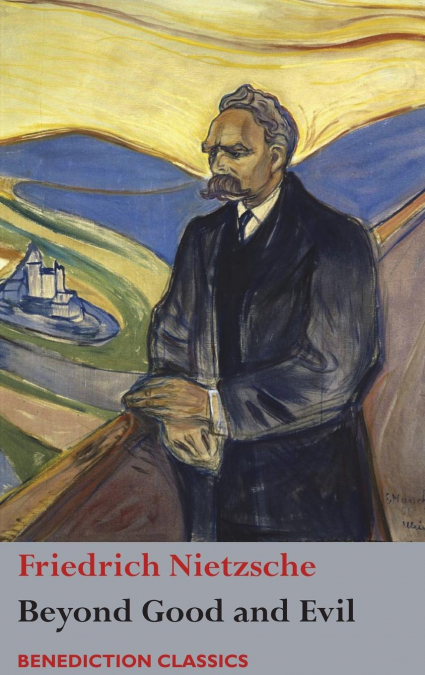
  • Beyond Good and Evil
    Friedrich Nietzsche
    Nietzsche, though primarily a philosopher, wrote widely on art, philology, history, religion, tragedy, culture, and science.  In 1886, at the height of his powers, he published Beyond Good and Evil.  Here he examines much of the best of human thought--dogmatic philosophy, Judeo-Christian morality, science and democracy – and finds it lacking.  Rejecting “slave-morality” he pres...
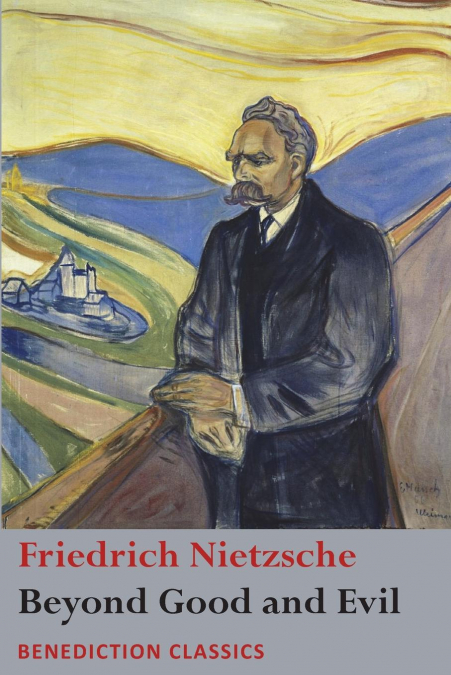
  • Beyond Good and Evil
    Friedrich Nietzsche
    Nietzsche, though primarily a philosopher, wrote widely on art, philology, history, religion, tragedy, culture, and science.  In 1886, at the height of his powers, he published Beyond Good and Evil.  Here he examines much of the best of human thought--dogmatic philosophy, Judeo-Christian morality, science and democracy – and finds it lacking.  Rejecting “slave-morality” he pres...
    Disponible

    9,99 €