

 Librería Samer Atenea
 Kálamo Books
 Librería Elías (Asturias)
 Librería Kolima (Madrid)
 Librería Proteo (Málaga)
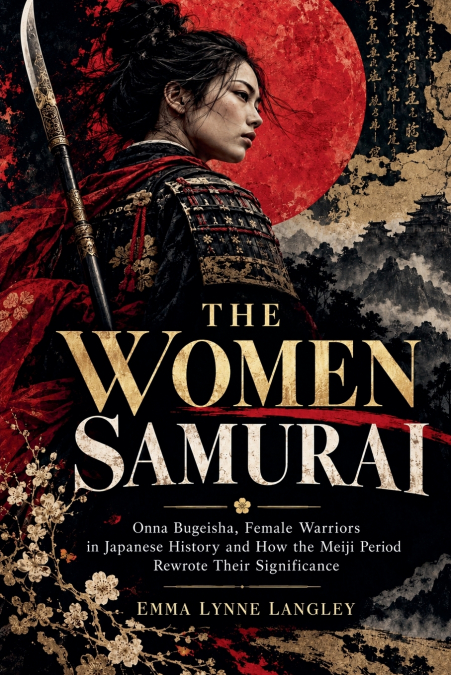
For centuries, the history of the samurai has been told largely through men. Yet women stood at the heart of Japan’s warrior society, shaping households, defending family power, managing estates, surviving sieges and, in some cases, taking up weapons themselves.The Women Samurai explores the history of Japan’s onna bugeisha and the women of warrior households across centuries of conflict, political change and social transformation.Moving beyond the familiar legends, this book examines what the historical evidence actually tells us. It considers the famous but elusive figure of Tomoe Gozen, the better documented Hangaku Gozen, the formidable political influence of Hojo Masako, the traditions surrounding Tsuruhime, and the women whose lives became inseparable from the violence and collapse of the old warrior order.But this is not simply a collection of warrior biographies.It is also a history of the world these women inhabited.Readers will discover how women inherited property, managed estates, entered political marriages, became hostages, defended castles, joined religious communities, negotiated family survival and adapted to changing laws and expectations. The book explores the importance of the household in samurai society and shows why the lives of warrior women cannot be understood through battle alone.Weapons and warfare are examined within that wider context. Archery, swords, spears, firearms and the naginata all appear in the story, alongside the realities of siege warfare, civil conflict and the responsibilities placed upon women during periods of crisis.The book also looks closely at the difference between history and legend.Some women are known through contemporary or near-contemporary records. Others survive mainly through later war tales, shrine traditions, local histories, monuments and popular memory. Rather than treating every famous story as fact, The Women Samurai distinguishes between what is securely documented, what is probable, what remains disputed and what appears to have developed through later tradition.The final part of the book follows the dramatic upheavals of the nineteenth century.The fall of Aizu, the Boshin War and the destruction of the old samurai order created some of the most powerful stories in the history of Japan’s warrior women. The lives of Nakano Takeko and Yamamoto Yaeko reveal different responses to a society undergoing extraordinary change, from battlefield resistance to survival in the emerging modern state.The Meiji period did more than dismantle the old warrior class. It also changed the way Japan remembered its past.Through schools, memorials, museums, local traditions, literature and public commemoration, the image of the female warrior continued to evolve. Some women were elevated into symbols of loyalty and courage. Others were forgotten, simplified or transformed into figures far removed from the complicated realities of their lives.The Women Samurai therefore asks a larger question: how is history preserved, and what happens when historical lives become cultural memory?Rich in social history, military history and the lives of remarkable women, this book offers a deeper account of Japan’s warrior society and the women who lived within it.For readers interested in samurai history, Japanese history, women’s history, warfare, social history and the relationship between fact and legend, The Women Samurai reveals a world far more complex than the mythology suggests.





