 Librería Samer Atenea
 Kálamo Books
 Librería Elías (Asturias)
 Librería Kolima (Madrid)
 Librería Proteo (Málaga)
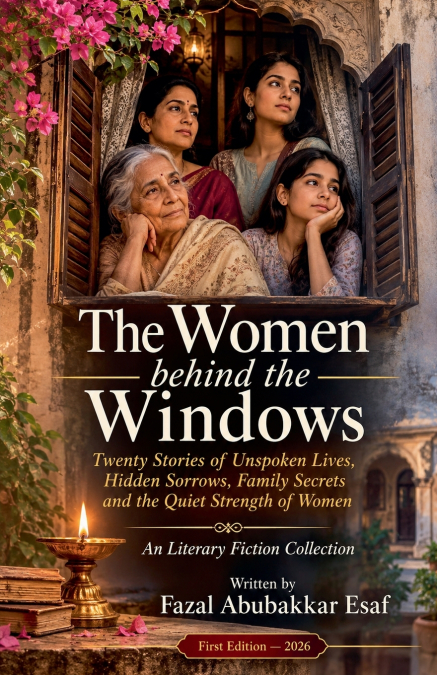
Women have always occupied a central place in the stories of families, communities and societies. They raise children, preserve traditions, care for ageing parents, maintain relationships and often hold together households during periods of uncertainty. Yet the importance of their work does not always translate into recognition of their individual lives.A woman may be known as someone’s mother, wife, daughter, sister or grandmother for most of her existence. These relationships can bring affection, belonging and purpose. But they can also become identities so dominant that the person behind them gradually disappears. Her ambitions, disappointments, private memories, unanswered questions and unfulfilled desires may remain hidden beneath the responsibilities she performs every day.The Women behind the Windows was conceived around this quiet contradiction.The twenty stories in this collection explore women whose lives are shaped by family expectations, social customs, emotional obligations, marriage, motherhood, widowhood, memory and the passage of time. Some live in old ancestral houses; others belong to small Himalayan towns, mountain villages, urban apartments and changing neighborhoods. Their circumstances differ, but each carries a private history that deserves attention.These stories do not attempt to portray women as perfect victims or unquestionable symbols of sacrifice. Their characters are human beings. They may be courageous or hesitant, affectionate or resentful, forgiving or unforgiving. They make decisions, misunderstand one another, conceal truths and sometimes become responsible for the suffering of others. Their complexity is part of their humanity.The collection also examines the families and communities surrounding them. Respectability, tradition and social acceptance can provide stability, but they can also conceal injustice. A family may appear harmonious to visitors while its members carry years of unresolved pain. A tradition may be celebrated as honorable while its consequences fall unequally upon women. A sacrifice may be praised by society even when the person making it never freely chose it.It is to examine the human consequences of expectations that are rarely questioned. Love deserves respect, but so does individual identity. Family responsibility deserves recognition, but it should not require the permanent abandonment of personal happiness.