 Librería Samer Atenea
 Kálamo Books
 Librería Elías (Asturias)
 Librería Kolima (Madrid)
 Librería Proteo (Málaga)
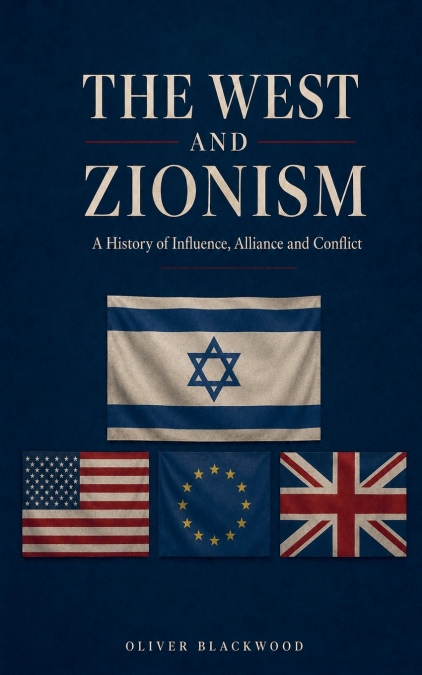
The West and Zionism: A History of Influence, Alliance and Conflict examines the political relationship between the Zionist movement, Israel and the major powers of the Western world. From the emergence of political Zionism in nineteenth-century Europe to the destruction of Gaza and the continuing struggle for Palestinian rights, Oliver Blackwood traces how imperial interests, military alliances and political influence helped shape one of the most enduring conflicts of the modern age.The book begins by exploring the European conditions that gave rise to political Zionism, including nationalism, antisemitism and the persecution of Jewish communities. It considers the ideas of Theodor Herzl, early Zionist settlement in Palestine and the movement’s search for support from a powerful international sponsor. It then examines Britain’s decisive role through the Balfour Declaration and the British Mandate, during which Zionist institutions expanded while Palestinian demands for independence were repeatedly denied.Blackwood follows this history through immigration, land acquisition, Palestinian resistance and the violent repression of the Arab Revolt. He also addresses the Holocaust and its enormous influence on Western support for Jewish statehood, while asking why Palestinians were required to bear much of the territorial and political cost of a catastrophe created in Europe. The partition of Palestine, the establishment of Israel and the mass displacement of approximately 750,000 Palestinians during the Nakba are examined as defining events whose consequences continue today.The narrative then turns to the United States, which gradually replaced Britain as Israel’s principal international supporter. Particular attention is given to the Cold War, the 1967 Arab-Israeli War and the development of Israel as a strategically important American ally. The book investigates billions of dollars in US assistance, weapons transfers, intelligence cooperation and diplomatic protection, alongside the activities of AIPAC, Christian Zionist organisations and the strong pro-Israel consensus within Congress.Britain’s continuing relationship with Israel is also explored, including the role of political advocacy organisations such as Labour Friends of Israel. Further chapters examine Germany’s historical responsibility for the Holocaust, its close diplomatic relationship with Israel and its supply of military equipment. The wider European position is considered through the contrasting policies of France, Italy, the Netherlands and other states, revealing differences in language and approach but a largely durable pattern of support.The final section confronts the war in Gaza, the scale of Palestinian death and displacement, the destruction of homes and civilian infrastructure, and the foreign weapons that have supported Israel’s military campaign. It questions the legal and moral responsibilities of the governments supplying those weapons and asks whether Western support has helped create an alliance without meaningful accountability.This book distinguishes clearly between Jewish identity, Judaism, Zionism, the State of Israel and the actions of individual governments. It rejects antisemitism, Islamophobia and collective blame while defending the right to examine political ideology, lobbying, military assistance and state conduct through documented evidence.Critical, accessible and historically grounded, The West and Zionism is for readers seeking to understand how Western power has influenced the history of Palestine and Israel-and why justice, freedom and equal human worth remain essential to any lasting peace.