 Librería Samer Atenea
 Kálamo Books
 Librería Elías (Asturias)
 Librería Kolima (Madrid)
 Librería Proteo (Málaga)
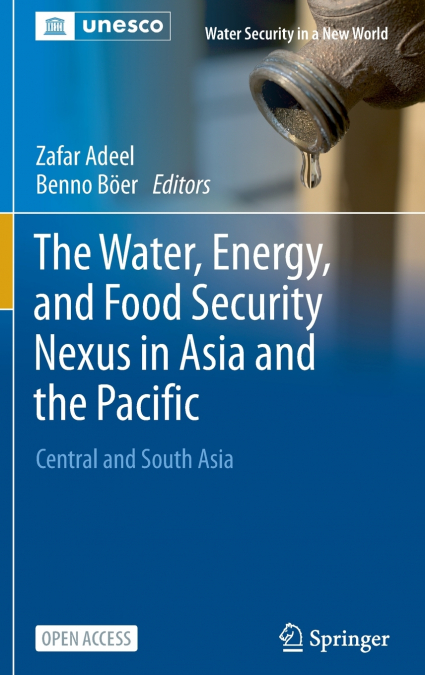
This open access book considers that the Central and South Asian region sits at the middle of geographical, geopolitical, economic and historical cross-roads. Since the independence of the Central Asian states in the 1990s, following the demise of the Soviet Union, and emergence of regional trade and political ties means that the region’s evolution has also been subject to common drivers - external and internal, opening up some new opportunities. The long-term social and economic success of the region depends on how water, energy, and food security is achieved at a regional scale that combines Central Asia and South Asia, which are typically treated separately in policy and scholarly works. This book considers how securing the 'Nexus' of water, energy, and food resources serves as a starting point for utilizing emerging region-wide opportunities. It does so by identifying the present state of play, deeply analyzing cross-cutting drivers (e.g., climate change, poverty, environmentalcrises and urbanization) and offering insights into possible solutions.The book offers an in-depth rationale for why dealing with this region as a whole makes sense; it is then divided into four sections: The first section, entitled 'A Regional Overview,' establishes the basic facts around the state of water, energy, and food resources; this section is meant to serve as the foundation upon which further exploration and analysis is built. The second section turns its attention to 'Regional Issues' and unpacks the Nexus into water-energy and water-food relationships. It also investigates how regional trade and coping mechanisms for environmental crises might inform the policies on the Nexus. The section includes a sampling of success and failure stories around implementation of the Nexus policies and strategies in the Central and South Asian region. The third section undertakes an analysis of the 'Cross-Cutting Themes for Nexus Security' by investigating all the major drivers of policy and development strategies in the region: climate change, urbanization, poverty, sharing of resources across borders, and gender-based disparities. The fourth and final section uses the discussion throughout the book to formulate 'An Integrated Narrative' around the Nexus. It explores how the new global development framework in the form of Sustainable Development Goals might offer a new perspective for achieving the Nexus security in the region. There is an argument that the Nexus security ties in with achievement of long-term peace and security. A final wrap-up chapter gazes into the crystal ball to test out some future scenarios - both positive and negative.