

 Librería Samer Atenea
 Kálamo Books
 Librería Elías (Asturias)
 Librería Kolima (Madrid)
 Librería Proteo (Málaga)
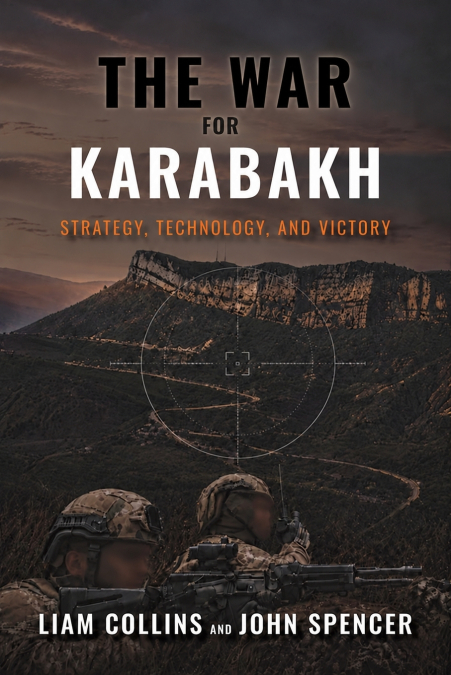
The 2020 Karabakh War ended nearly three decades of military stalemate, transformed the South Caucasus, and ignited a global debate: had drones and precision weapons fundamentally changed warfare?In The War for Karabakh: Strategy, Technology, and Victory, Liam Collins and John Spencer challenge the familiar 'drone war' narrative. Their central finding: Azerbaijan’s victory grew from decades of strategic preparation, military reform, effective leadership, and disciplined combined-arms operations. Technology mattered-but understanding how it was employed matters more.Drawing on battlefield reconnaissance, official military records, operational maps, open-source intelligence, and interviews with more than one hundred military commanders, government officials, and combat veterans from Azerbaijan and Armenia, Collins and Spencer reconstruct how the war was planned, fought, and won. They connect decisions made at the highest levels of government with the battlefield actions that determined the outcome.The book traces the conflict from the First Karabakh War through Azerbaijan’s twenty-six-year military transformation, the 2020 campaign, and the decisive 2023 operation that restored Azerbaijani control over the region. Detailed accounts examine the breaching of Armenia’s prepared defenses and the battles of Hadrut, Fuzuli, Gubadli, and Shusha, revealing how strategy, operational art, force design, and adaptation shaped the fighting.Drones and precision weapons proved enormously valuable. Their effectiveness, however, depended on their integration with training, tactics, leadership, and a national strategy that coordinated diplomatic, informational, economic, and military power. By examining those relationships, the authors explain what technology-centered accounts miss-and what military leaders and policymakers can learn from the conflict.Combining rigorous scholarship with practitioner insight, The War for Karabakh connects the campaign to urgent questions about military innovation, deterrence, alliances, and the preparation of forces for future conflict. It offers military professionals, policymakers, historians, defense analysts, and students of strategy a detailed operational history and a framework for assessing claims about the changing character of war.For anyone seeking to understand why armies win, this book moves beyond the weapons themselves to the strategy, institutions, and decisions that make them effective.*Includes custom color maps.*This book is in the Rapid Communications in Conflict and Security (RCCS) Series (General Editor: Thomas G. Mahnken; Founding Editor: Geoffrey R.H. Burn). 6





