
The Voice of Conscience

The Voice of Conscience

Mika Ojakangas

64,06 €
IVA incluido
Disponible
Editorial:
Bloomsbury Publishing plc
Año de edición:
2015
Materia
Ética y filosofía moral
ISBN:
9781474218184
64,06 €
IVA incluido
Disponible

Selecciona una librería:

  • Librería Samer Atenea
  • Librería Aciertas (Toledo)
  • Kálamo Books
  • Librería Perelló (Valencia)
  • Librería Elías (Asturias)
  • Donde los libros
  • Librería Kolima (Madrid)
  • Librería Proteo (Málaga)

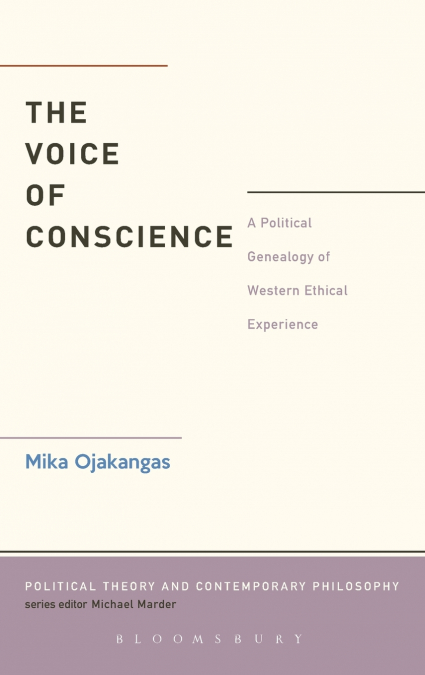
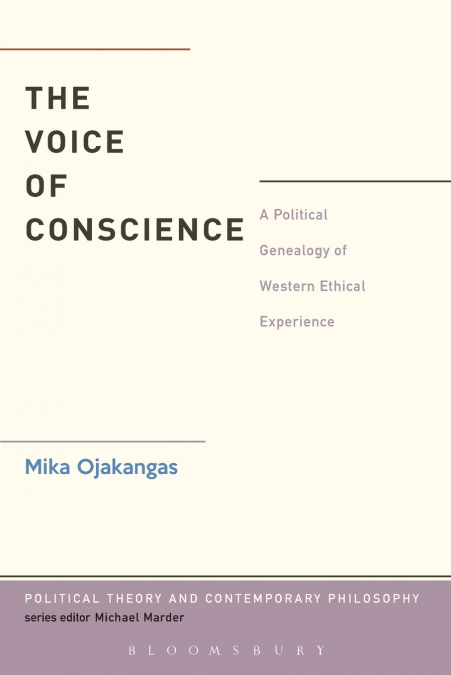
In Western thought, it has been persistently assumed that in moral and political matters, people should rely on the inner voice of conscience rather than on external authorities, laws, and regulations. This volume investigates this concept, examining the development of the Western politics of conscience, from Socrates to the present, and the formation of the Western ethico-political subject. The work opens with a discussion of the ambiguous role of conscience in politics, contesting the claim that it is the best defense against totalitarianism. It then look back at canonical authors, from the Church Fathers and Luther to Rousseau and Derrida, to show how the experience of conscience constitutes the foundation of Western ethics and politics. This unique work not only synthesizes philosophical and political insights, but also pays attention to political theology to provide a compelling and innovative argument that the experience of conscience has always been at the core of the political Western tradition. An engaging and accessible text, it will appeal to political theorists and philosophers as well as theologians and those interested in the critique of the Western civilization.

Artículos relacionados

  • Ka Ab Ba Building The Lighted Temple
    Dr Terri R. Nelson / Dr Terri RNelson
    The book KaAbBa Building The Lighted Temple/Metaphysical Keys to the Tree of Life draws a circle that is inclusive of the Afrikan origin of the Ancient Kemetic/Egyptian wisdom. It reveals the undeniable root and link of Ancient Africa to all the religious systems that would develop worldwide. This book is explosive in its power to convey the meaning of KaAbBa, the Medu Neter  (...
    Disponible

    37,41 €

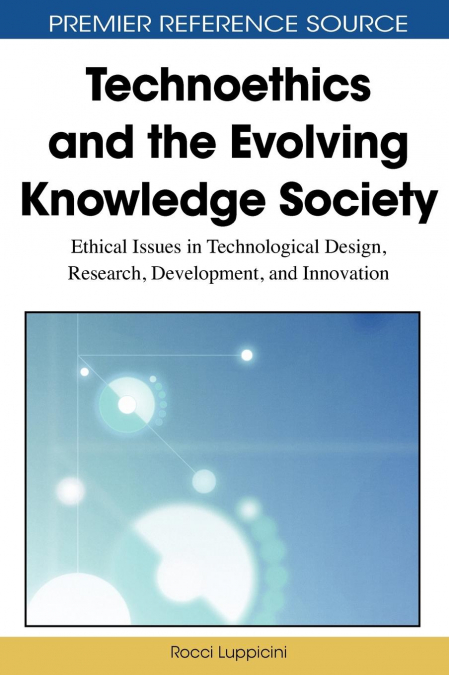
  • Technoethics and the Evolving Knowledge Society
    Rocci Luppicini
    Recently, there has been a major push to rediscover the ethical dimension of technology across the sciences, social sciences, and humanities. Technoethics and the Evolving Knowledge Society: Ethical Issues in Technological Design, Research, Development, and Innovation examines human processes and practices connected to technology embedded within social, political, and moral sph...
  • Kant
    Immanuel Kant
    Kant’s Groundwork of the Metaphysics of Morals is one of the most important works in modern moral philosophy. It belongs beside Plato, Aristotle, Machiavelli, and Hobbes. Here Kant sets out to articulate and defend the Categorical Imperative - the fundamental principle that underlies moral reasoning - and to lay the foundation for a comprehensive account of justice and human vi...
  • On the Duty of Civil Disobedience
    HENRY DAVID THOREAU
    Civil Disobedience argues that citizens should not permit their governments to overrule their consciences, and that they have a duty to avoid allowing their acquiescence to enable the government to make them the agents of injustice. Thoreau was motivated in part by his disgust with slavery and the Mexican-American War, but the sentiments he expresses here are just as pertinent ...
  • Beyond Good and Evil
    Friedrich Nietzsche
    Nietzsche, though primarily a philosopher, wrote widely on art, philology, history, religion, tragedy, culture, and science.  In 1886, at the height of his powers, he published Beyond Good and Evil.  Here he examines much of the best of human thought--dogmatic philosophy, Judeo-Christian morality, science and democracy – and finds it lacking.  Rejecting “slave-morality” he pres...
  • Beyond Good and Evil
    Friedrich Nietzsche
    Nietzsche, though primarily a philosopher, wrote widely on art, philology, history, religion, tragedy, culture, and science.  In 1886, at the height of his powers, he published Beyond Good and Evil.  Here he examines much of the best of human thought--dogmatic philosophy, Judeo-Christian morality, science and democracy – and finds it lacking.  Rejecting “slave-morality” he pres...
    Disponible

    9,99 €

Otros libros del autor

  • On the Greek Origins of Biopolitics
    Mika Ojakangas
    This book focuses on the Greek origins of biopolitics, arguing that, contrary to Foucault’s view, biopolitics is not exclusively a modern idea, but is as old as western political thought itself. Ojakangas discusses Plato and Aristotle, in particular their most famous books on politics and administration: Plato’s Republic and Laws, ...
    Disponible

    80,36 €

  • On the Greek Origins of Biopolitics
    Mika Ojakangas
    This book focuses on the Greek origins of biopolitics, arguing that, contrary to Foucault’s view, biopolitics is not exclusively a modern idea, but is as old as western political thought itself. Ojakangas discusses Plato and Aristotle, in particular their most famous books on politics and administration: Plato’s Republic and Laws, and Aristotle’s Politics, demonstrating that th...
  • The Voice of Conscience
    Mika Ojakangas
    In Western thought, it has been persistently assumed that in moral and political matters, people should rely on the inner voice of conscience rather than on external authorities, laws, and regulations. This volume investigates this concept, examining the development of the Western politics of conscience, from Socrates to the present, and the formation of the Western ethico-poli...