 Librería Samer Atenea
 Kálamo Books
 Librería Elías (Asturias)
 Librería Kolima (Madrid)
 Librería Proteo (Málaga)
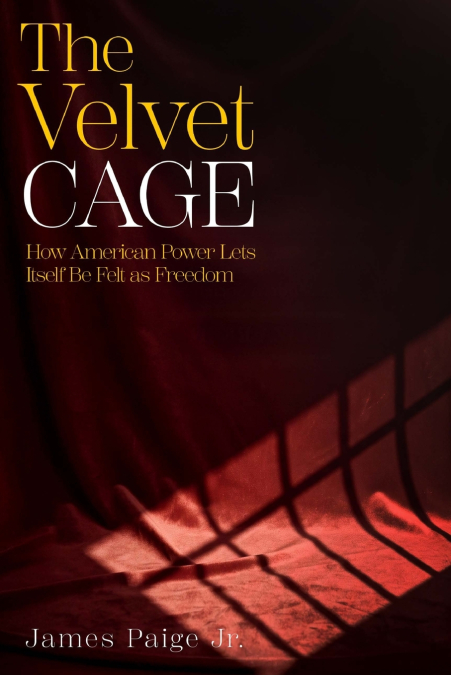
What if forgetting isn’t an accident, but a policy?In America, the most dangerous thing you can do is remember. Memory isn’t dangerous to you. It is dangerous to make arrangements that depend on your forgetting.A right can remain on the books even as the agency that enforces it is starved of funds. A program can be called race-neutral even as it builds wealth in one set of neighborhoods and drains it from another. A movement’s demand for ownership and institutional power can be answered with individual access, and a generation later the difference between the two no longer has a name in everyday speech. Each step is legal. Each is defensible. And each depends on one condition: that no one connects it to what came before.The Velvet Cage reckons with that condition. It treats erasure as a working mechanism of American power, not as casual neglect of history. Erasure steadily severs the present from the record that explains it, until the outcomes seem natural and the people living within them appear responsible for their own circumstances. The bars of this cage are not iron. They are velvet: facially neutral rules, technical vocabulary, and administrative routines that produce coercive results while preserving complete deniability. No one has to intend the outcome for the system to deliver it.James Paige Jr. arrived at this argument after years in social services, where he watched the machinery operate at the street level. He saw policy decisions labeled as neutral, hardship explained as personal failure, and history dismissed as irrelevant to the person sitting across the desk. The Velvet Cage traces these moments to their source, through housing, labor, civil rights enforcement, and the language Americans use to describe their economy.What emerges is a pattern that repeats across a century of reform and reversal. When ordinary people press for change, some of what they ask for is granted, usually the parts that can be handed out one person at a time. The parts that would give communities lasting institutions of their own are refused, delayed, or quietly withdrawn. Then the record of refusal fades, and what remains is a story in which the door was opened, and anyone who did not walk through it has only themselves to blame.In these pages you will learn:Why erasure works as a strategy, even when no one is strategizing?What rights are dismantled without repeal: narrowed in court, defunded in practice, left standing in name.Why gains granted to individuals are tolerated, while gains that build collective institutions are turned back again and again?How the vocabulary of markets and merit makes a managed outcome sound like a natural one.Why protest is labeled chaos and compliance is sold as peace.How remembering completely, honestly, and without apology breaks the spell.This is not a book about what happened. It is a book about what is still happening, and why we are not supposed to see it.The Velvet Cage does not simply describe oppression. It exposes erasure as an operating mechanism of American power, and it gives readers a framework to see it, name it, and resist it.