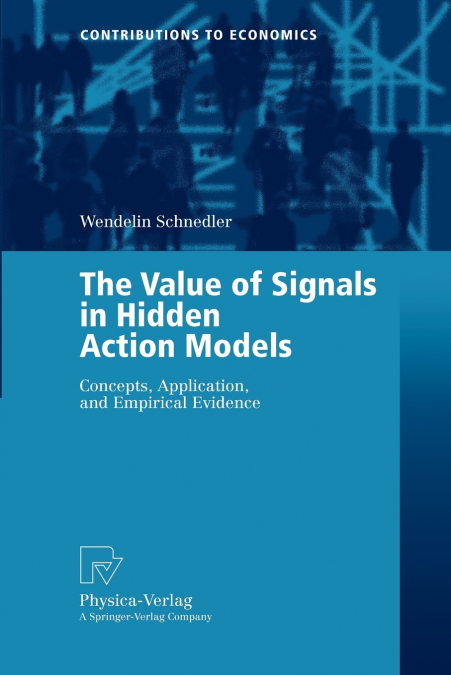

The Value of Signals in Hidden Action Models

The Value of Signals in Hidden Action Models

Wendelin Schnedler

66,83 €
IVA incluido
Disponible
Editorial:
Springer Nature B.V.
Año de edición:
2004
Materia
Teoría y filosofía económicas
ISBN:
9783790801736
66,83 €
IVA incluido
Disponible

Selecciona una librería:

  • Librería Samer Atenea
  • Librería Aciertas (Toledo)
  • Kálamo Books
  • Librería Perelló (Valencia)
  • Librería Elías (Asturias)
  • Donde los libros
  • Librería Kolima (Madrid)
  • Librería Proteo (Málaga)

Since the fundamental work of Walras (1874), markets have received particular attention by economists because they lead to an efficient allocation of goods and services. However, the proper functioning of markets rests on certain assumptions. For instance, the good or ser­ vice which is to be traded must be clearly defined. This elementary requirement is often violated in reality, in particular when services are concerned. Consider the example of railway workers who are hired to lay tracks. A labour contract which stipulates a fixed wage and defines the workers’ task as 'laying tracks' is rather unspecific. Workers may profit from this vagueness by reducing effort to a comfortable amount -as long as tracks are laid, they do not violate contract conditions. Thus, an im­ precise definition of the service can result in inefficiently low efforts. An obvious solution to this problem is a clearer definition of the ser­ vice, but often this way is barred: To specify, for instance, all actions which are involved in laying tracks and which may vary with weather, surface and other conditions is far too complicated and too costly. In­ deed, labour contracts seldom give a detailed account of the task of a worker. Alternatively to a more precise task description, the wage of the worker could be conditioned on information about the worker’s performance. For example, the railway workers might be paid by the length of tracks laid so that they are motivated to exert more effort.

Artículos relacionados

  • Economic and Philosophic Manuscripts of 1844
    Karl Marx
    In the Economic and Philosophic Manuscripts of 1844 Marx explains how, under capitalism, people rely on labor to live. In the past people could rely on Nature itself for their natural needs; in modern society, if one wants to eat, one must work: it is only through money that one may survive. Thus, man becomes a slave to his wages. It is only through his work that he can find en...
  • The Communist Manifesto
    Friedrich Engels / Karl Marx / Samuel Moore
    First published in 1848, Karl Marx and Friedrich Engels’ revolutionary manifesto quickly became one of the most influential political and economictexts in history. A landmark in political philosophy, it advocates for the overthrow of capitalist systems and the establishment of a classless,communist society. ...
    Disponible

    13,12 €

  • Cruel September
    Daniel D. Victor
    Romance blooms at Phillips Junior High when teacher Art Malamud, the school’s union rep, meets Mandy Sayer, the newest member of the faculty. As the school year progresses, Art leads his colleagues in the historic Los Angeles teachers’ strike of 1970 and stokes the ire of the principal, Vivian Laws. Though Art has tenure and relative immunity from Laws’s personal attacks, Mandy...
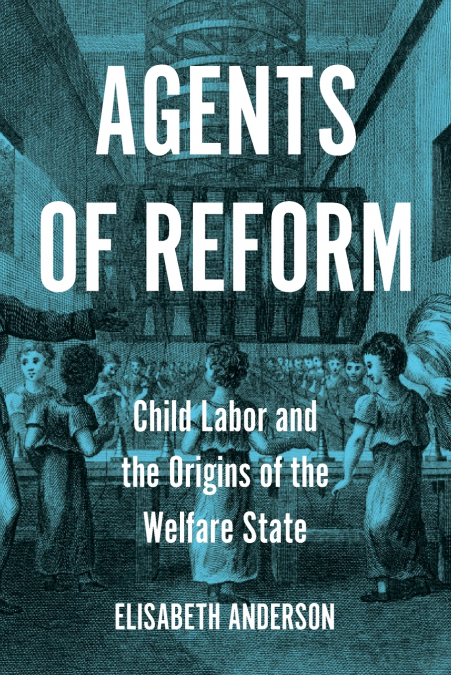
  • Agents of Reform
    Elisabeth Anderson
    A groundbreaking account of how the welfare state began with early nineteenth-century child labor laws, and how middle-class and elite reformers made it happenThe beginnings of the modern welfare state are often traced to the late nineteenth-century labor movement and to policymakers’ efforts to appeal to working-class voters. But in Agents of Reform, Elisabeth Anderson shows t...
    Disponible

    42,75 €

  • Fish and Chips, and the British Working Class, 1870-1940
    John K. Walton
    Unlike other institutions of central importance to working-class life, the fish-and-chip trade has not yet been rescued from what the author of this book regards as the massive condescension of posterity. In attempting to begin this process, he traces the origins of what was by 1914 an important national industry, setting the economic, social and political context of the trade,...
    Disponible

    142,78 €

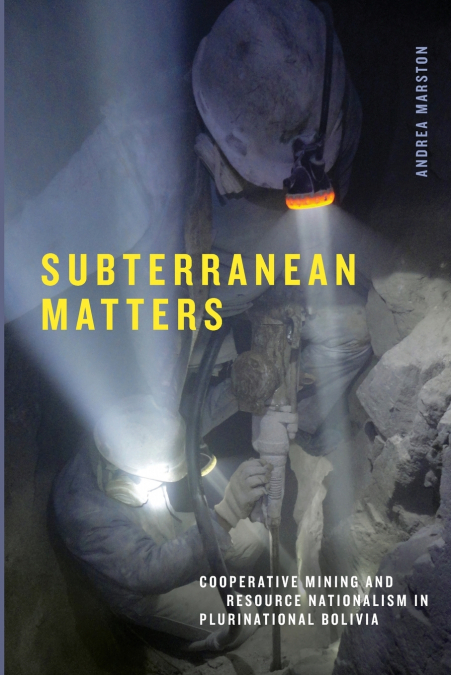
  • Subterranean Matters
    Andrea Marston
    In Subterranean Matters, Andrea Marston examines the ongoing history of Bolivian mining cooperatives, an economic formation that has been central to Bolivian politics and to the country’s economy. Marston outlines how mining cooperatives occupy a contradictory place in Bolivian politics. They were major backers of left-wing president Evo Morales in 2006 and participated signifi...
    Disponible

    36,40 €