
Inicio > Humanidades > Religión y creencias > Judaísmo > Judaísmo: textos sagrados > The Use of Sobriquets in the Qumran Dead Sea Scrolls
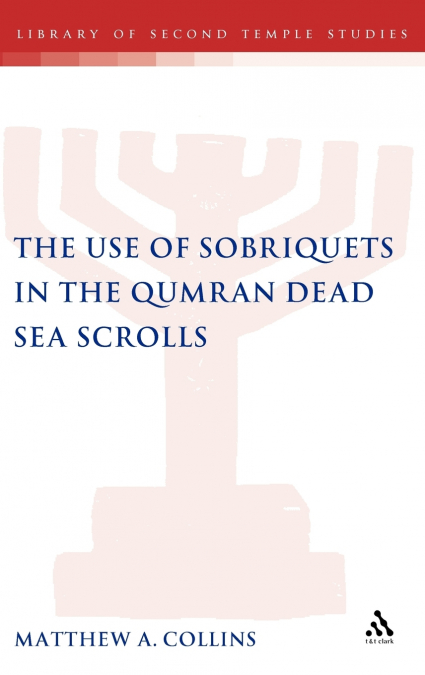
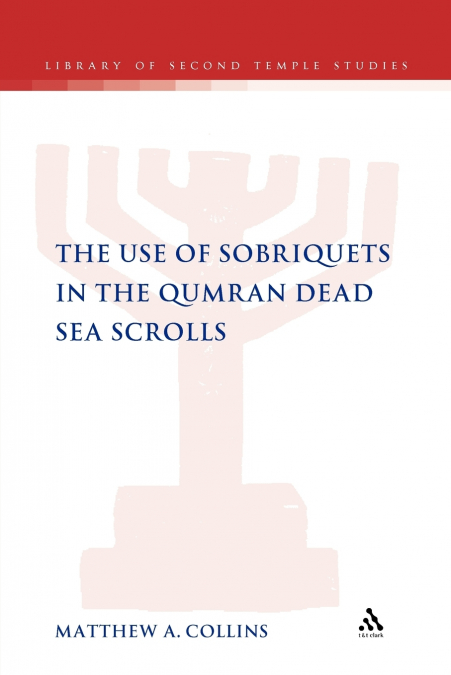
The Use of Sobriquets in the Qumran Dead Sea Scrolls

The Use of Sobriquets in the Qumran Dead Sea Scrolls

Matthew A. Collins

66,60 €
IVA incluido
Disponible
Editorial:
Bloomsbury Publishing plc
Año de edición:
2011
Materia
Judaísmo: textos sagrados
ISBN:
9780567629630
66,60 €
IVA incluido
Disponible

Selecciona una librería:

  • Librería Samer Atenea
  • Librería Aciertas (Toledo)
  • Kálamo Books
  • Librería Perelló (Valencia)
  • Librería Elías (Asturias)
  • Donde los libros
  • Librería Kolima (Madrid)
  • Librería Proteo (Málaga)

This book constitutes an examination of key sobriquets found among the Qumran Dead Sea Scrolls. Its primary focus is literary rather than historical and concentrates on the function of the sobriquets as labels utilised positively or negatively within the sectarian compositions. Noting the presence of ‘standard’ and ‘variant’ forms of these designations, this study examines the differing form and function of the sobriquets across the range of texts in which they appear. More specifically, it attempts to demonstrate that over time they underwent a developmental process, changing in form and perhaps denotation. Adopting a chronological schema that posits a Formative, Early and Late Sectarian Period, and concentrating on the sobriquets ‘the Teacher of Righteousness’ and ‘the Spouter of the Lie’, this investigation observes a development from contextualised scriptural typologies towards titular forms constituting discrete elements of sectarian terminology. A more general evolutionary trend towards a definite (‘standard’) form is also highlighted, with so-called variants representing earlier stages in this process (further demonstrated by means of a supplementary case study involving the sobriquet, ‘the Seekers of Smooth Things’).Comparison of these results with sociological insights, drawing upon the sociology of deviance and ‘labelling theory’, suggests that this phenomenon can be understood against a wider context of labelling practices. Thus it is demonstrated that the sobriquets function as tools for labelling deviance and affirming positive counterparts. Furthermore, it is suggested that the move towards definite titular forms reflects a process of role engulfment, increased prototypically and the ultimate acquisition of ‘master status’.
Artículos relacionados

  • Jesus in the Talmud
    Peter Schäfer
    Scattered throughout the Talmud, the founding document of rabbinic Judaism in late antiquity, can be found quite a few references to Jesus--and they’re not flattering. In this lucid, richly detailed, and accessible book, Peter Schäfer examines how the rabbis of the Talmud read, understood, and used the New Testament Jesus narrative to assert, ultimately, Judaism’s superiority o...
    Disponible

    44,77 €

  • Septuagint - Kingdoms
    Scriptural Research Institute
    The Septuagint’s 1st Kingdoms retells the story of the unification of Israel under the Benjamite King Saul in the aftermath of the collapse of the Egyptian New Kingdom. The events of 1st Kingdoms continues the history of the Hebrews told in the book of Judges, as the era of the Judges ended with Samuel, who anointed Saul, the tallest man in the land, to rule over the Israelites...
    Disponible

    29,27 €

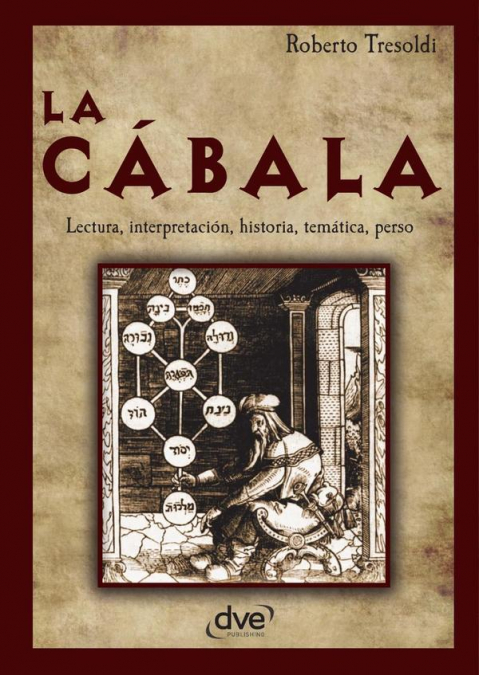
  • La cábala
    Roberto Tresoldi
    Sobre la cábala se han escrito numerosos libros, aunque resulta difícil encontrar una obra sencilla, clara y completa. Hoy día, la cábala, al igual que otras artes esotéricas siempre envueltas en un halo de misterio, sigue siendo un concepto de significado vago o ambiguo, pero no por ello menos misterioso. Roberto Tresoldi, el autor de esta obra, profundiza en esta disciplina q...
    Disponible

    18,72 €

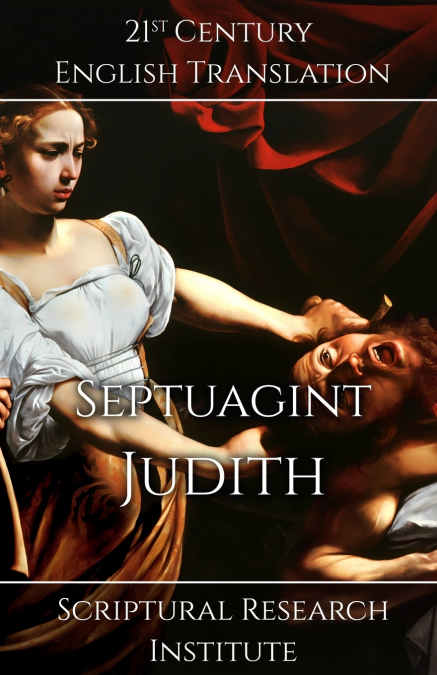
  • Septuagint - Judith
    Scriptural Research Institute
    The origin of the Book of Judith has been debated for thousands of years, and is often assumed to have been written in Greek as anti-Hellenic propaganda during the Maccabean Revolt. It isn’t clear why an anti-Hellenic book would have been written in Greek by an Aramaic-speaking people, however, no ancient copies of it survive in Hebrew, Aramaic, or Phoenician (Samaritan / Judah...
    Disponible

    16,21 €

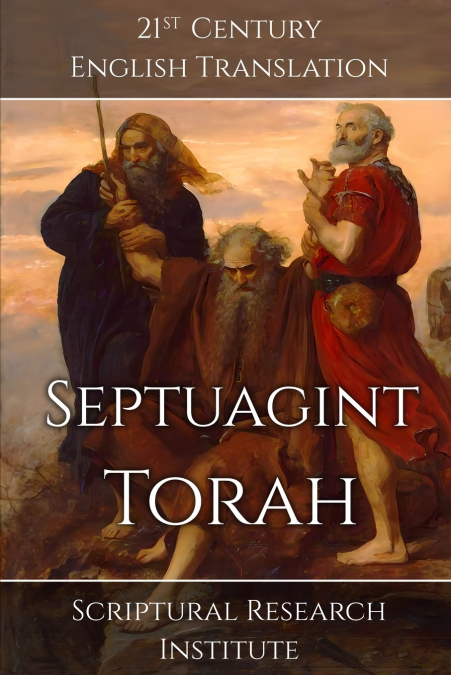
  • Septuagint - Torah
    Scriptural Research Institute
    After the death of Alexander the Great in 323 BC, his generals ripped apart his empire, and by 305 BC General Ptolemy had gained control of the Eastern Mediterranean, including Egypt, Judea, Cyprus, Cyrene, and coastal regions of modern Turkey, including Cilicia, Pamphylia, Lycia, and Caria. He established the dynasty of the Ptolemies that would rule Egypt for the next three ce...
    Disponible

    40,45 €

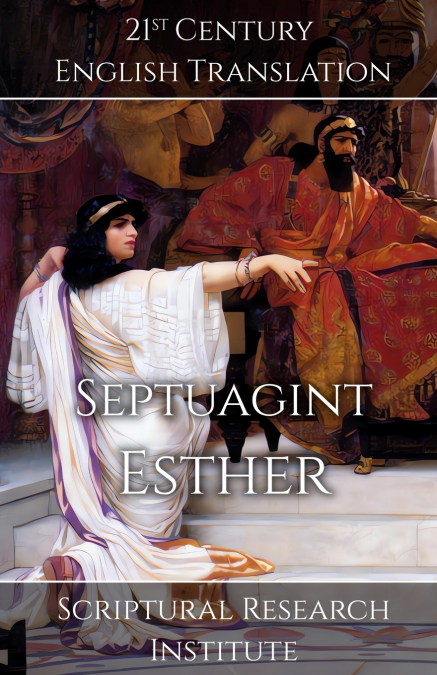
  • Septuagint - Esther
    Scriptural Research Institute
    There are two versions of the Book of Esther the various copies of the Septuagint, however, neither originated at the Library of Alexandria. The common version of Esther is found in almost all copies, while the rare version is only found in four know manuscripts, numbered as 19, 93, 108, and 319. This edition includes both the Septuagint’s versions, using the oldest surviving c...
    Disponible

    16,05 €

Otros libros del autor

  • The Use of Sobriquets in the Qumran Dead Sea Scrolls
    Matthew A. Collins
    This book constitutes an examination of key sobriquets found among the Qumran Dead Sea Scrolls. Its primary focus is literary rather than historical and concentrates on the function of the sobriquets as labels utilised positively or negatively within the sectarian compositions. Noting the presence of ’standard and ’variant forms of these designations, this study examines the di...