
Inicio > Humanidades > Filosofía > Ética y filosofía moral > The Unfit Brain and the Limits of Moral Bioenhancement
The Unfit Brain and the Limits of Moral Bioenhancement

The Unfit Brain and the Limits of Moral Bioenhancement

Fabrice Jotterand

133,99 €
IVA incluido
Disponible
Editorial:
Springer Nature B.V.
Año de edición:
2023
Materia
Ética y filosofía moral
ISBN:
9789811696954
133,99 €
IVA incluido
Disponible

Selecciona una librería:

  • Librería Samer Atenea
  • Librería Aciertas (Toledo)
  • Kálamo Books
  • Librería Perelló (Valencia)
  • Librería Elías (Asturias)
  • Donde los libros
  • Librería Kolima (Madrid)
  • Librería Proteo (Málaga)

In light of the potential novel applications of neurotechnologies in psychiatry and the current debate on moral bioenhancement, this book outlines the reasons why more conceptual work is needed to inform the scientific and medical community, and society at large, about the implications of moral bioenhancement before a possible, highly hypothetical at this point, broad acceptance, and potential implementation in areas such as psychiatry (e.g., treatment of psychopathy), or as a measure to prevent crime in society. The author does not negate the possibility of altering or manipulating moral behavior through technological means. Rather he argues that the scope of interventions is limited because the various options available to 'enhance morality' improve, or simply manipulate, some elements of moral behavior and not the moral agent per se in the various elements constitutive of moral agency. The concept of Identity Integrity is suggested as a potential framework for a responsible use of neurotechnologies in psychiatry to avoid human beings becoming orderers and orderables of technological manipulations.

Artículos relacionados

  • Ka Ab Ba Building The Lighted Temple
    Dr Terri R. Nelson / Dr Terri RNelson
    The book KaAbBa Building The Lighted Temple/Metaphysical Keys to the Tree of Life draws a circle that is inclusive of the Afrikan origin of the Ancient Kemetic/Egyptian wisdom. It reveals the undeniable root and link of Ancient Africa to all the religious systems that would develop worldwide. This book is explosive in its power to convey the meaning of KaAbBa, the Medu Neter  (...
    Disponible

    37,41 €

  • Technoethics and the Evolving Knowledge Society
    Rocci Luppicini
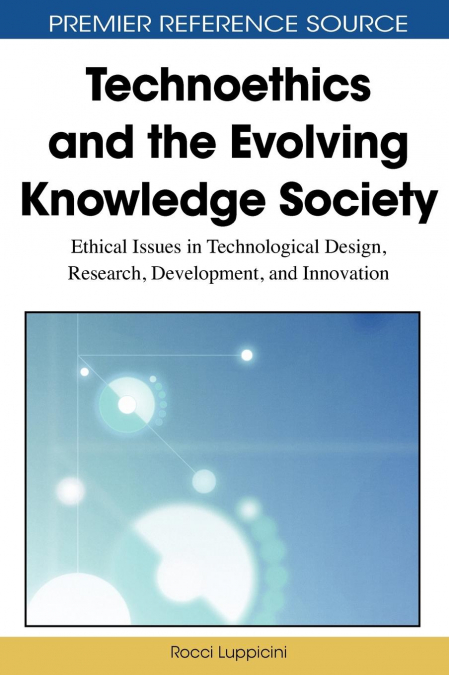
    Recently, there has been a major push to rediscover the ethical dimension of technology across the sciences, social sciences, and humanities. Technoethics and the Evolving Knowledge Society: Ethical Issues in Technological Design, Research, Development, and Innovation examines human processes and practices connected to technology embedded within social, political, and moral sph...
  • Kant
    Immanuel Kant
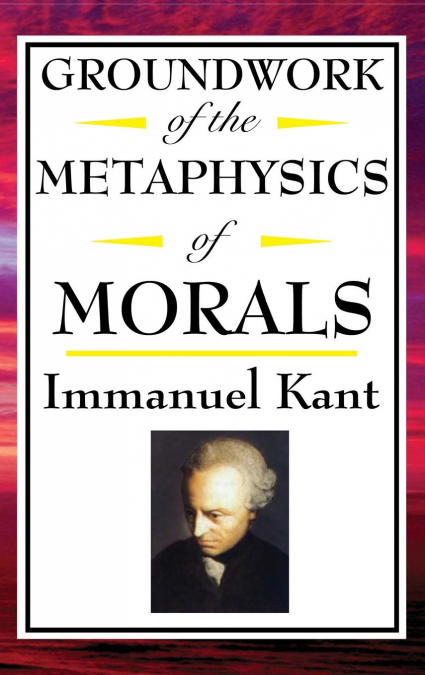
    Kant’s Groundwork of the Metaphysics of Morals is one of the most important works in modern moral philosophy. It belongs beside Plato, Aristotle, Machiavelli, and Hobbes. Here Kant sets out to articulate and defend the Categorical Imperative - the fundamental principle that underlies moral reasoning - and to lay the foundation for a comprehensive account of justice and human vi...
  • On the Duty of Civil Disobedience
    HENRY DAVID THOREAU
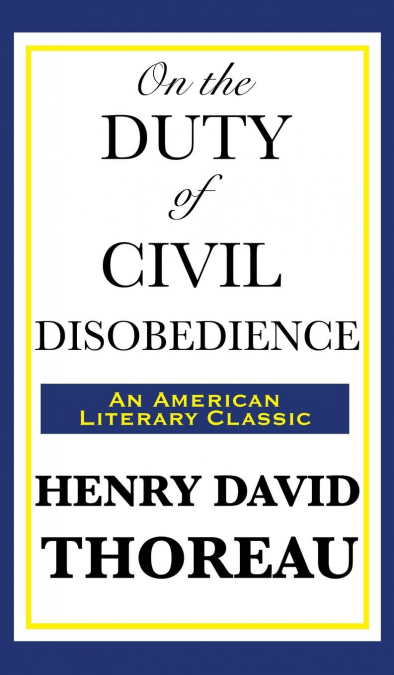
    Civil Disobedience argues that citizens should not permit their governments to overrule their consciences, and that they have a duty to avoid allowing their acquiescence to enable the government to make them the agents of injustice. Thoreau was motivated in part by his disgust with slavery and the Mexican-American War, but the sentiments he expresses here are just as pertinent ...
  • Beyond Good and Evil
    Friedrich Nietzsche
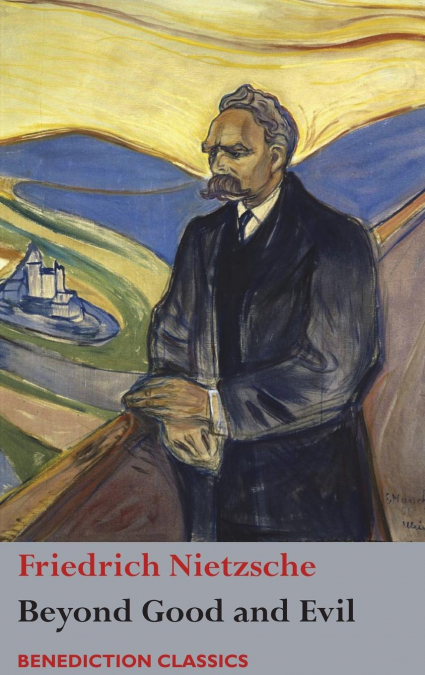
    Nietzsche, though primarily a philosopher, wrote widely on art, philology, history, religion, tragedy, culture, and science.  In 1886, at the height of his powers, he published Beyond Good and Evil.  Here he examines much of the best of human thought--dogmatic philosophy, Judeo-Christian morality, science and democracy – and finds it lacking.  Rejecting “slave-morality” he pres...
  • Beyond Good and Evil
    Friedrich Nietzsche
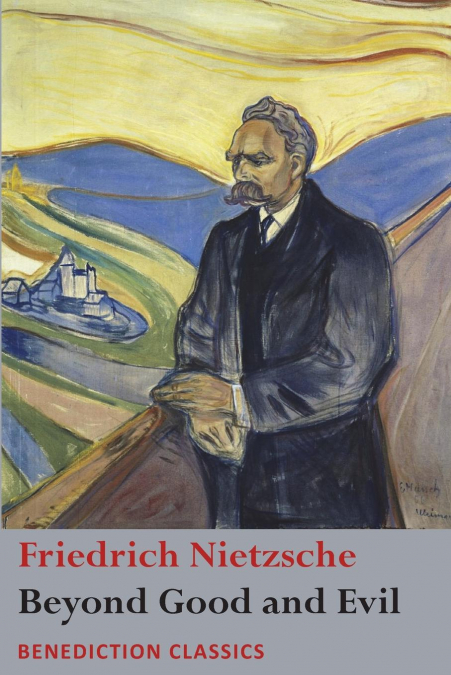
    Nietzsche, though primarily a philosopher, wrote widely on art, philology, history, religion, tragedy, culture, and science.  In 1886, at the height of his powers, he published Beyond Good and Evil.  Here he examines much of the best of human thought--dogmatic philosophy, Judeo-Christian morality, science and democracy – and finds it lacking.  Rejecting “slave-morality” he pres...
    Disponible

    9,99 €

Otros libros del autor

  • The Unfit Brain and the Limits of Moral Bioenhancement
    Fabrice Jotterand
    In light of the potential novel applications of neurotechnologies in psychiatry and the current debate on moral bioenhancement, this book outlines the reasons why more conceptual work is needed to inform the scientific and medical community, and society at large, about the implications of moral bioenhancement before a possible, highly hypothetical at this point, broad acceptanc...
  • Emerging Conceptual, Ethical and Policy Issues in Bionanotechnology
    Fabrice Jotterand
    Introduction Fabrice Jotterand, Beyond Feasibility: Why Ethics is Important for Bionanotechnology Knowledge Production in Nanotechnoscience Andreas Woyke, The World View of Nanotechnology: Philosophical Reflections Bernadette Bensaude-Vincent & Xavier Guchet, Nanomachine: Technological Concept or Metaphor? Alfred Nordmann, No Future for Nanotechnology? Historical De...
    Disponible

    269,26 €

  • Emerging Conceptual, Ethical and Policy Issues in Bionanotechnology
    Fabrice Jotterand
    Nanobiotechnology is the convergence of existing and new biotechnology with the 1 ability to manipulate matter at or near the molecular level. This ability to manipulate matter on a scale of 100 nanometers (nm) or less is what constitutes the nanotechnology revolution occurring today, the potentially vast economic and social implications of which are yet to be fully understood ...