Inicio > Humanidades > Filosofía > Ética y filosofía moral > The Unconstitutionality of Slavery: Large Print
The Unconstitutionality of Slavery: Large Print

The Unconstitutionality of Slavery: Large Print

Lysander Spooner

0,00 €
IVA incluido
Consulta disponibilidad
Editorial:
Muze Publications
Año de edición:
2026
Materia
Ética y filosofía moral
ISBN:
9781811141205

Selecciona una librería:

  • Librería Samer Atenea

  • Kálamo Books
  • Librería Elías (Asturias)
  • Librería Kolima (Madrid)
  • Librería Proteo (Málaga)

Can a practice enforced by government still have no lawful authority? Lysander Spooner turns that question into a searching constitutional case for abolition.First published in 1845, The Unconstitutionality of Slavery challenges the belief that the United States Constitution sanctioned human bondage. Spooner begins with a fundamental claim: law must rest on natural justice, not simply on the commands of those who hold power. He then examines colonial charters, the Declaration of Independence, the Articles of Confederation, and the Constitution to argue that slavery lacked a legitimate legal foundation.At the heart of the work is a close reading of the provisions commonly invoked to defend slavery, including the three-fifths provision, the fugitive-servant clause, and the slave-trade compromise. Spooner insists that constitutional meaning must be established through the words ratified by the people, rather than the unexpressed intentions of the framers. His argument challenged defenders of slavery and divided abolitionists themselves. Today, it remains a provocative encounter with the relationship between written law, moral principle, and state power.What readers find inside:Natural justice — Spooner grounds legal authority in rights that government does not create.Founding documents — America’s early political instruments become evidence in a sustained argument for liberty.Contested clauses — Constitutional provisions used to support bondage receive detailed scrutiny.Rules of interpretation — The work argues for the authority of the ratified text over the private intentions of its authors.Law and conscience — Spooner presses judges and citizens to confront their responsibility when power conflicts with justice.This work will engage readers of constitutional law, students of American abolitionism, and anyone interested in the philosophical foundations of individual rights.Begin Spooner’s argument and consider what makes a law worthy of obedience.Large print edition: 16-point type for comfortable reading. 10


Artículos relacionados

  • Ka Ab Ba Building The Lighted Temple
    Dr Terri R. Nelson / Dr Terri RNelson
    The book KaAbBa Building The Lighted Temple/Metaphysical Keys to the Tree of Life draws a circle that is inclusive of the Afrikan origin of the Ancient Kemetic/Egyptian wisdom. It reveals the undeniable root and link of Ancient Africa to all the religious systems that would develop worldwide. This book is explosive in its power to convey the meaning of KaAbBa, the Medu Neter  (...
    Disponible

    45,14 €

  • Technoethics and the Evolving Knowledge Society
    Rocci Luppicini
    Recently, there has been a major push to rediscover the ethical dimension of technology across the sciences, social sciences, and humanities. Technoethics and the Evolving Knowledge Society: Ethical Issues in Technological Design, Research, Development, and Innovation examines human processes and practices connected to technology embedded within social, political, and moral sph...
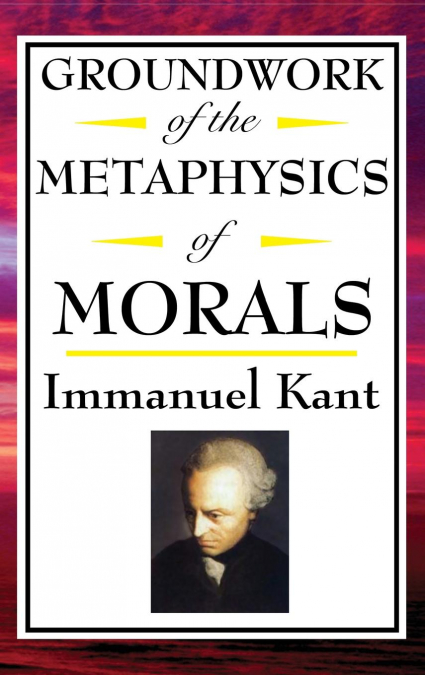
  • Kant
    Immanuel Kant
    Kant’s Groundwork of the Metaphysics of Morals is one of the most important works in modern moral philosophy. It belongs beside Plato, Aristotle, Machiavelli, and Hobbes. Here Kant sets out to articulate and defend the Categorical Imperative - the fundamental principle that underlies moral reasoning - and to lay the foundation for a comprehensive account of justice and human vi...
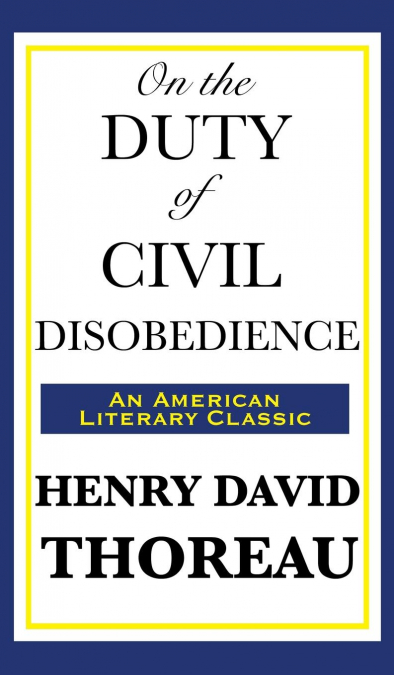
  • On the Duty of Civil Disobedience
    HENRY DAVID THOREAU
    Civil Disobedience argues that citizens should not permit their governments to overrule their consciences, and that they have a duty to avoid allowing their acquiescence to enable the government to make them the agents of injustice. Thoreau was motivated in part by his disgust with slavery and the Mexican-American War, but the sentiments he expresses here are just as pertinent ...
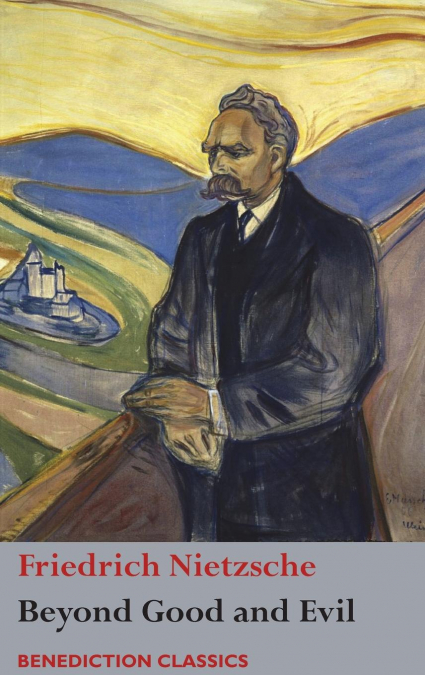
  • Beyond Good and Evil
    Friedrich Nietzsche
    Nietzsche, though primarily a philosopher, wrote widely on art, philology, history, religion, tragedy, culture, and science.  In 1886, at the height of his powers, he published Beyond Good and Evil.  Here he examines much of the best of human thought--dogmatic philosophy, Judeo-Christian morality, science and democracy – and finds it lacking.  Rejecting “slave-morality” he pres...
  • Beyond Good and Evil
    Friedrich Nietzsche
    Nietzsche, though primarily a philosopher, wrote widely on art, philology, history, religion, tragedy, culture, and science.  In 1886, at the height of his powers, he published Beyond Good and Evil.  Here he examines much of the best of human thought--dogmatic philosophy, Judeo-Christian morality, science and democracy – and finds it lacking.  Rejecting “slave-morality” he pres...
    Disponible

    10,94 €

Otros libros del autor

  • La inconstitucionalidad de la esclavitud
    Lysander Spooner
    ¿Puede una práctica impuesta por el gobierno carecer de toda autoridad legal? Lysander Spooner convierte esa pregunta en un exhaustivo alegato constitucional a favor de la abolición.Publicado por primera vez en 1845, La inconstitucionalidad de la esclavitud cuestiona la creencia de que la Constitución de Estados Unidos autorizaba la esclavitud. Spooner parte de una afirmación f...
  • La inconstitucionalidad de la esclavitud: Letra Grande
    Lysander Spooner
    ¿Puede una práctica impuesta por el gobierno carecer de toda autoridad legal? Lysander Spooner convierte esa pregunta en un exhaustivo alegato constitucional a favor de la abolición.Publicado por primera vez en 1845, La inconstitucionalidad de la esclavitud cuestiona la creencia de que la Constitución de Estados Unidos autorizaba la esclavitud. Spooner parte de una afirmación f...
  • The Unconstitutionality of Slavery
    Lysander Spooner
    Can a practice enforced by government still have no lawful authority? Lysander Spooner turns that question into a searching constitutional case for abolition.First published in 1845, The Unconstitutionality of Slavery challenges the belief that the United States Constitution sanctioned human bondage. Spooner begins with a fundamental claim: law must rest on natural justice, not...
  • A Letter to Grover Cleveland
    Lysander Spooner
    This XpressRead Cram Edition of A Letter to Grover Cleveland pairs the complete original text with carefully prepared study materials, designed for deeper engagement with this classic.Lysander Spooner’s 'A Letter to Grover Cleveland' is a powerful and incisive critique of American political philosophy and constitutional law. Addressed directly to President Cleveland, this histo...
    Disponible

    25,55 €

  • The Unconstitutionality of Slavery (Cram Edition)
    Lysander Spooner
    This XpressRead Cram Edition of The Unconstitutionality of Slavery pairs the complete original text with carefully prepared study materials, designed for deeper engagement with this classic.Lysander Spooner’s 'The Unconstitutionality of Slavery' presents a powerful legal and moral argument against slavery in the United States. Spooner meticulously challenges the prevailing view...
    Disponible

    25,85 €

  • An Essay on the Trial by Jury (Cram Edition)
    Lysander Spooner
    This XpressRead Cram Edition of An Essay on the Trial by Jury pairs the complete original text with carefully prepared study materials, designed for deeper engagement with this classic.Lysander Spooner’s 'An Essay on the Trial by Jury' is a foundational text exploring the historical significance of the jury within the framework of common law and constitutional law. This treatis...
    Disponible

    28,87 €