Inicio > Sociedad y ciencias sociales > Política y gobierno > Relaciones internacionales > Diplomacia > The Tyranny of the Minority. The Effectiveness of Policy Making in Israel
The Tyranny of the Minority. The Effectiveness of Policy Making in Israel

The Tyranny of the Minority. The Effectiveness of Policy Making in Israel

Badir Bayramov

21,13 €
IVA incluido
Disponible
Editorial:
GRIN Publishing
Año de edición:
2013
Materia
Diplomacia
ISBN:
9783656537359
21,13 €
IVA incluido
Disponible

Selecciona una librería:

  • Librería Samer Atenea
  • Librería Aciertas (Toledo)
  • Kálamo Books
  • Librería Perelló (Valencia)
  • Librería Elías (Asturias)
  • Donde los libros
  • Librería Kolima (Madrid)
  • Librería Proteo (Málaga)

Seminar paper from the year 2013 in the subject Politics - International Politics - Region: Near East, Near Orient, grade: 1,0, University of Potsdam, language: English, abstract: The Tyranny of the Minority: The effectiveness of policy making in Israel. Introduction to Israel's Political System As a fledgling nation facing a unique set of social challenges and physical threats, the democracy of Israel was created in an incredibly volatile environment. Nonetheless, in certain respects Israeli democracy has shown itself to be remarkably stable-for example, not once in Israel's sixty-five year history have the results of a major election been challenged. In other respects, however, Israeli democracy has presented itself as fundamentally unstable and subject to perpetual inefficiency. This is further exacerbated by the fact that unlike most Western democracies, the state of Israel lacks a formal constitution; instead, Israel has passed a set of Basic Laws intended to fill the gap. One symptom of this perpetually unstable condition is the frequency in which Israel changes the makeup of its governing coalitions-in Israel's brief history of sixty-five years, there have been thirty-one different governments. The question becomes, to what extent is such an erratic democracy able to set policy and govern effectively? In what follows, this question will be analyzed thoroughly, with an emphasis placed on the role that Israel's multiparty political system plays in this process. The political system in Israel is a parliamentary system based strictly on proportional representation. This was a system Israel adopted in the aftermath of the period of the British Mandate in order to accommodate the starkly different social, political and religious groups-and particularly the vast waves of immigrants-that composed its population. In Israel's parliamentary system, a party receives seats in the Knesset in proportion to the number of votes that they received in the legislative electio

Artículos relacionados

  • How Statesmen Think
    Robert Jervis
    Robert Jervis has been a pioneering leader in the study of the psychology of international politics for more than four decades. How Statesmen Think presents his most important ideas on the subject from across his career. This collection of revised and updated essays applies, elaborates, and modifies his pathbreaking work. The result is an indispensable book for students and sch...
    Disponible

    43,09 €

  • Tower of Babble
    Dore Gold
    ...
    Disponible

    16,40 €

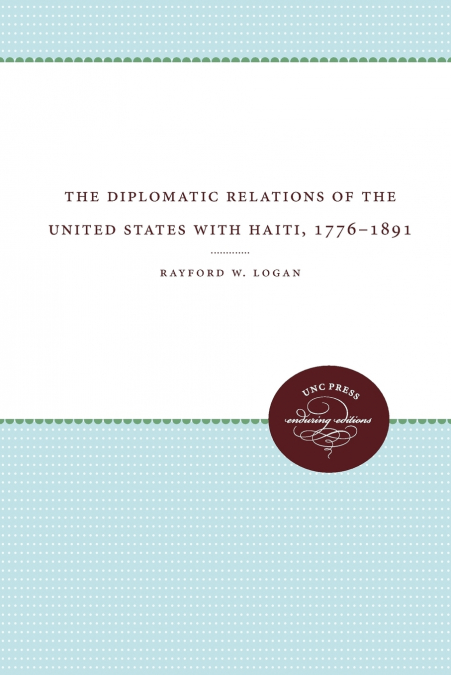
  • The Diplomatic Relations of the United States with Haiti, 1776-1891
    Rayford W. Logan
    The relations of the United States with Haiti have been different from American relations with any other nation; they have been vital and at times even dramatic. They climaxed in 1891 when the United States failed to make Haiti lease her Mole St. Nicolas. This failure constitutes an amazing episode in American diplomatic hostory. Recounting the story of Haiti’s struggle for ind...
    Disponible

    76,25 €

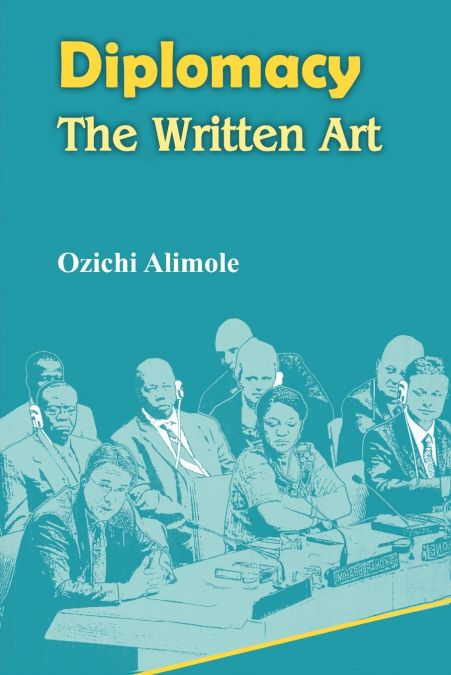
  • Diplomacy. the Written Art
    Ozichi Alimole
    The author seeks to redefine written diplomacy in its true meaning: the art of learning to write in a particular kind of language and mood. He seeks to refocus attention on the significance of diplomatic communication as one of the defining characteristics of diplomacy. A wide variety of correspondence encountered by diplomats is explained, with an analysis of each form of corr...
    Disponible

    57,94 €

  • West Africa’s Trouble Spots and the Impe
    Osita Agbu
    This monograph highlights the necessity for taking preventive measures in the form of peace-building as a sustainable and long-term solution to conflicts in West Africa, with a special focus on the Mano River Union countries. Apart from the Mano River Union countries, efforts at resolving other conflicts in say, Guinea Bissau, Senegal, Côte d’Ivoire and Nigeria, have suffered f...
    Disponible

    58,17 €

  • The Evolution Of UAE Foreign Policy
    GEW Intelligence Unit
    The research background of this book focuses on the historical evolution and strategic development of the United Arab Emirates’ (UAE) foreign policy from its formation to the present day.u2029The research methodology proposed in this book includes a historical analysis of the UAE’s foreign policy, examining key events and strategies that have shaped its current principles and g...
    Disponible

    28,96 €