Inicio > Humanidades > Filosofía > Ética y filosofía moral > The True Meaning Of The System Of Nature (1852)
The True Meaning Of The System Of Nature (1852)

The True Meaning Of The System Of Nature (1852)

Helvetius

22,09 €
IVA incluido
Disponible
Editorial:
Kessinger Publishing
Año de edición:
2010
Materia
Ética y filosofía moral
ISBN:
9781120934260
22,09 €
IVA incluido
Disponible

Selecciona una librería:

  • Librería Samer Atenea
  • Librería Aciertas (Toledo)
  • Kálamo Books
  • Librería Perelló (Valencia)
  • Librería Elías (Asturias)
  • Donde los libros
  • Librería Kolima (Madrid)
  • Librería Proteo (Málaga)

The True Meaning Of The System Of Nature is a philosophical work written by Helvetius in 1852. The book delves into the nature of human beings and their relationship with the world around them. Helvetius argues that all human actions and behaviors are determined by the laws of nature, and that free will is an illusion. He also explores the concept of happiness and how it can be achieved by living in accordance with nature. The book is divided into three parts: the first part discusses the principles of the system of nature, the second part explores the relationship between the mind and the body, and the third part examines the role of education in shaping human behavior. Helvetius’ work was controversial at the time of its publication and was criticized for its radical ideas. However, it has since become an important work in the history of philosophy and continues to be studied and debated by scholars today.This scarce antiquarian book is a facsimile reprint of the old original and may contain some imperfections such as library marks and notations. Because we believe this work is culturally important, we have made it available as part of our commitment for protecting, preserving, and promoting the world’s literature in affordable, high quality, modern editions, that are true to their original work.

Artículos relacionados

  • Ka Ab Ba Building The Lighted Temple
    Dr Terri R. Nelson / Dr Terri RNelson
    The book KaAbBa Building The Lighted Temple/Metaphysical Keys to the Tree of Life draws a circle that is inclusive of the Afrikan origin of the Ancient Kemetic/Egyptian wisdom. It reveals the undeniable root and link of Ancient Africa to all the religious systems that would develop worldwide. This book is explosive in its power to convey the meaning of KaAbBa, the Medu Neter  (...
    Disponible

    37,41 €

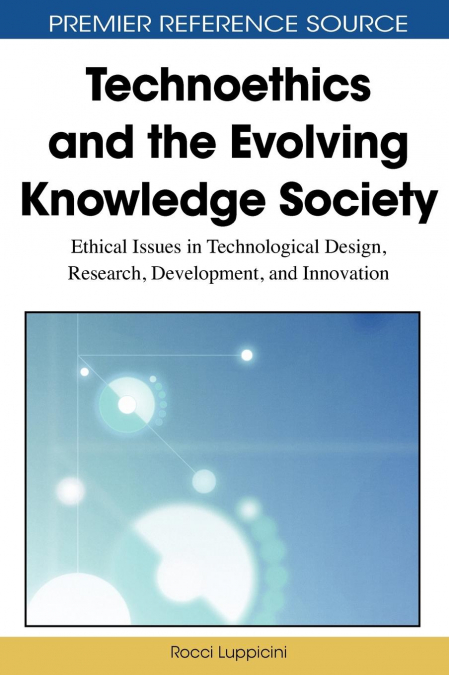
  • Technoethics and the Evolving Knowledge Society
    Rocci Luppicini
    Recently, there has been a major push to rediscover the ethical dimension of technology across the sciences, social sciences, and humanities. Technoethics and the Evolving Knowledge Society: Ethical Issues in Technological Design, Research, Development, and Innovation examines human processes and practices connected to technology embedded within social, political, and moral sph...
  • Kant
    Immanuel Kant
    Kant’s Groundwork of the Metaphysics of Morals is one of the most important works in modern moral philosophy. It belongs beside Plato, Aristotle, Machiavelli, and Hobbes. Here Kant sets out to articulate and defend the Categorical Imperative - the fundamental principle that underlies moral reasoning - and to lay the foundation for a comprehensive account of justice and human vi...
  • On the Duty of Civil Disobedience
    HENRY DAVID THOREAU
    Civil Disobedience argues that citizens should not permit their governments to overrule their consciences, and that they have a duty to avoid allowing their acquiescence to enable the government to make them the agents of injustice. Thoreau was motivated in part by his disgust with slavery and the Mexican-American War, but the sentiments he expresses here are just as pertinent ...
  • Beyond Good and Evil
    Friedrich Nietzsche
    Nietzsche, though primarily a philosopher, wrote widely on art, philology, history, religion, tragedy, culture, and science.  In 1886, at the height of his powers, he published Beyond Good and Evil.  Here he examines much of the best of human thought--dogmatic philosophy, Judeo-Christian morality, science and democracy – and finds it lacking.  Rejecting “slave-morality” he pres...
  • Beyond Good and Evil
    Friedrich Nietzsche
    Nietzsche, though primarily a philosopher, wrote widely on art, philology, history, religion, tragedy, culture, and science.  In 1886, at the height of his powers, he published Beyond Good and Evil.  Here he examines much of the best of human thought--dogmatic philosophy, Judeo-Christian morality, science and democracy – and finds it lacking.  Rejecting “slave-morality” he pres...
    Disponible

    9,99 €

Otros libros del autor

  • De L’esprit
    Helvétius
    The 18th century was a wealth of knowledge, exploration and rapidly growing technology and expanding record-keeping made possible by advances in the printing press. In its determination to preserve the century of revolution, Gale initiated a revolution of its own: digitization of epic proportions to preserve these invaluable works in the largest archive of its kind. Now for the...
  • Poésies
    Helvétius
    Découvrez les poésies de M. Helvetius, une collection captivante qui offre un aperçu unique de la pensée et de la sensibilité du XVIIIe siècle. Ces vers, empreints de classicisme et d’esprit philosophique, témoignent du talent littéraire d’Helvetius et de son engagement envers les idées des Lumières.Ce recueil est une ressource précieuse pour les amateurs de poésie française e...
    Disponible

    25,30 €

  • Oeuvres Philosophiques
    Helvétius
    Découvrez les œuvres philosophiques majeures d’Helvétius, notamment 'De l’Homme.' Cet ouvrage explore des thèmes essentiels tels que la nature humaine, la morale, et la politique, offrant une perspective unique sur la société et l’individu au siècle des Lumières. Les écrits d’Helvétius, caractérisés par leur esprit critique et leur engagement envers le progrès social, restent p...
    Disponible

    29,88 €

  • A Treatise On Man
    Helvétius
    'A Treatise on Man, His Intellectual Faculties & His Education, Volume 1' by Helvétius, originally published in 1810, presents a foundational exploration of human understanding and the principles of education. This seminal work delves into the nature of human intellect, examining the factors that shape our thoughts, perceptions, and behaviors. Helvétius, a key figure of the Enl...
    Disponible

    27,96 €

  • De L’homme, De Ses Facultés Intellectuelles Et De Son Éducation; Volume 2
    Helvétius
    De L’homme, De Ses Facultés Intellectuelles Et De Son Éducation, Volume 2, by Helvétius, is a significant work of Enlightenment philosophy. Originally published in 1773, this volume delves into the nature of human intellectual capabilities and explores the principles of education. Helvétius, a prominent figure of the French Enlightenment, presents his theories on how education ...
    Disponible

    35,55 €

  • Oeuvres Philosophiques; Volume 1
    Helvétius
    This first volume of Helvétius’s 'Oeuvres Philosophiques' presents a collection of his most important philosophical writings. A key figure of the French Enlightenment, Helvétius challenged conventional thought with his materialist and utilitarian ideas. His work explores themes of morality, education, and the nature of human understanding. These essays offer insights into the i...
    Disponible

    31,84 €