 Librería Samer Atenea
 Kálamo Books
 Librería Elías (Asturias)
 Librería Kolima (Madrid)
 Librería Proteo (Málaga)
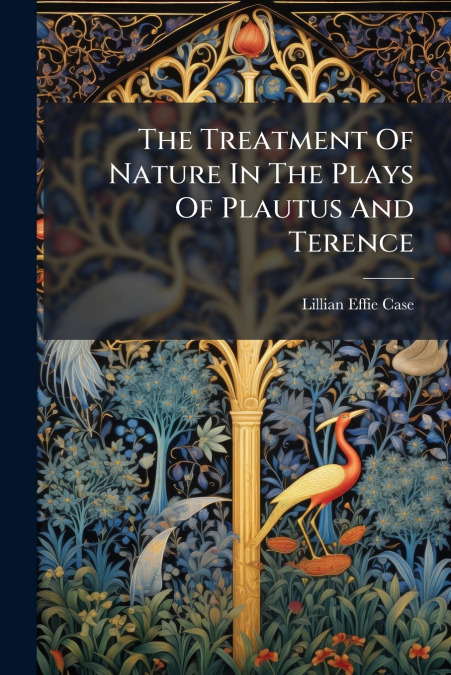
The Treatment Of Nature In The Plays Of Plautus And Terence examines the portrayal of nature within the works of these two foundational playwrights of Roman comedy. Lillian Effie Case’s study delves into the subtle ways Plautus and Terence incorporate natural elements, landscapes, and natural phenomena into their dramatic works. Far from mere background, Case argues that nature plays a vital, often symbolic, role in shaping the meaning and impact of these classic plays. This analysis sheds light on the cultural values and perceptions of the natural world held by Roman society, as reflected through its dramatic literature. Exploring themes of pastoral settings, the influence of the environment on characters, and the use of natural imagery, this work provides valuable insights into the enduring appeal and artistic merit of Plautus and Terence’s comedies.This work has been selected by scholars as being culturally important, and is part of the knowledge base of civilization as we know it. This work was reproduced from the original artifact, and remains as true to the original work as possible. Therefore, you will see the original copyright references, library stamps (as most of these works have been housed in our most important libraries around the world), and other notations in the work.This work is in the public domain in the United States of America, and possibly other nations. Within the United States, you may freely copy and distribute this work, as no entity (individual or corporate) has a copyright on the body of the work.As a reproduction of a historical artifact, this work may contain missing or blurred pages, poor pictures, errant marks, etc. Scholars believe, and we concur, that this work is important enough to be preserved, reproduced, and made generally available to the public. We appreciate your support of the preservation process, and thank you for being an important part of keeping this knowledge alive and relevant.