 Librería Samer Atenea
 Kálamo Books
 Librería Elías (Asturias)
 Librería Kolima (Madrid)
 Librería Proteo (Málaga)
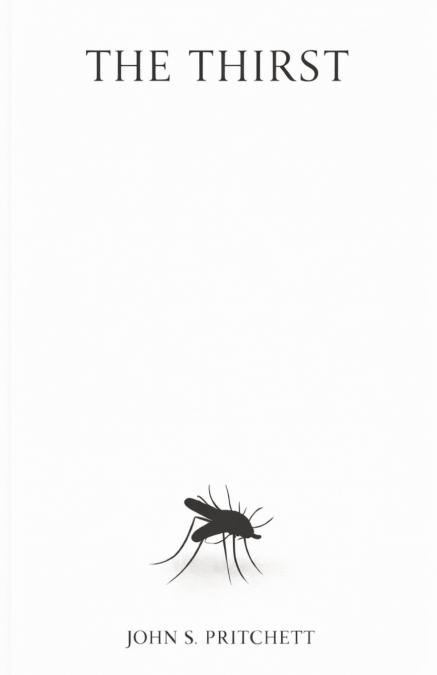
It begins beneath Antarctic ice. It ends by changing the way people live with water.In The Thirst, a drilling team breaches an isolated subglacial pocket deep beneath Antarctica and recovers samples that appear almost lifeless. The incident is contained. The mosquitoes found near the site die. The scientists leave.Then people begin walking into freshwater.Dr. Martin Hale first notices the pattern in Mississippi: unexplained thirst, fixation on lakes and sinks, and victims who remain rational even as they move toward water they know may kill them. The behavior is not madness, dehydration, or an ordinary infection. Something has altered the value the brain assigns to freshwater-and resisting the impulse becomes harder the longer it remains unresolved.The danger is not simply thirst. It is the need to complete an action.As drownings spread through contact networks, Hale and public-health teams discover that mosquitoes can inoculate a transient biological trigger and that direct physical contact can carry diminishing amounts onward. The syndrome separates normal thirst from water-seeking behavior, disrupts the body’s ability to conserve water, and turns ordinary freshwater cues into powerful behavioral targets.Then the response begins making the problem worse.Automated health guidance encourages hydration. Hospitals leave sinks and showers within reach. Public warnings make freshwater more visible. Well-intended interventions amplify the very behavior they are meant to control.A strange rule emerges: interrupt external freshwater contact long enough-while carefully maintaining hydration and electrolytes-and the fixation can collapse.Forty-eight hours.But a rule that works in a controlled room becomes something far more complicated when applied to families, hospitals, schools, cities, reservoirs, and millions of people who do not experience risk equally.Survival depends less on defeating the phenomenon than on learning how to live around it.Blending behavioral neuroscience, epidemiology, entomology, water infrastructure, public health, and psychological suspense, The Thirst follows a society forced to redesign ordinary life around a danger hidden in one of humanity’s most basic needs.The water remains.What changes is the interval between impulse and action.