Librería Samer Atenea
 Kálamo Books
 Librería Elías (Asturias)
 Librería Kolima (Madrid)
 Librería Proteo (Málaga)
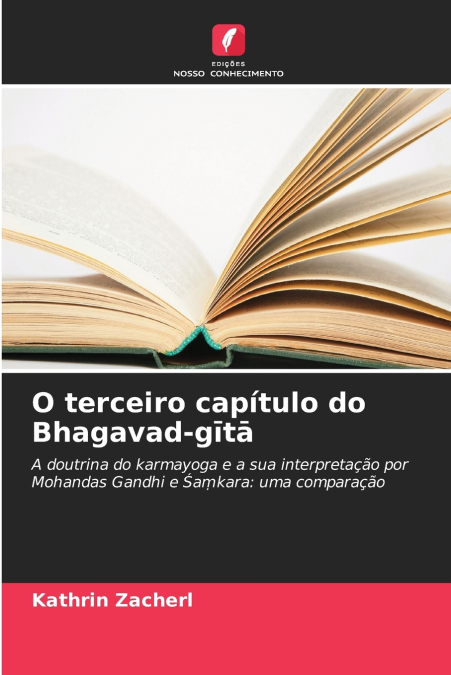
This thesis centres on the third chapter of the Bhagavadgītā, arguably India’s best-known philosophical and religious text, and its interpretation by Śaṃkara and Mohandas Gandhi. In order to clarify Gandhi’s specific interpretation of the Bhagavadgītā, it is compared with Śaṃkara’s commentary. The Bhagavadgītābhāṣya, attributed to Śaṃkara, is regarded as the oldest commentary still in existence today. It was probably composed between the late eighth and early ninth centuries AD. Owing to Śaṃkara’s great philosophical significance right up to modern times and his important role in the history of reception, his interpretation of the Bhagavadgītā provides an extremely interesting basis for comparison. The comparison is limited to three selected topics, namely the social system of the varṇas, karma and, finally, yajña. Following a basic introduction, the analysis draws on the author’s own translation of the Bhagavadgītā verses and Śaṃkara’s commentary from Sanskrit, as well as Gandhi’s English interpretation.