
Inicio > Humanidades > Filosofía > Ética y filosofía moral > The Thinning I - When Nothing Feels Wrong Anymore
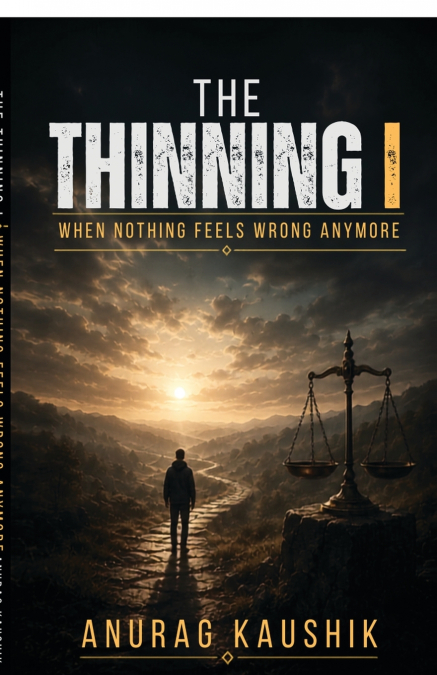
The Thinning I - When Nothing Feels Wrong Anymore

The Thinning I - When Nothing Feels Wrong Anymore

Anurag Kaushik

17,89 €
IVA incluido
Disponible
Editorial:
Notion Press Media Pvt. Ltd
Año de edición:
2026
Materia
Ética y filosofía moral
ISBN:
9798906736710
17,89 €
IVA incluido
Disponible

Selecciona una librería:

  • Librería Samer Atenea
  • Kálamo Books
  • Librería Elías (Asturias)
  • Librería Kolima (Madrid)
  • Librería Proteo (Málaga)

Nothing collapses all at once. Sometimes, it simply becomes easier to bend.The Thinning I - When Nothing Feels Wrong Anymore is a work of reflective nonfiction about the small adjustments that quietly reshape who we become. A harmless exaggeration. A promise softened into 'I’ll try.' A truth postponed to avoid discomfort. An opinion repeated without understanding. A silence chosen because speaking would cost too much.None of these moments feels catastrophic. That is precisely the point.Through intimate observations, everyday encounters, inherited stories, and philosophical reflection, Anurag Kaushik explores what happens when our internal resistance to compromise slowly grows lighter. The book asks whether flexibility can become avoidance, whether convenience can erode precision, and whether a life can drift away from alignment without ever appearing obviously wrong.This is not an argument for rigidity or nostalgia. It is an invitation to notice the almost invisible moment before adjustment-the pause where integrity, commitment, and clarity are quietly tested.Not a manifesto. Not a rulebook. Just a mirror.Because the most consequential changes may begin long before anything looks broken. The manuscript itself frames this as a gradual process: structures do not necessarily shatter first; they 'thin.'

Artículos relacionados

  • Ka Ab Ba Building The Lighted Temple
    Dr Terri R. Nelson / Dr Terri RNelson
    The book KaAbBa Building The Lighted Temple/Metaphysical Keys to the Tree of Life draws a circle that is inclusive of the Afrikan origin of the Ancient Kemetic/Egyptian wisdom. It reveals the undeniable root and link of Ancient Africa to all the religious systems that would develop worldwide. This book is explosive in its power to convey the meaning of KaAbBa, the Medu Neter  (...
    Disponible

    37,41 €

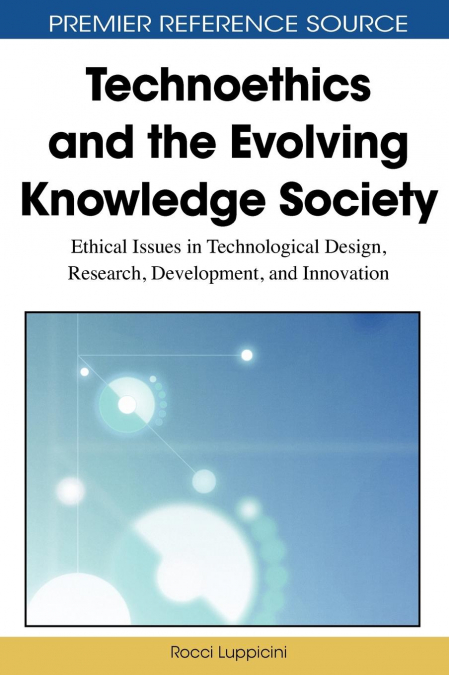
  • Technoethics and the Evolving Knowledge Society
    Rocci Luppicini
    Recently, there has been a major push to rediscover the ethical dimension of technology across the sciences, social sciences, and humanities. Technoethics and the Evolving Knowledge Society: Ethical Issues in Technological Design, Research, Development, and Innovation examines human processes and practices connected to technology embedded within social, political, and moral sph...
  • Kant
    Immanuel Kant
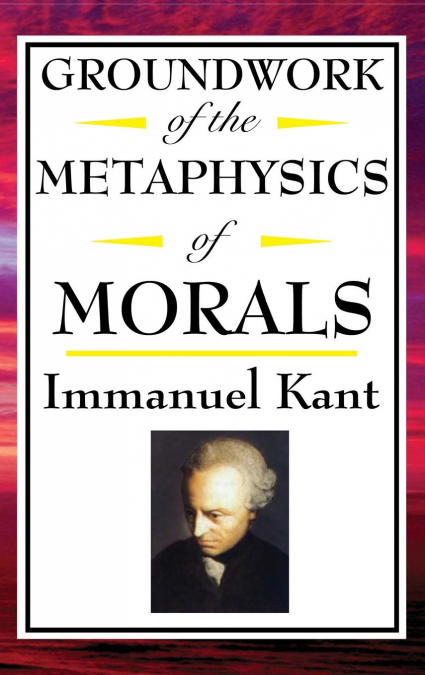
    Kant’s Groundwork of the Metaphysics of Morals is one of the most important works in modern moral philosophy. It belongs beside Plato, Aristotle, Machiavelli, and Hobbes. Here Kant sets out to articulate and defend the Categorical Imperative - the fundamental principle that underlies moral reasoning - and to lay the foundation for a comprehensive account of justice and human vi...
  • On the Duty of Civil Disobedience
    HENRY DAVID THOREAU
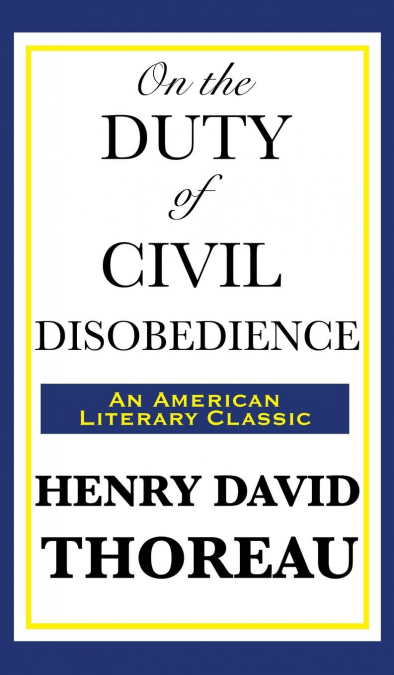
    Civil Disobedience argues that citizens should not permit their governments to overrule their consciences, and that they have a duty to avoid allowing their acquiescence to enable the government to make them the agents of injustice. Thoreau was motivated in part by his disgust with slavery and the Mexican-American War, but the sentiments he expresses here are just as pertinent ...
  • Beyond Good and Evil
    Friedrich Nietzsche
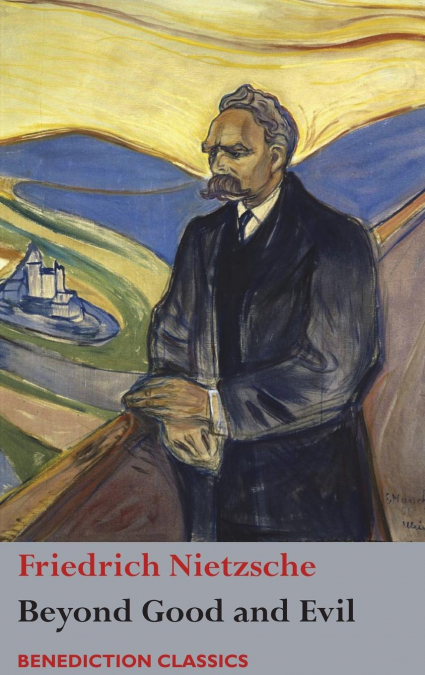
    Nietzsche, though primarily a philosopher, wrote widely on art, philology, history, religion, tragedy, culture, and science.  In 1886, at the height of his powers, he published Beyond Good and Evil.  Here he examines much of the best of human thought--dogmatic philosophy, Judeo-Christian morality, science and democracy – and finds it lacking.  Rejecting “slave-morality” he pres...
  • Beyond Good and Evil
    Friedrich Nietzsche
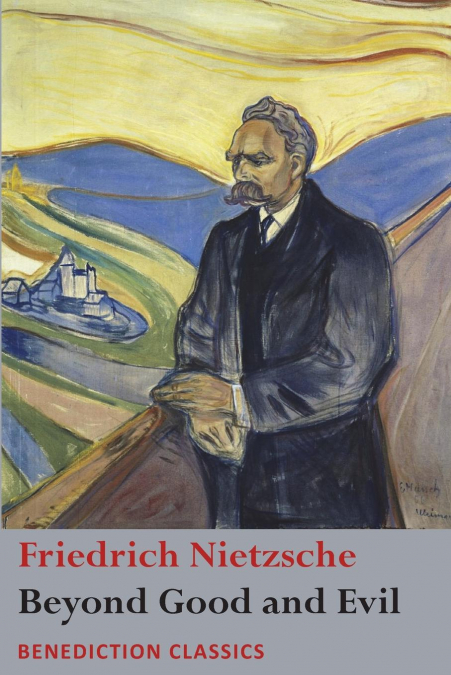
    Nietzsche, though primarily a philosopher, wrote widely on art, philology, history, religion, tragedy, culture, and science.  In 1886, at the height of his powers, he published Beyond Good and Evil.  Here he examines much of the best of human thought--dogmatic philosophy, Judeo-Christian morality, science and democracy – and finds it lacking.  Rejecting “slave-morality” he pres...
    Disponible

    9,99 €

Otros libros del autor

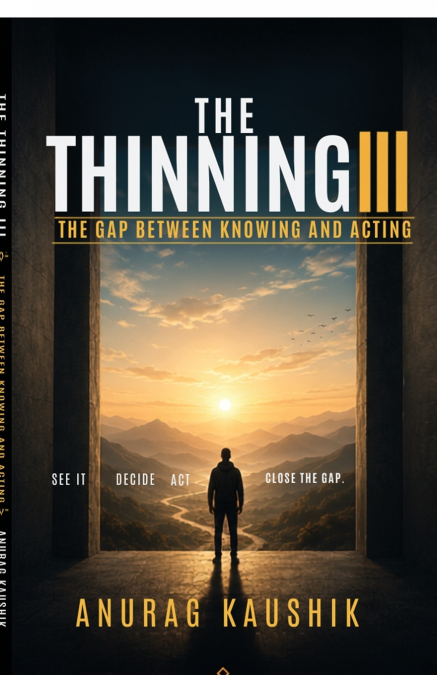
  • The Thinning III
    Anurag Kaushik
    You already know what needs to be done.Send the message. Start the work. Make the decision. Take the first step.And yet, somehow, nothing moves.The Thinning III: After Seeing, Nothing Moves explores one of the quietest and most consequential gaps in human behavior: the space between knowing and acting.This is not a book about finding more clarity. It begins where clarity has al...
    Disponible

    18,02 €

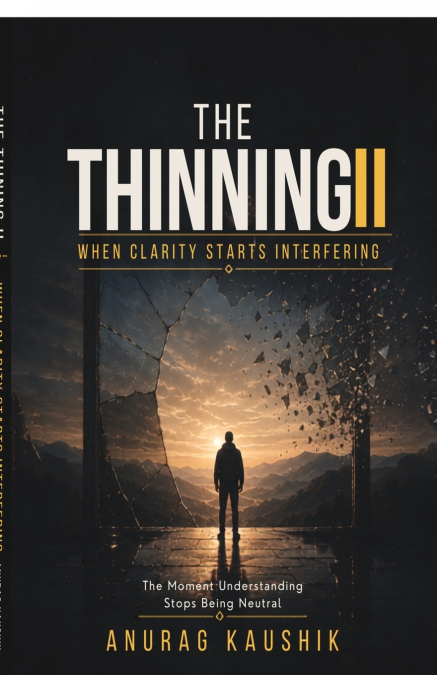
  • The Thinning II - When Clarity Starts Interfering
    Anurag Kaushik
    What if clarity does not simply reveal reality-but quietly begins to shape it?The Thinning II: When Clarity Starts Interfering enters the unsettling territory beyond awareness, where seeing everything clearly no longer feels entirely neutral.As thoughts, reactions, emotions, and silence become increasingly visible, something unexpected begins to happen: what is observed no long...
    Disponible

    17,92 €

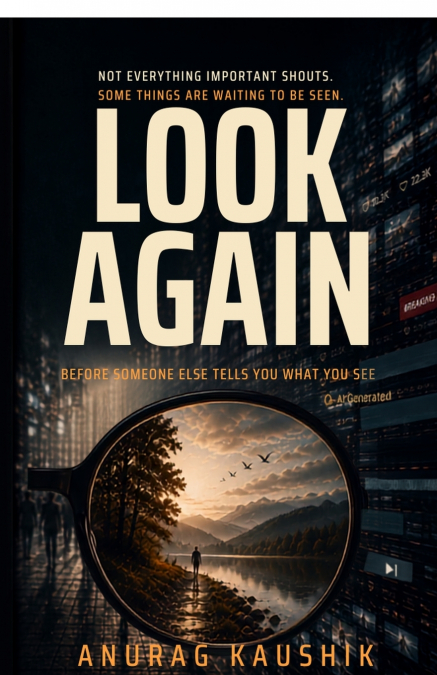
  • Look Again
    Anurag Kaushik
    We live in a world that increasingly observes us, predicts for us, recommends to us, and often provides an answer before we have fully formed the question. Information is everywhere. Attention is becoming rare.Look Again: Before Someone Else Tells You What You See explores what happens to human attention, perception, intuition, and choice in a world shaped by technology, algori...
    Disponible

    22,03 €