The Taxobook

The Taxobook

Marjorie Hlava

49,69 €
IVA incluido
Disponible
Editorial:
Springer Nature B.V.
Año de edición:
2014
Materia
Redes y comunicaciones informáticas
ISBN:
9783031034152
49,69 €
IVA incluido
Disponible

Selecciona una librería:

  • Librería Samer Atenea
  • Librería Aciertas (Toledo)
  • Kálamo Books
  • Librería Perelló (Valencia)
  • Librería Elías (Asturias)
  • Donde los libros
  • Librería Kolima (Madrid)
  • Librería Proteo (Málaga)

This is the first volume in a series about creating and maintaining taxonomies and their practical applications, especially in search functions. In Book 1 (The Taxobook: History, Theories, and Concepts of Knowledge Organization), the author introduces the very foundations of classification, starting with the ancient Greek philosophers Plato and Aristotle, as well as Theophrastus and the Roman Pliny the Elder. They were first in a line of distinguished thinkers and philosophers to ponder the organization of the world around them and attempt to apply a structure or framework to that world. The author continues by discussing the works and theories of several other philosophers from Medieval and Renaissance times, including Saints Aquinas and Augustine, William of Occam, Andrea Cesalpino, Carl Linnaeus, and René Descartes. In the 17th, 18th, and 19th centuries, John Locke, Immanuel Kant, James Frederick Ferrier, Charles Ammi Cutter, and Melvil Dewey contributed greatly to the theories of classification systems and knowledge organization. Cutter and Dewey, especially, created systems that are still in use today. Chapter 8 covers the contributions of Shiyali Ramamrita Ranganathan, who is considered by many to be the 'father of modern library science.' He created the concept of faceted vocabularies, which are widely used-even if they are not well understood-on many e-commerce websites. Following the discussions and historical review, the author has included a glossary that covers all three books of this series so that it can be referenced as you work your way through the second and third volumes. The author believes that it is important to understand the history of knowledge organization and the differing viewpoints of various philosophers-even if that understanding is only that the differing viewpoints simply exist. Knowing the differing viewpoints will help answer the fundamental questions: Why do we want to build taxonomies? How do we build them to serve multiple pointsof view? Table of Contents: List of Figures / Preface / Acknowledgments / Origins of Knowledge Organization Theory: Early Philosophy of Knowledge / Saints and Traits: Realism and Nominalism / Arranging the glowers... and the Birds, and the Insects, and Everything Else: Early Naturalists and Taxonomies / The Age of Enlightenment Impacts Knowledge Theory / 18th-Century Developments: Knowledge Theory Coming to the Foreground / High Resolution: Classification Sharpens in the 19th and 20th Centuries / Outlining the World and Its Parts / Facets: An Indian Mathematician and Children’s Toys at Selfridge’s / Points of Knowledge / Glossary / End Notes / Author Biography
Artículos relacionados

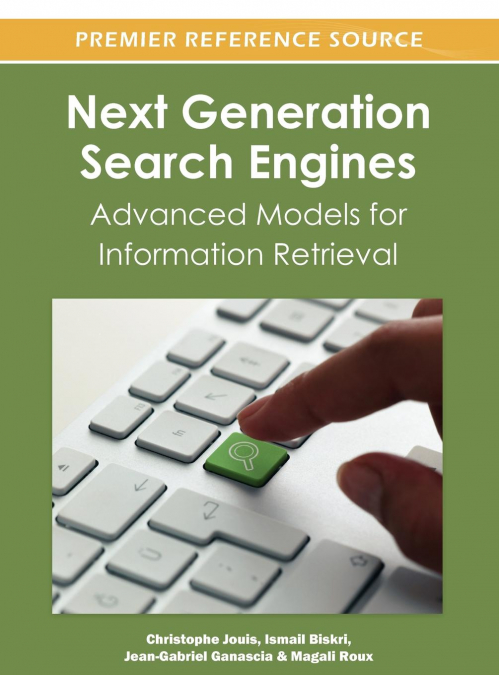
  • Next Generation Search Engines
    Recent technological progress in computer science, Web technologies, and the constantly evolving information available on the Internet has drastically changed the landscape of search and access to information. Current search engines employ advanced techniques involving machine learning, social networks, and semantic analysis. Next Generation Search Engines: Advanced Models for ...
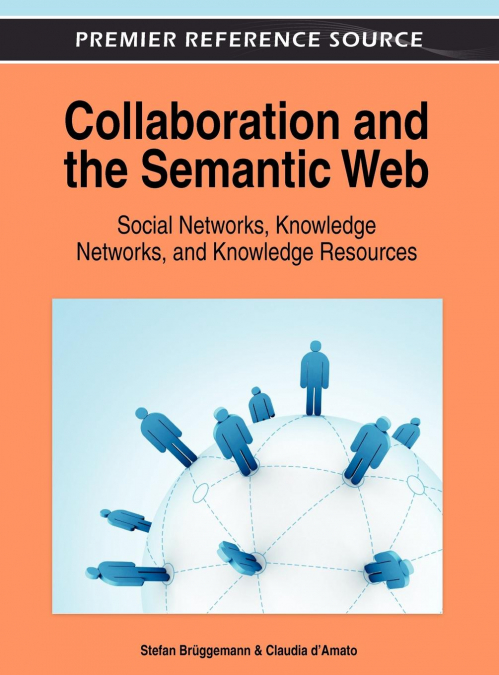
  • Collaboration and the Semantic Web
    Collaborative working has been increasingly viewed as a good practice for organizations to achieve efficiency. Organizations that work well in collaboration may have access to new sources of funding, deliver new, improved, and more integrated services, make savings on shared costs, and exchange knowledge, information and expertise. Collaboration and the Semantic Web: Social Net...
  • Resource Allocation in Next-Generation Broadband Wireless Access Networks
    With the growing popularity of wireless networks in recent years, the need to increase network capacity and efficiency has become more prominent in society. This has led to the development and implementation of heterogeneous networks. Resource Allocation in Next-Generation Broadband Wireless Access Networks is a comprehensive reference source for the latest scholarly research o...
  • Advanced Topics in Information Technology Standards and Standardization Research, Volume 1
    Kai Jakobs
    ...
  • Data Warehouses and OLAP
    ...
  • Selected Readings on Database Technologies and Applications
    Terry Halpin
    Education and research in the field of database technology can prove problematic without the proper resources and tools on the most relevant issues, trends, and advancements. Selected Readings on Database Technologies and Applications supplements course instruction and student research with quality chapters focused on key issues concerning the development, design, and analysis ...

Otros libros del autor

  • The Taxobook
    Marjorie Hlava
    This book outlines the basic principles of creation and maintenance of taxonomies and thesauri. It also provides step by step instructions for building a taxonomy or thesaurus and discusses the various ways to get started on a taxonomy construction project. Often, the first step is to get management and budgetary approval, so I start this book with a discussion of reasons to em...
    Disponible

    75,35 €

  • The Taxobook
    Marjorie Hlava
    This book outlines the basic principles of creation and maintenance of taxonomies and thesauri. It also provides step by step instructions for building a taxonomy or thesaurus and discusses the various ways to get started on a taxonomy construction project. Often, the first step is to get management and budgetary approval, so I start this book with a discussion of reasons to em...
    Disponible

    51,10 €

  • The Taxobook
    Marjorie Hlava
    This is the first volume in a series about creating and maintaining taxonomies and their practical applications, especially in search functions. In Book 1 (The Taxobook: History, Theories, and Concepts of Knowledge Organization), the author introduces the very foundations of classification, starting with the ancient Greek philosophers Plato and Aristotle, as well as Theophrastu...
    Disponible

    50,61 €