
The Takeover of Social Policy by Financialization

The Takeover of Social Policy by Financialization

Lena Lavinas

157,05 €
IVA incluido
Consulta disponibilidad
Editorial:
Springer Nature B.V.
Año de edición:
2017
Materia
Hacienda pública
ISBN:
9781137491060

Selecciona una librería:

  • Librería Samer Atenea
  • Librería Aciertas (Toledo)
  • Kálamo Books
  • Librería Perelló (Valencia)
  • Librería Elías (Asturias)
  • Donde los libros
  • Librería Kolima (Madrid)
  • Librería Proteo (Málaga)

This book critically addresses the model of social inclusion that prevailed in Brazil under the rule of the Workers Party from the early 2000s until 2015. It examines how the emergence of a mass consumer society proved insufficient, not only to overcome underdevelopment, but also to consolidate the comprehensive social protection system inherited from Brazil’s 1988 Constitution. By juxtaposing different theoretical frameworks, this book scrutinizes how the current finance-dominated capitalism has reshaped the role of social policy, away from rights-based decommodified benefits and towards further commodification. This constitutes the Brazilian paradox: how a center-left government has promoted and boosted financialization through a market incorporation strategy using credit as a lever for expanding financial inclusion. In so doing, it has pushed the subjection of social policy further into the logic of financial markets.


Artículos relacionados

  • The Federal Estate Tax
    David Joulfaian
    ...
    Disponible

    39,16 €

  • Teoría de la Administración Pública
    Jorge Mendoza Vester
    La mayoría de los textos de administración se inclinan hacia una orientación empresarial, centrados en el sector privado. Esta tendencia deja un hueco considerable en la educación de aquellos que aspiran a servir en el sector público. Mi objetivo con este manual es ofrecer una perspectiva que aborde de manera integral los desafíos y particularidades de la administración pública...
    Disponible

    30,71 €

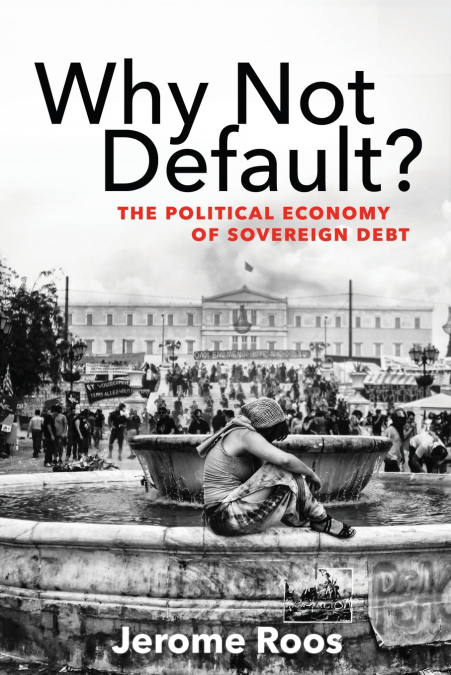
  • Why Not Default?
    Jerome E. Roos
    How creditors came to wield unprecedented power over heavily indebted countries-and the dangers this poses to democracyThe European debt crisis has rekindled long-standing debates about the power of finance and the fraught relationship between capitalism and democracy in a globalized world. Why Not Default? unravels a striking puzzle at the heart of these debates-why, despite f...
    Disponible

    39,81 €

  • Political Economy for Public Policy
    Ethan Bueno de Mesquita
    The ideal introductory textbook to the politics of the policymaking processThis textbook uses modern political economy to introduce students of political science, government, economics, and public policy to the politics of the policymaking process. The book’s distinct political economy approach has two virtues. By developing general principles for thinking about policymaking, i...
  • What Do We Know and What Should We Do About Tax Justice?
    Alex Cobham
    ...
  • Decoding Tomorrow’s Currency
    Randy Woodrum
    'Decoding Tomorrow’s Currency: An In-Depth Exploration of the Future of Cryptocurrency' is an illuminating journey into the multifaceted world of digital currencies and blockchain technologies. This comprehensive exploration examines the origins and evolution of cryptocurrency, unraveling its intricate technological underpinnings and tracing the emergence of groundbreaking conc...
    Disponible

    14,27 €