 Librería Samer Atenea
 Kálamo Books
 Librería Elías (Asturias)
 Librería Kolima (Madrid)
 Librería Proteo (Málaga)
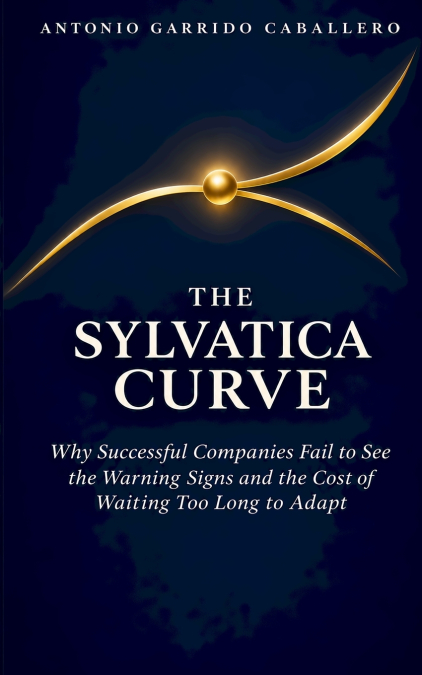
YOUR COMPANY IS SUCCESSFUL. BUT WHAT IS THAT SUCCESS COSTING YOU?Revenue is growing. Targets are being met. The board is satisfied. By every conventional measure, your organization is performing exceptionally well.So why is everything becoming harder?Decisions take longer. Internal friction increases. Management structures become more complicated. Leadership teams are stretched thinner. And the very systems responsible for yesterday’s success may be quietly undermining tomorrow’s performance.This is the Veil of Corporate Comfort: the false sense of security that strong results can create while organizational pressure accumulates beneath the surface.In The Sylvatica Curve: Why Successful Companies Fail to See the Warning Signs and the Cost of Waiting Too Long to Adapt, Antonio Garrido Caballero introduces an original framework for examining the hidden pressures that can develop inside successful organizations.Drawing on approximately four decades of organizational consulting experience, the author explores five critical indicators:Growth Momentum: Is the organization still growing, and at what cost?Operational Friction: Is getting things done becoming increasingly difficult?Structural Complexity: Has the organization become harder to coordinate and manage?Leadership Load: Are executives spending more energy maintaining the system than advancing it?Organizational Energy: Does the organization still possess the capacity to adapt?At the heart of the book is the fork, the moment when leaders must confront the possibility that continuing along the existing path may carry greater consequences than changing it.The Sylvatica Framework examines three possible trajectories: Renewal, Continuity, and Break. It also introduces the Crisis Tax, the additional cost in time, revenue, people, and strategic options that may arise when necessary adaptation is delayed.Through organizational cases, structured analysis, and an examination of preliminary empirical research, the book distinguishes what the framework proposes from what the available evidence has established.This is not another management book about surviving a crisis after it arrives.It is an invitation to recognize the organizational pressures that may be developing while business is still good.For CEOs, board directors, senior executives, management consultants, and researchers, The Sylvatica Curve offers a different way to examine organizational success, resilience, and the timing of strategic change.The question is not simply whether your company is successful today. It is whether the organization producing that success is still capable of creating tomorrow’s.