Inicio > Humanidades > Historia > Historia regional y nacional > Historia de África > The Story of the Origins of the Bura/Pabir People of Northeast Nigeria
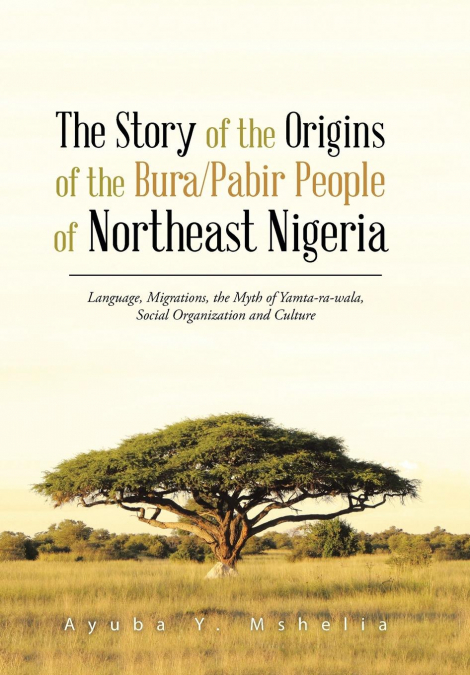
The Story of the Origins of the Bura/Pabir People of Northeast Nigeria

The Story of the Origins of the Bura/Pabir People of Northeast Nigeria

The Story of the Origins of the Bura/Pabir People of Northeast Nigeria

Ayuba y. Mshelia / Ayuba yMshelia

33,31 €
IVA incluido
Consulta disponibilidad
Editorial:
AuthorHouse
Año de edición:
2014
Materia
Historia de África
ISBN:
9781496904317

Selecciona una librería:

  • Librería Samer Atenea
  • Librería Aciertas (Toledo)
  • Kálamo Books
  • Librería Perelló (Valencia)
  • Librería Elías (Asturias)
  • Donde los libros
  • Librería Kolima (Madrid)
  • Librería Proteo (Málaga)

A Synopsis of the Bura Project The three major rationale for writing this book are primarily to: through the study of African language family groups trace the origin of the tribe to a more specific location rather than the diffused response of ?from the East?; secondly to investigate why and how the word ?Pabir/Babur? came on the scene referring to a separate ethnic group different or the same as the Bura and thirdly to document some of the vanishing Bura cultural practices and deeds. For example what their beliefs are, their marriage practices, local industries and what they do to pass time. It is my strong belief that the first objective is accomplished through our analysis and presentation of the Proto-Afro-asiatic linguistic family classification group and its subgroup the Proto-Chadic of which the Biu-Mandara forms a sub-branch. Through a systemic and vigorous study of the classification of the different languages comprising this Proto Family of languages and its sub-branches we are able to assert that the Bura people were among many other ethnic groups part of a group whose origin can be traced to the Levant region of south west Asia and the Middle-East. They belong to the group that forms ?back to Africa migration?. This is because modern genetic studies of languages indicate that they?re the only group that have traces of Y chromosome belonging to haplogroup R1b R-V88 in Africa but found mainly in Asia and Europe. After tracing the influences of the powerful Kanem (ca. 700-1376) and later Bornu-Kanem (1380-1893) empires around the Lake Chad region as well as the kingdom of Mandara (founded in about 1459, i.e. end of the 15th century), in what is today modern Cameroon on the inhabitants of the region, we conclude a chaotic period of migrations and wars, including trade in slaves. It is through this prism that we notice the emergence of the founder of the Woviri dynasty of Biu. Through his failure to win the Maiship of Bornu, he moved to Mandara and then the Plateau of Biu with some of his followers or relatives. Being a student of History Abdulahi or who later became Yamta-ra-wala attempted to replicate what the Kanembu were able to do among the local people they conquered some centuries earlier; they created an ethnicity and language called Kanuri. Yamta-ra-wala succeeded somewhat, but wasn?t able to completely conquer the Bura people and turn them in his new ethnic vision. Instead the Buras went to the hills to fight him the next day. The new breed he created he called ?Pabir? or Babur as the Hausa would call them. The myth of who Yamta-ra-wala is has for the present eclipsed historians and would probably continue for some time to come. As for the Bura (Most have down the hill-tops and mountains!) and the Pabir they have never been closer than today. Today for all practical purposes they are one and the same ethnic group, they?ve intermingled more than any two previously separated groups. Their vocabulary, phonology and cultural practices have fused into one in most instances.
Artículos relacionados

  • Kulubnarti I
    William Y. Adams / William YAdams
    Sudan Archaeological Research Society. Publication Number 18In 1998 and 1999 volumes II and III of the reports on the University of Kentucky excavations at Kulubnarti were published by the Sudan Archaeological Research Society as numbers 2 and 4 in its monograph series. Kulubnarti III was also available through British Archaeological Reports in its International Series no. 814....
    Disponible

    104,23 €

  • The Creole Elite and the Rise of Angolan Protonationalism
    Jacopo Corrado
    This book is about Angolan literature and culture. It investigates a segment of Angolan history and literature, with which even Portuguese-speaking readers are generally not familiar. Its main purpose is to define the features and the literary production of the so-called ’creole elite’, as well as its contribution to the early manifestations of dissatisfaction towards colonial ...
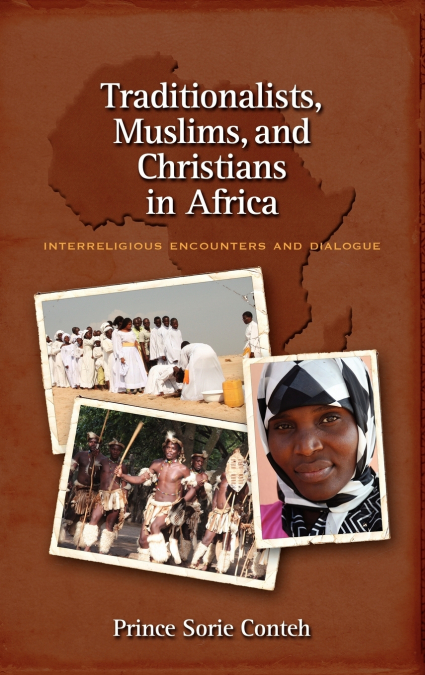
  • Traditionalists, Muslims, and Christians in Africa
    Prince Sorie Conteh
    As is the case for most of sub-Saharan Africa, African Traditional Religion (ATR) is the indigenous religion of Sierra Leone. When the early forebears and later progenitors of Islam and Christianity arrived, they met Sierra Leone indigenes with a remarkable knowledge of God and a structured religious system. Successive Muslim clerics, traders, and missionaries were respectful o...
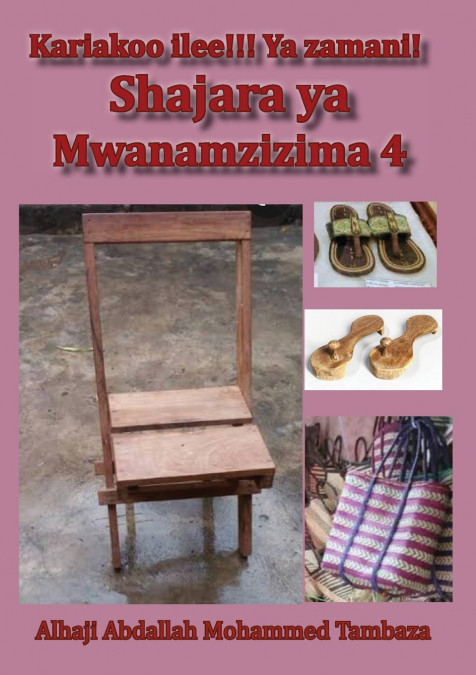
  • Shajara ya Mwana Mzizima 4
    Alhaji Abdallah Mohammed Tambaza
    This is the fourth part in the series of the history of Dar es salaam. This book is about Kariakoo, the first area where Africans were allowed to live and stay. It traces the history of the area before independence and up till the 1970’s.Kitabu hiki ni mfululizo wa vitabu vya kumbukumbu ya sehemu na watu mashuhuri katika jiji la Dar es Salaam. Kitabu hiki ni cha tatu ambacho ki...
    Disponible

    41,51 €

  • Britain, the Royal Air Force and relief flights to Biafra, 1968-1969
    Onianwa Oluchukwu Ignatus
    In this intriguing new book, Onianwa Oluchukwu Ignatus investigates Britain’s decision to engage the Royal Air Force (RAF) in the relief operations during the Nigerian Civil War. The main area badly ravaged by the conflict being the Republic of Biafra was declared 'a frontier of need.' Humanitarian concerns and mounting public pressures, both in Britain and other Western countr...
  • We Rest Here Content
    Robin Smith
    We Rest Here Content is not the history of the Imperial Light Horse Regiment - that was written by the regiment’s Intelligence Officer, Lieutenant George Fleming Gibson and published in 1937 as The Story of the Imperial Light Horse in the South African War 1899-1902. We Rest Here Content approaches the subject of the I.L.H. from a different viewpoint. It looks at all the known ...
    Disponible

    75,50 €

Otros libros del autor