John Franklin 1867- [from old cat Bair
 Librería Samer Atenea
 Kálamo Books
 Librería Elías (Asturias)
 Librería Kolima (Madrid)
 Librería Proteo (Málaga)
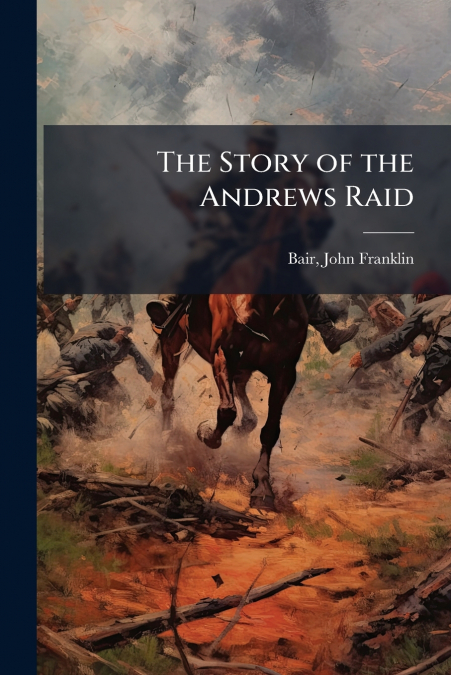
'The Story of the Andrews Raid' recounts one of the most daring and audacious episodes of the American Civil War. In April 1862, James J. Andrews, a civilian scout, led a band of Union soldiers deep into Confederate territory to seize a train and disrupt vital supply lines. Their mission, known as Andrews’ Raid or the Great Locomotive Chase, aimed to cripple the Confederate war effort by destroying bridges and tracks along the Western and Atlantic Railroad. This historical narrative, originally published in 1898, provides a detailed account of the raid, the pursuit by Confederate forces, and the ultimate capture of Andrews and his men. The story highlights the bravery and resourcefulness of the participants, as well as the strategic importance of railroads during the Civil War. A thrilling tale of adventure, espionage, and military strategy, 'The Story of the Andrews Raid' remains a captivating read for Civil War enthusiasts and anyone interested in remarkable feats of courage behind enemy lines.This work has been selected by scholars as being culturally important, and is part of the knowledge base of civilization as we know it. This work was reproduced from the original artifact, and remains as true to the original work as possible. Therefore, you will see the original copyright references, library stamps (as most of these works have been housed in our most important libraries around the world), and other notations in the work.This work is in the public domain in the United States of America, and possibly other nations. Within the United States, you may freely copy and distribute this work, as no entity (individual or corporate) has a copyright on the body of the work.As a reproduction of a historical artifact, this work may contain missing or blurred pages, poor pictures, errant marks, etc. Scholars believe, and we concur, that this work is important enough to be preserved, reproduced, and made generally available to the public. We appreciate your support of the preservation process, and thank you for being an important part of keeping this knowledge alive and relevant.