 Librería Samer Atenea
 Kálamo Books
 Librería Elías (Asturias)
 Librería Kolima (Madrid)
 Librería Proteo (Málaga)
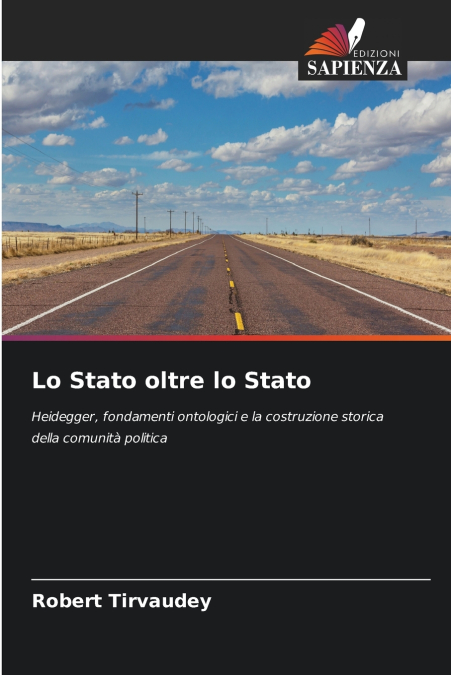
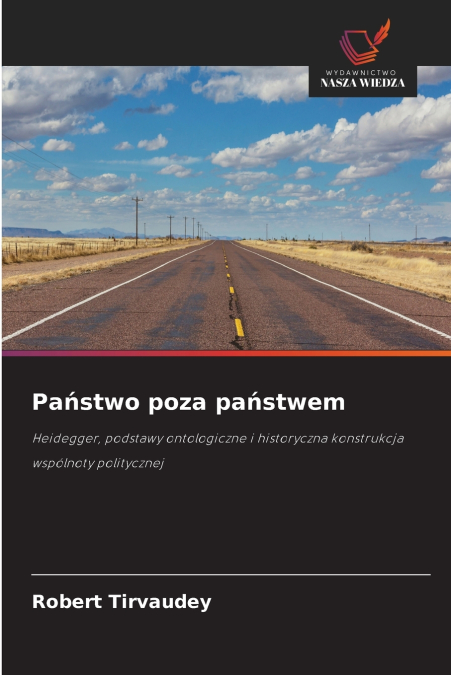
This essay examines the State through a philosophical dialogue with Martin Heidegger, asking whether political authority can legitimately be understood as the foundation of the human world. It argues that the State is neither an absolute reality nor the origin of human coexistence, but a historical institution situated within a world that precedes and exceeds it. Drawing on Heidegger’s analyses of being-in-the-world, being-with, historicity, technology, and finitude, the essay examines the State as an ontological, historical, and political problem. It places Heidegger in dialogue with Hegel, Nietzsche, Arendt, Levinas, Ricœur, and Habermas, while critically confronting Heidegger’s political engagement in 1933. The essay develops a politics of finitude grounded in plurality, institutional responsibility, limits to political knowledge, and the preservation of a common world. Its central thesis is that the State should possess sufficient authority to sustain common life, while remaining limited by the plurality, historicity, and irreducibility of human existence.