 Librería Samer Atenea
 Kálamo Books
 Librería Elías (Asturias)
 Librería Kolima (Madrid)
 Librería Proteo (Málaga)
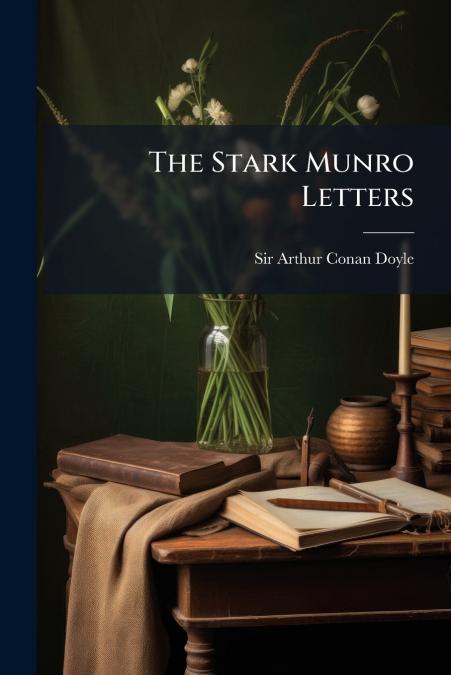
Journey back to the late 19th century with Sir Arthur Conan Doyle’s 'The Stark Munro Letters.' This epistolary novel unfolds through a series of sixteen letters penned by J. Stark Munro, a newly qualified doctor, to his friend Herbert Swanborough in Lowell, Massachusetts, between 1881 and 1884. Follow Stark Munro’s trials and tribulations as he navigates the challenges of establishing his medical practice, forms an unlikely partnership with the eccentric and unconventional Dr. James Cullingworth, and grapples with questions of faith, science, and the human condition. Written with Doyle’s characteristic wit and engaging style, 'The Stark Munro Letters' offers a fascinating glimpse into the world of Victorian medicine and a timeless exploration of friendship and self-discovery. Discover a lesser-known work by the creator of Sherlock Holmes, filled with memorable characters and thought-provoking insights.This work has been selected by scholars as being culturally important, and is part of the knowledge base of civilization as we know it. This work was reproduced from the original artifact, and remains as true to the original work as possible. Therefore, you will see the original copyright references, library stamps (as most of these works have been housed in our most important libraries around the world), and other notations in the work.This work is in the public domain in the United States of America, and possibly other nations. Within the United States, you may freely copy and distribute this work, as no entity (individual or corporate) has a copyright on the body of the work.As a reproduction of a historical artifact, this work may contain missing or blurred pages, poor pictures, errant marks, etc. Scholars believe, and we concur, that this work is important enough to be preserved, reproduced, and made generally available to the public. We appreciate your support of the preservation process, and thank you for being an important part of keeping this knowledge alive and relevant.