
Inicio > Humanidades > Filosofía > The Space Between Things
The Space Between Things

The Space Between Things

Mario Schipflinger

22,93 €
IVA incluido
Disponible
Editorial:
Published by Apollo (Mario Schipflinger)
Año de edición:
2026
Materia
Filosofía
ISBN:
9783903679146
22,93 €
IVA incluido
Disponible

Selecciona una librería:

  • Librería Samer Atenea

  • Kálamo Books
  • Librería Elías (Asturias)
  • Librería Kolima (Madrid)
  • Librería Proteo (Málaga)

RTFM · Volume 3 · Book 3.3 - The Space Between ThingsBook 3.3 shifts attention away from individual systems and toward the spaces between them. Instead of focusing on parts, identities, or experiences, this volume examines how influence, coherence, and instability spread across shared fields without direction, control, or intention.This book introduces field awareness as a readable layer of the Human Operating System. Fields are not metaphors, social constructs, or abstract theories. They are directly observable patterns that emerge when multiple systems interact without narrative coordination. Nothing here requires belief, interpretation, or symbolic decoding.Book 3.3 explores how behavior organizes at scale, how coherence appears across distance, how instability propagates through shared space, and how local changes alter wider patterns. Influence is shown to arise structurally, not through agency or communication. Control is replaced by recognition.A central focus of the book is altered states as field-transparent conditions. Dreams, lucid dreaming, sleep paralysis, psychedelic states, and vision phenomena are treated as diagnostic windows where field dynamics become visible. These states do not reveal external realities or hidden dimensions. They expose how symbolic cognition, emotional memory, and identity architecture generate shared experiential space.Dreams are described as the symbolic operating mode of the system, running without narrative supervision. Lucid dreaming is reframed as observer awareness inside an autonomous symbolic field. Sleep paralysis reveals boundary-layer mismatches between perception and symbolic cognition. Psychedelic states show how identity rigidity suppresses field perception during waking life. Visions are explained as symbolic projection interpreted as external reality.Throughout the book, altered states are stripped of mysticism and reframed as structural phenomena. Symbols are not messages. Experiences are not transmissions. Meaning is not imported from outside. What appears is always generated by internal architecture interacting with field conditions.The final sections address integration and limits. Altered states reveal architecture but do not reorganize it. Insight does not equal transformation. Coherence returns when identity stabilizes, emotional residue resolves, and narrative distortion drops. Fields become readable when attention widens instead of narrowing.Extensive appendices provide reference maps for dream nodes, paralysis-lucidity transitions, psychedelic versus dream mechanisms, and vision classification. These are not practices or techniques. They are orientation aids designed to prevent misinterpretation and escalation.RTFM · Volume 3 · Book 3.3 is not a guide to altered states. It is a structural manual for recognizing how influence spreads without control, how coherence emerges without direction, and how the space between things becomes visible once interpretation relaxes.
Artículos relacionados

  • Introduction to a Future Way of Thought
    Kostas Axelos / Kenneth Mills
    'Technologists only change the world in various ways in generalized indifference; the point is to think the world and interpret the changes in its unfathomability, to perceive and experience the difference binding being to the nothing.'Anticipating the age of planetary technology Kostas Axelos, a Greek-French philosopher, approaches the technological question in this book, firs...
    Disponible

    18,58 €

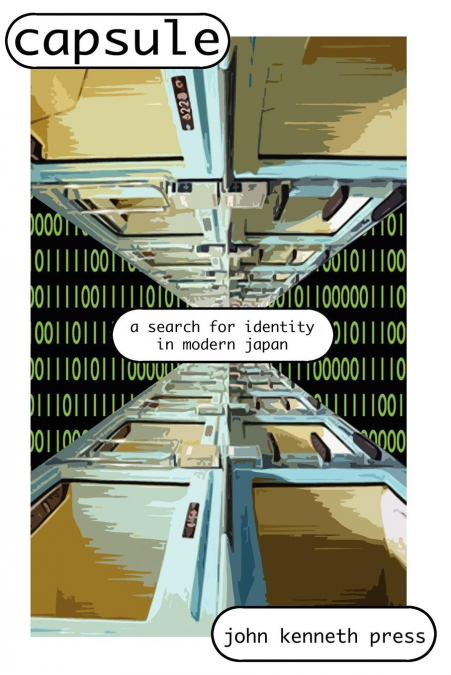
  • Capsule
    John Kenneth Press
    Join John and Adam as they wander the mean streets of Japan on a psychedelic fueled search for identity. While fun for the average reader, this book could also serve as a philosphy textbook because of its ordered exploration of sources of identity. Ultimately this trip through nationalist attacks, sex, and drugs, will take you to a better understanding of yourself and your pl...
    Disponible

    11,51 €

  • If you look at it long enough...
    Paul Hallam
    Originally written for an academic journal, If you look at it long enough... is primarily a personal account of Paul Hallam’s recollections of “self-abuse” through the consumption of porn over several decades. Challenging the familiar form of an “academic essay,” this autobiographical narrative raises several questions in relation to our contemporary morals related to sex in ge...
    Disponible

    11,30 €

  • The Teachers of Gurdjieff
    Rafael Lafort / Rafael Lefort
    When The Teachers of Gurdjieff was first published more than 50 years ago, it made a considerable stir. George Ivanovich Gurdjieff had been one of the most famous mystics in the West in the first half of the 20th century - a teaching master who had many fashionable and influential pupils. He had a striking appearance and manner of teaching, and his teaching proved to be very in...
    Disponible

    20,45 €

  • Manifesto of the Communist Party
    Karl Marx
    The Communist Manifesto was first published on February 21, and it is one of the world’s most influential political tracts. Commissioned by the Communist League and written by communist theorists Karl Marx and Friedrich Engels, it laid out the League’s purposes and program. The Manifesto suggested a course of action for a proletarian (working class) revolution to overthrow the ...
  • The Art of Literature
    Arthur Schopenhauer
    Collected here are eight short essays, On Authorship, On Style, On the Study of Latin, On Men of Learning, On Thinking for Ones Self, On Criticism, On Reputation, On Genius, by the world renowned philosopher Arthur Achopenhauer. ...

Otros libros del autor

  • Do You Want to Update?
    Mario Schipflinger
    RTFM - Book 1 introduces a way of observing cognition without relying on narrative, interpretation, or personal belief.Rather than presenting arguments or explanations, the book functions as a field manual. It invites the reader to notice how meaning, identity, and internal storytelling arise, and how they shape perception before they are recognized as mechanisms. The focus is ...
    Disponible

    23,72 €

  • Applied Non-Narrative Cognition
    Mario Schipflinger
    RTFM - Book 5: Applied Non-Narrative Cognition moves from description to application, without introducing instruction, technique, or self-improvement framing.This volume examines how non-narrative cognition functions in practical contexts once structural clarity is stable. Rather than teaching methods, the book documents how cognition behaves when narrative, emotional signaling...
    Disponible

    23,46 €

  • Trans-Architectural Domain
    Mario Schipflinger
    RTFM · Volume 2 · Book 2.6 - Trans-Architectural Domain examines the threshold where architecture becomes capable of operating on itself.After dismantling narrative cognition and establishing structural perception, internal architecture, external architecture, integration, and origin-conditions (Books 2.1-2.5), this volume enters the Trans-Architectural Domain. Here, architectu...
    Disponible

    23,65 €

  • Meta-Architecture
    Mario Schipflinger
    RTFM · Volume 2 · Book 2.7 - Meta-Architecture: Architecture Operating Across Architectures completes the architectural domain by making architecture itself the object of observation.This volume does not extend architecture further. It establishes the conditions under which extension must stop.After dismantling narrative cognition (Volume 1) and establishing perception, interna...
    Disponible

    23,66 €

  • Internal Structural Formation
    Mario Schipflinger
    RTFM - Volume 2, Book 2.2: Internal Structural Formation introduces the internal operating system that becomes visible once narrative cognition has fallen silent.This book marks the first transition from perception to internal structure. Where Book 2.1 established non-narrative perception, Book 2.2 reveals the human operating system as an architectural system composed of module...
    Disponible

    23,21 €

  • External Structural Formation
    Mario Schipflinger
    RTFM - Volume 2, Book 2.3: External Structural Formation marks the transition from internal system visibility to the direct observation of external architecture.Where Book 2.1 recalibrated perception and Book 2.2 revealed the internal operating system, Book 2.3 extends structural readability beyond the individual. External behavior, interaction, and environments are no longer i...
    Disponible

    23,15 €