 Librería Samer Atenea
 Kálamo Books
 Librería Elías (Asturias)
 Librería Kolima (Madrid)
 Librería Proteo (Málaga)
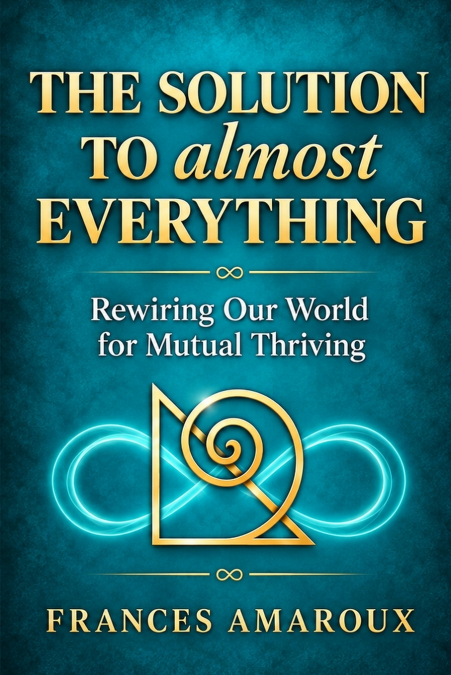
Why do so many human systems produce outcomes that almost nobody consciously wants? Governments become remote from the people they serve. Medicine can lose sight of health. Education rewards compliance more readily than curiosity. Money concentrates, information fragments, technology accelerates-and ordinary people are left trying to become better versions of themselves inside structures that continually pull them in the opposite direction.The Solution to Almost Everything begins with a deceptively simple proposition: many of the crises we treat as separate problems are expressions of the same underlying pattern. We have designed too much of human civilisation around win-lose relationships-competition without sufficient cooperation, power without adequate feedback, extraction without regeneration and short-term gain without responsibility for what comes next. The problem is not merely that some people behave badly. It is that systems shape behaviour, reward certain choices and quietly make other choices difficult.Drawing on systems thinking, lived experience, relationship work and a lifetime of noticing what happens when people do not fit neatly inside established structures, Frances Amaroux asks the reader to look beneath events to their architecture. Nature offers the central clue. Living systems compete locally, but endure through relationship, reciprocity, feedback and cooperation. Human beings did not invent interdependence; we arrived inside it. The question is whether the systems we created can be redesigned to reflect it.The book develops the distinction between win-win as a pleasant intention and win-win as a design discipline. It explores the movement from domination towards partnership; the developmental insights of Spiral Dynamics; dependence, independence and interdependence; the limits of self-help; the role of feedback, friction, force and discernment; and the reasons healthy systems decay. It does not pretend that conflict, malice or incompatible needs can be wished away. Instead, it asks what structures help imperfect human beings create better outcomes without requiring everyone to become enlightened first.The final section turns from diagnosis to possibility. It explores why new civilisations often begin at the edges, what a win-win human looks like inside an imperfect world, and how post-scarcity technologies might liberate humanity-or deepen control-depending on the systems into which they are placed. Rather than presenting a utopian blueprint, the book offers principles for building institutions that can learn, correct themselves and remain in relationship with the life they affect. Accessible, candid and occasionally irreverent, its central invitation is to stop asking only how to fix each failing part-and begin asking what kind of relationships our systems are designed to produce.