

 Librería Samer Atenea
 Kálamo Books
 Librería Elías (Asturias)
 Librería Kolima (Madrid)
 Librería Proteo (Málaga)
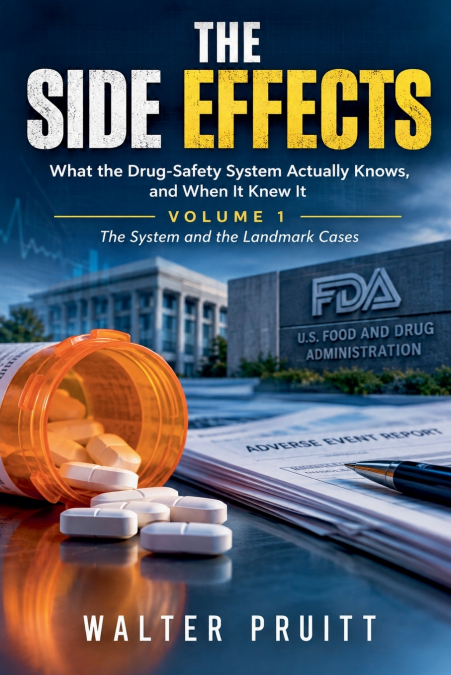
When a drug is linked to a serious side effect, the public wants answers. Was the danger known? Who recognized it? Why did action take so long? And how can we tell the difference between a genuine warning and a misleading signal?The answers are rarely as simple as a headline suggests.Every year, reports of suspected drug-related injuries, illnesses, and deaths flow into the U.S. drug-safety monitoring system. Analysts search those reports for patterns that might reveal emerging risks. Regulators weigh evidence, companies respond, restrictions may follow, and sometimes decisions are reversed.But a report is not proof. A pattern is not a verdict. And the absence of a clear warning does not necessarily mean the absence of danger.Using the image of a smoke detector, Pruitt explains why a safety signal deserves attention without automatically establishing that a medicine caused harm. The system can alert investigators to something worth examining, but it cannot independently determine what happened, why it happened, or who is responsible.Nine landmark cases. One system under scrutiny.Through nine landmark cases, this first volume explores the mechanisms of detection, delay, regulatory action, and reversal. The cases reveal different ways the safety process can succeed, struggle, or change course-and why understanding the timeline matters as much as understanding the outcome.Rather than relying on dramatic claims or treating every disputed number as settled fact, Pruitt distinguishes documented events from estimates, contested interpretations, and uncertain conclusions. The result is a closer look at how drug-safety history is reconstructed, and why the details matter.Along the way, readers will discover:How drug-safety surveillance works: What happens when a suspected adverse event is reported, and how individual reports can contribute to a broader signal.Why the data can mislead: Underreporting, duplicate reports, publicity-driven spikes, and other limitations can distort the picture.Why a signal is not proof: An association that deserves investigation is not the same as a demonstrated cause.How regulators make difficult decisions: Why evidence can prompt a warning, a restriction, a withdrawal, or-when the evidence changes-a reversal.What historical cases can teach us: How to examine the gap between the first warning sign, the available evidence, and the eventual response.How to read drug-safety headlines more critically: What questions to ask about the data, the timeline, the strength of the evidence, and the action taken.A clearer way to understand drug-safety controversiesDrug safety is often discussed in absolutes: a medicine is safe or dangerous; regulators acted or failed; a warning was justified or mistaken. Real-world surveillance is more complicated. Evidence accumulates unevenly, reporting systems have blind spots, and decisions must sometimes be made before every uncertainty can be resolved.Pruitt takes that complexity seriously. He does not ask readers to accept every safety alarm as proof of wrongdoing, nor does he ask them to dismiss a warning because the evidence is incomplete. Instead, he offers a framework for examining what was reported, what could be inferred, what remained uncertain, and what happened next.The Side Effects is for readers who want more than a sensational account of a drug controversy. It is for those who want to understand the system behind the headlines-and to learn how to judge its evidence with greater care.





