The Shortest Explanation Wins

The Shortest Explanation Wins

NBM House

14,37 €
IVA incluido
Disponible
Editorial:
NBM House
Año de edición:
2026
Materia
Filosofía: epistemología y teoría del conocimiento
ISBN:
9798233272066
14,37 €
IVA incluido
Disponible

Selecciona una librería:

  • Librería Samer Atenea

  • Kálamo Books
  • Librería Elías (Asturias)
  • Librería Kolima (Madrid)
  • Librería Proteo (Málaga)

For more than two thousand years, philosophers have wrestled with the problem of induction: we cannot logically prove that the future will resemble the past, yet every prediction we make - from sunrise tomorrow to the next bridge holding our weight - depends on exactly that assumption. Hume showed the justification is circular. Popper, pragmatists, and statisticians offered patches. None sealed the leak.Then, in the 1960s, Ray Solomonoff discovered something astonishing: there is a mathematically optimal way to generalize from evidence, one that no other method can systematically beat across all computable worlds. It requires no special assumptions about nature, only that the processes generating our observations are computable (as far as physics has ever shown). The trick? Treat every possible explanation as a computer program, and weight them by how short they are. Shorter programs - simpler explanations - receive exponentially higher prior probability. Prediction becomes Bayesian updating over this universal prior. The result is Solomonoff induction: the formal vindication of Occam’s Razor as a theorem, not a heuristic.This is not just abstract philosophy. It collapses prediction, compression, and understanding into one operation. Intelligence - whether in a bacterium, a child, a scientist, or a large language model - turns out to be the search for short descriptions of complex phenomena. The shortest explanation really does win, and the mathematics tells us exactly why.Written with clarity and intellectual drama, The Shortest Explanation Wins traces the history of the induction problem from Hume and Goodman through information theory and computation to Solomonoff’s quiet revolution. It explains - without equations - why statistics isn’t enough, why priors cannot be arbitrary, why deep learning works when it does, and what the uncomputable ideal reveals about the limits of knowledge itself.If you have ever wondered why simplicity predicts better than complexity, why science converges, or what intelligence fundamentally is, this book offers the deepest, most principled answer yet discovered.For readers of Hume, Jaynes, Hofstadter, Wolfram, Tegmark, and anyone who wants to understand the logic beneath rational thought - and beneath intelligence itself.

Artículos relacionados

  • Vier Quellen Der Erkenntnis
    Ellis Potter
    Woher wissen wir etwas? Weil es ‚wissenschaftlich bewiesen‘ ist oder ‚in der Bibel steht‘ oder es ‚sich in mir einfach richtig und wahr anfühlt ‘? Wissen wir alles auf gleiche Weise? Passen unterschiedliche Wege der Erkenntnis zusammen in ein Leben und eine Wirklichkeit?In dieser kompakten Ausgabe, dem zweiten Teil einer Trilogie, zeigt der internationale Referent Ellis Potter ...
    Disponible

    12,44 €

  • Fichte’s 1804 Wissenschaftslehre
    Illuminating new essays on Fichte’s 1804 Wissenschaftslehre, or The Science of Knowing.Fichte’s 1804 Wissenschaftslehre, or The Science of Knowing, consists of a series of lectures he delivered in his Berlin home to members of the city’s political and cultural elite in 1804. The lectures mark a dramatic shift in the terminology and methodology he uses to explore the nature of k...
  • Cybernetics for the 21st Century Vol. 1
    Andrew Pickering / Katherine Hayles
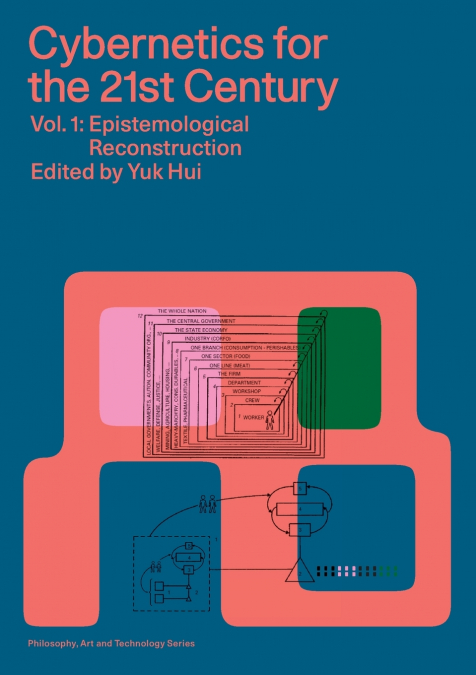
    Cybernetics for the 21st Century Vol.1 is dedicated to the epistemological reconstruction of cybernetics, consisting of a series of historical and critical reflections on the subject - which according to Martin Heidegger marked the completion of Western metaphysics. In this anthology, historians, philosophers, sociologists and media studies scholars explore the history of cyber...
    Disponible

    20,84 €

  • Huellas de San Agustín en Kant
    Javier Narváez Arango
    El libro se desarrolla en tres partes. En la primera encontramos el tiempo, el espacio, el fenómeno, el númeno, las categorías, los juicios sintéticos a priori, el mundo, el alma y Dios, expuestos por Kant en la Crítica de la razón pura. En la segunda parte encontramos los mismos temas desde san Agustín, haciendo un paralelo, para mostrar las semejanzas entre estos autores, enc...
  • Materialist Phenomenology
    Manuel DeLanda
    Bringing together phenomenology and materialism, two perspectives seemingly at odds with each other, leading international theorist, Manuel DeLanda, has created an entirely new theory of visual perception. Engaging the scientific (biology, ecological psychology, neuroscience and robotics), the philosophical (idea of ’the embodied mind’) and the mathematical (dynamic systems the...
  • A Certain Ambiguity
    Gaurav Suri / Hartosh Singh Bal
    While taking a class on infinity at Stanford in the late 1980s, Ravi Kapoor discovers that he is confronting the same mathematical and philosophical dilemmas that his mathematician grandfather had faced many decades earlier--and that had landed him in jail. Charged under an obscure blasphemy law in a small New Jersey town in 1919, Vijay Sahni is challenged by a skeptical judge ...
    Disponible

    23,19 €

Otros libros del autor

  • Jungian Psychology
    NBM House
    Carl Jung argued that the mind is larger than consciousness. Beneath the ego we present to the world sit complexes we do not choose, patterns we inherit, and a collective layer of images that show up, uninvited, in dreams, myths, and religions across cultures that never met.Jungian Psychology follows that argument from its origins to its present state. It starts with Jung himse...
    Disponible

    39,02 €

  • Psychology
    NBM House
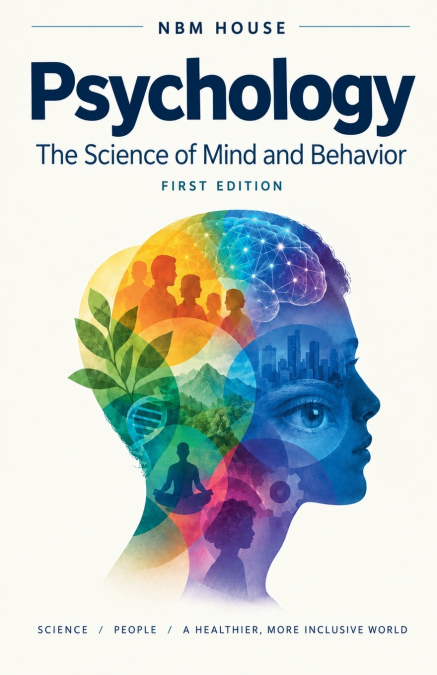
    Psychology works best when it examines behavior across multiple levels of explanation at the same time. A behavior can have a neural mechanism, a learning history, a developmental origin, a social context, and a subjective meaning. This book trains readers to hold those explanations together and to ask which one the evidence actually supports.Organized around five recurring que...
    Disponible

    36,98 €

  • Life Without a Manager
    NBM House
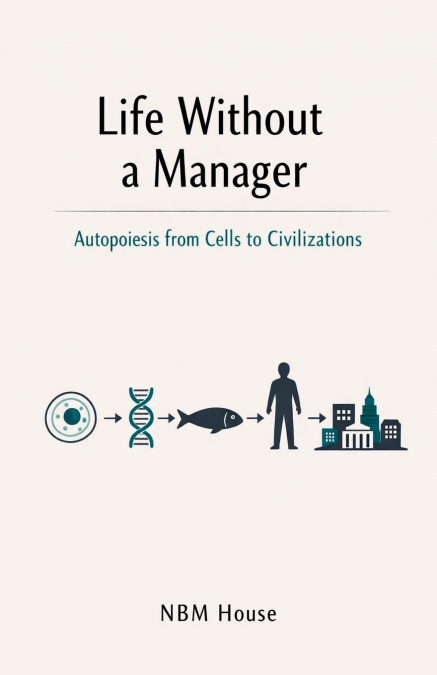
    What if life isn’t a special substance, a program, or a machine with a designer-but a self-sustaining loop that runs without anyone in charge?In Life Without a Manager, readers are taken on a radical yet lucid journey from the chemistry of a single bacterium to the stubborn inertia of bureaucracies, from bacterial chemotaxis to human consciousness, and from ancient Buddhist ins...
    Disponible

    13,31 €

  • The Taxonomy of Dust
    NBM House
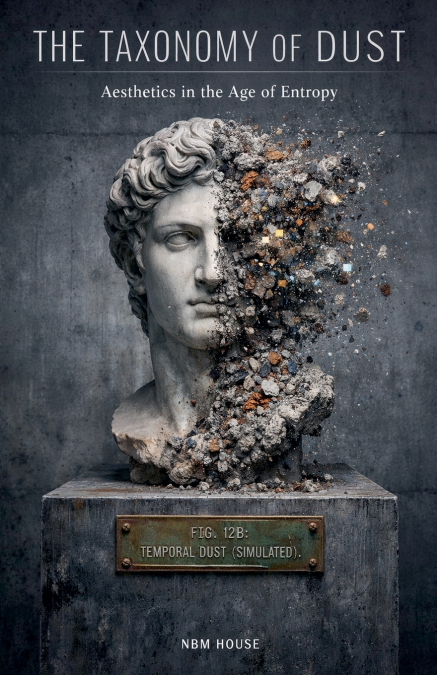
    In The Taxonomy of Dust: Aesthetics in the Age of Entropy, [author name or 'a sharp cultural critic' if unknown] delivers a razor-sharp, unflinching examination of how late-stage civilization has turned decay into its most seductive art form.As systems accelerate beyond human control and agency fades, beauty no longer celebrates life or transcendence-it eroticizes disappearance...
    Disponible

    12,00 €