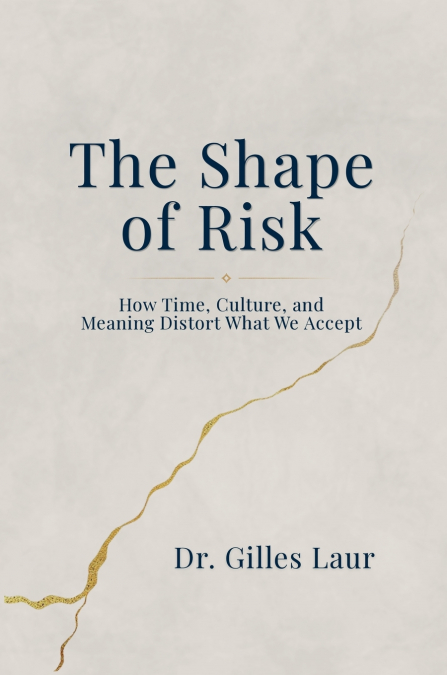

The Shape of Risk

The Shape of Risk

laur

82,80 €
IVA incluido
Disponible
Editorial:
Dr Gilles Laur
Año de edición:
2026
Materia
Ética y filosofía moral
ISBN:
9781764681223
82,80 €
IVA incluido
Disponible

Selecciona una librería:

  • Librería Samer Atenea

  • Kálamo Books
  • Librería Elías (Asturias)
  • Librería Kolima (Madrid)
  • Librería Proteo (Málaga)

This book examines a defining paradox of modern life: despite unprecedented gains in safety, longevity, and technological control over uncertainty, contemporary societies have becomeless tolerant of risk and more anxious about its residual presence. It argues that risk has not disappeared but transformed-from an accepted condition of survival in earlier eras into amoralised and politicised phenomenon shaped by expectations of preventability, institutional responsibility, and technological promise.Rather than treating risk as a purely statistical problem, the book reframes it as a cultural, ethical, and psychological construct embedded in relationships between individuals,institutions, and generations. It explores how social media amplifies rare harms, how modern medicine struggles to reconcile autonomy with genuine understanding, and how the shiftfrom inevitability to expectation has reshaped public responses to uncertainty, error, and suffering. Across domains such as healthcare, finance, law, and public policy, it shows howthe demand for perfect safety erodes resilience and distorts judgment. Ultimately, the book calls for a restoration of meaning to risk-not by rejecting science orprogress, but by recognising that uncertainty is inseparable from human life. It asks how societies can live responsibly with vulnerability in an age that promises control yet cannoteliminate unpredictability.


Artículos relacionados

  • Ka Ab Ba Building The Lighted Temple
    Dr Terri R. Nelson / Dr Terri RNelson
    The book KaAbBa Building The Lighted Temple/Metaphysical Keys to the Tree of Life draws a circle that is inclusive of the Afrikan origin of the Ancient Kemetic/Egyptian wisdom. It reveals the undeniable root and link of Ancient Africa to all the religious systems that would develop worldwide. This book is explosive in its power to convey the meaning of KaAbBa, the Medu Neter  (...
    Disponible

    37,41 €

  • Technoethics and the Evolving Knowledge Society
    Rocci Luppicini
    Recently, there has been a major push to rediscover the ethical dimension of technology across the sciences, social sciences, and humanities. Technoethics and the Evolving Knowledge Society: Ethical Issues in Technological Design, Research, Development, and Innovation examines human processes and practices connected to technology embedded within social, political, and moral sph...
  • Kant
    Immanuel Kant
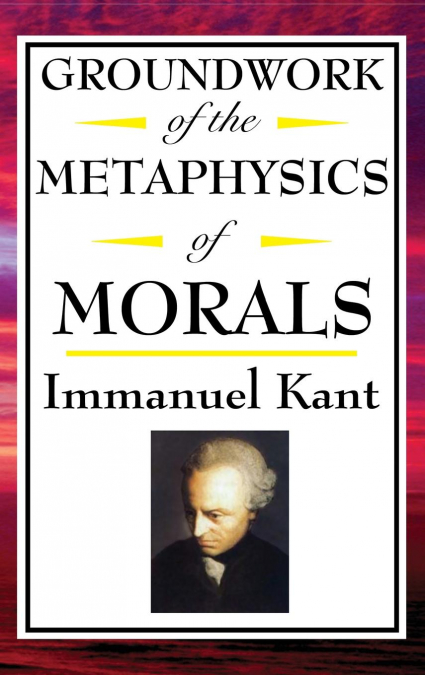
    Kant’s Groundwork of the Metaphysics of Morals is one of the most important works in modern moral philosophy. It belongs beside Plato, Aristotle, Machiavelli, and Hobbes. Here Kant sets out to articulate and defend the Categorical Imperative - the fundamental principle that underlies moral reasoning - and to lay the foundation for a comprehensive account of justice and human vi...
  • On the Duty of Civil Disobedience
    HENRY DAVID THOREAU
    Civil Disobedience argues that citizens should not permit their governments to overrule their consciences, and that they have a duty to avoid allowing their acquiescence to enable the government to make them the agents of injustice. Thoreau was motivated in part by his disgust with slavery and the Mexican-American War, but the sentiments he expresses here are just as pertinent ...
  • Beyond Good and Evil
    Friedrich Nietzsche
    Nietzsche, though primarily a philosopher, wrote widely on art, philology, history, religion, tragedy, culture, and science.  In 1886, at the height of his powers, he published Beyond Good and Evil.  Here he examines much of the best of human thought--dogmatic philosophy, Judeo-Christian morality, science and democracy – and finds it lacking.  Rejecting “slave-morality” he pres...
  • Beyond Good and Evil
    Friedrich Nietzsche
    Nietzsche, though primarily a philosopher, wrote widely on art, philology, history, religion, tragedy, culture, and science.  In 1886, at the height of his powers, he published Beyond Good and Evil.  Here he examines much of the best of human thought--dogmatic philosophy, Judeo-Christian morality, science and democracy – and finds it lacking.  Rejecting “slave-morality” he pres...
    Disponible

    9,99 €