
Inicio > Humanidades > Historia > The Selborne Pioneer
The Selborne Pioneer

The Selborne Pioneer

Ted Dadswell

94,78 €
IVA incluido
Disponible
Editorial:
Taylor & Francis Ltd
Año de edición:
2018
Materia
Historia
ISBN:
9781138378209
94,78 €
IVA incluido
Disponible

Selecciona una librería:

  • Librería Samer Atenea
  • Librería Aciertas (Toledo)
  • Kálamo Books
  • Librería Perelló (Valencia)
  • Librería Elías (Asturias)
  • Donde los libros
  • Librería Kolima (Madrid)
  • Librería Proteo (Málaga)

Gilbert White’s name is known universally but, as Ted Dadswell insists in this book, important aspects of his work have frequently been overlooked even by scholarly editors. The Selborne naturalist (1720-1793) has been described as ’a prince of personal observers’; but a shrewd analytical questioning and comparing was also typical of his ’natural knowledge’. Exceptional even in his general aims, White studied the behaviour, the ’manners’ and ’conversation’, of his animals and plants. He saw, moreover, that an animal or plant and indeed a parish such as his own, was unitary in operation; again and again, a cause had numerous effects and an effect numerous causes. Observation could go forward in circumstances such as these, if one was both sharp-eyed and patient, but how could true investigation be managed? How could a particular cause or effect be isolated or tested? Here what Dadswell calls White’s ’comparative habit’ was put to good use. Gilbert White was a careful keeper of records, and using these comparatively he ’appealed to controls’ while examining his living creatures. Questioning and testing even the ’entirely usual’, White was brought back repeatedly to the notion of adaptability. His zoological findings often concerned ’changed or changing’ animals (or birds) and their social and inter-personal relationships. Today, we can seem particularly well placed to appreciate his methods and factual claims; our ’ethologists’ and ecologists have - seemingly - corroborated much of what he did. And yet just this corroboration renders him the more mysterious. To properly assess White as naturalist, we must be able to approach him not only scientifically but also historically. He hoped for the emergence of teams of behavioural workers but did not try to pre-empt what would be achieved only by such teams, and while he ’saw with his own eyes’, as his friend John Mulso says, he was substantially affected by certain of his contemporaries and predecessors. His journals and notebooks show us the naturalist at work. When a perhaps unexpected combination of influences is allowed for, his ’unique’ activities can be at least partially explained.

Artículos relacionados

  • Raising Freedom's Banner
    Paul Harris
    World wide history of peaceful street demonstrations from their earliest beginning in eighteenth century England to their use throughout the world in the twenty-first century. Describes why some demonstration movements succeeded and others failed. Contrasts demonstrations within the law with civil disobedience demonstrations. Describes Peterloo, the Chartists, the Suffragettes,...
    Disponible

    23,59 €

  • Waipi’o Valley
    Jeffrey L. Gross
    Waipi’o Valley: A Polynesian Journey from Eden to Eden recounts the remarkable migrations of the Polynesians across a third of the circumference of the earth. Their amazing journey began from Kalana i Hau’ola, the biblical “Garden of Eden” located along the shore of the Persian Gulf, extended to the Indus River Valley of ancient Vedic India, to Egypt where some ancestors of the...
  • Floralia
    June Rainsford Butler
    A century characterized by a growing interest in science, the opportunity for travel, and leisure for gardening furnishes the setting for Butler’s book. The rise of landscape gardening in England is traced, and the origin and history of its most famous gardens are given. The close relation between England and America in the field of horticulture is also discussed.Originally pub...
    Disponible

    61,20 €

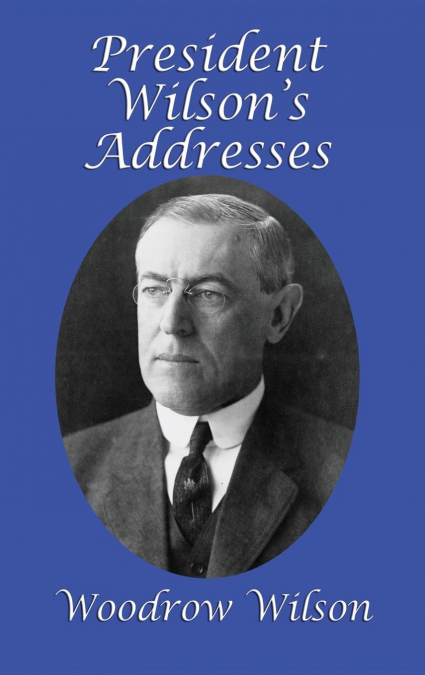
  • President Wilson’s Addresses
    Woodrow Wilson
    'These addresses of President Woodrow Wilson are almost entirely concerned with political affairs, and more specifically with defining Americanism. Yet they also show that even as he moved from academia to the heights of politics, Wilson retained something of the teacher’s interest in showing the relation between specific instances and the general forms of thought or action of ...
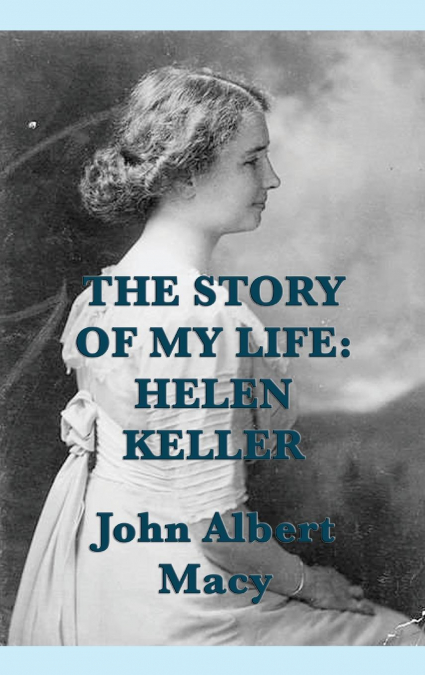
  • The Story of my Life
    John Albert Macy
    The Story of My Life, is Helen Keller’s autobiography detailing her early life, especially her experiences with Anne Sullivan. The book is dedicated to inventor Alexander Graham Bell. The dedication reads, 'To ALEXANDER GRAHAM BELL Who has taught the deaf to speak and enabled the listening ear to hear speech from the Atlantic to the Rockies, I dedicate this Story of My Life.' ...
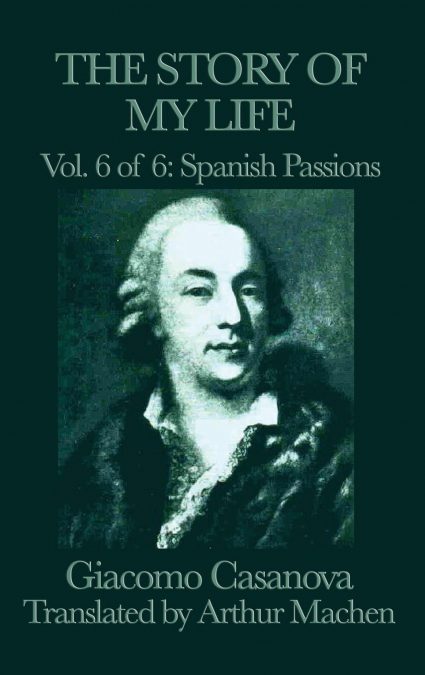
  • The Story of My Life Vol. 6 Spanish Passions
    Giacomo Casanova
    Casanova was an Italian adventurer and author from the Republic of Venice. His autobiography, Histoire de ma vie (Story of My Life), is regarded as one of the most authentic sources of the customs and norms of European social life during the 18th century. He has become so famous for his often complicated and elaborate affairs with women that his name is now synonymous with 'wom...

Otros libros del autor

  • The Selborne Pioneer
    Ted Dadswell
    The Selborne Pioneer reassesses the life and work of the eighteenth century naturalist Gilbert White, author of The Natural History of Selborne. It succeeds in presenting a new and more comprehensive picture of White both as observer and as rigorous behavioural investigator. By means of a detailed study of the naturalist’s essays, correspondence and record books - the latter ...