
The Science of Responding to a Nuclear Reactor Accident

The Science of Responding to a Nuclear Reactor Accident

AA.VV

26,52 €
IVA incluido
Disponible
Editorial:
National Academies Press
Año de edición:
2014
Materia
Impacto social de los desastres
ISBN:
9780309316590
26,52 €
IVA incluido
Disponible

Selecciona una librería:

  • Librería Samer Atenea
  • Librería Aciertas (Toledo)
  • Kálamo Books
  • Librería Perelló (Valencia)
  • Librería Elías (Asturias)
  • Donde los libros
  • Librería Kolima (Madrid)
  • Librería Proteo (Málaga)

The Science of Responding to a Nuclear Reactor Accident summarizes the presentations and discussions of the May 2014 Gilbert W. Beebe Symposium titled ’The Science and Response to a Nuclear Reactor Accident’. The symposium, dedicated in honor of the distinguished National Cancer Institute radiation epidemiologist who died in 2003, was co-hosted by the Nuclear and Radiation Studies Board of the National Academy of Sciences and the National Cancer Institute. The symposium topic was prompted by the March 2011 accident at the Fukushima Daiichi nuclear power plant that was initiated by the 9.0-magnitude earthquake and tsunami off the northeast coast of Japan. This was the fourth major nuclear accident that has occurred since the beginning of the nuclear age some 60 years ago. The 1957 Windscale accident in the United Kingdom caused by a fire in the reactor, the 1979 Three Mile Island accident in the United States caused by mechanical and human errors, and the 1986 Chernobyl accident in the former Soviet Union caused by a series of human errors during the conduct of a reactor experiment are the other three major accidents. The rarity of nuclear accidents and the limited amount of existing experiences that have been assembled over the decades heightens the importance of learning from the past. This year’s symposium promoted discussions among federal, state, academic, research institute, and news media representatives on current scientific knowledge and response plans for nuclear reactor accidents. The Beebe symposium explored how experiences from past nuclear plant accidents can be used to mitigate the consequences of future accidents, if they occur. The Science of Responding to a Nuclear Reactor Accident addresses off-site emergency response and long-term management of the accident consequences; estimating radiation exposures of affected populations; health effects and population monitoring; other radiological consequences; and communication among plant officials, government officials, and the public and the role of the media.
Artículos relacionados

  • Springfield Tornado
    Loretta Kapinos
    On June 1, 2011, a super cell thunderstorm developed over Western Massachusetts, producing an EF3 tornado that cut a 39-mile track of destruction across the state. Despite ample warnings, this event took everyone by surprise.These are the stories of survivors and emergency responders who saw firsthand what happened when this life changing tornado touched down. ...
    Disponible

    32,14 €

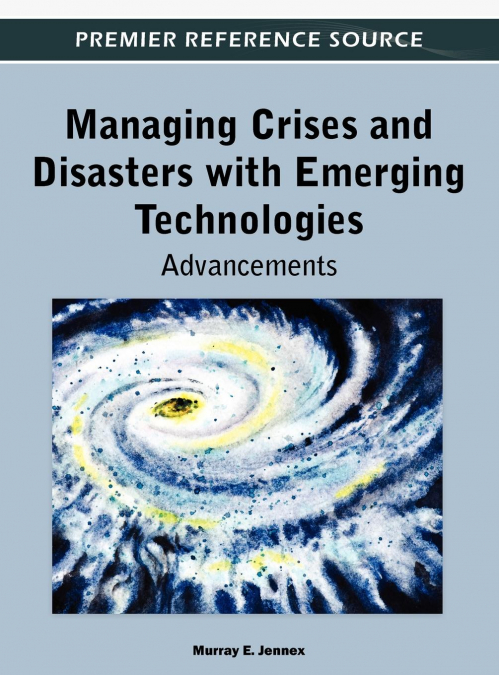
  • Managing Crises and Disasters with Emerging Technologies
    When a disaster strikes, having every possible resource available is an urgent need for those practitioners and government officials put in charge of aid and recovery to those in need. Managing Crises and Disasters with Emerging Technologies: Advancements offers the most vital, up-to-date research within the field of disaster management technologies. Since the first disaster in...
  • Decision Making in Disaster Response
    J. S. Tipper
    The aggressive, armed militia member in front of you wants fifty dollars to let you deliver your medicine to a war-zone clinic which is running desperately low on stock.How would you respond?Responding to disasters - whether natural or man-made - can be incredibly challenging. With more and more people on the frontline of humanitarian response, how can they - and the organisati...
    Disponible

    23,63 €

  • Theory Reimagined
    Anjana Narayan / Bandana Purkayastha / Melanie Heath / Rianka Roy
    This book is an attempt to decolonise social theory: to rethink theory by focusing on theorists from other regions, chosen by scholars who live and work in countries in Africa, Asia, Latin America, and Eastern Europe. We feature the selections and presentations of sociologists from Brazil, Ethiopia, India, Kenya, Poland, South Africa, Singapore, and Tunisia. 10 ...
    Disponible

    41,55 €

  • Cuando el trabajo se vuelve esencial
    Andrea Del Bono / Johanna Maldovan Bonelli / Johanna Maldovan Bonelli
    En el marco de la creciente heterogeneización de las relaciones del trabajo y las condiciones laborales, la incertidumbre emerge como uno de los rasgos más evidentes en la proyección de la vida actual, y el trabajo –en tanto actividad que continúa signando las posibilidades y condiciones de reproducción de las grandes mayorías– aparece como una de sus manifestaciones centrales....
    Disponible

    15,08 €

  • Why Your Gasoline Prices Are High
    Seldon B Graham Jr.
    US oil production has been plunging downward since 1986. The result is that gasoline prices have been going up. If you do not like high gasoline prices, this book is for you. ...
    Disponible

    8,24 €