 Librería Samer Atenea
 Kálamo Books
 Librería Elías (Asturias)
 Librería Kolima (Madrid)
 Librería Proteo (Málaga)
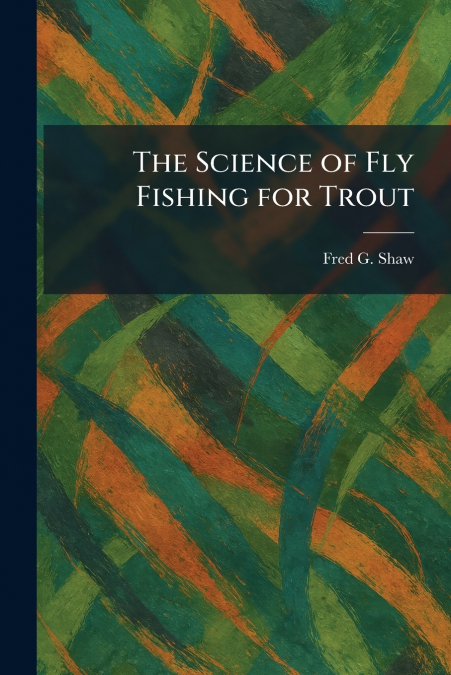
'The Science of Fly Fishing for Trout' is an authoritative guide that treats the art of angling with the precision and depth of a scientific discipline. Written by Fred G. Shaw, a renowned expert and champion caster, this work delves into the technical intricacies of trout fishing, offering readers a comprehensive understanding of how to master the fly rod and read the waters effectively.The book covers a wide array of essential topics, including the mechanics of various casting styles, the selection of appropriate tackle, and the meticulous study of trout behavior. A significant portion of the work is dedicated to the entomology of the riverbed, teaching the angler how to identify and mimic the natural insects that trout feed upon. Through detailed instruction and observations, Shaw emphasizes the importance of accuracy, patience, and a deep respect for the natural environment.Whether exploring the nuances of the dry fly or the strategies of wet fly fishing, 'The Science of Fly Fishing for Trout' remains a foundational text for anyone seeking to elevate their skill from casual hobbyist to proficient angler. Its focus on the marriage between physical technique and biological knowledge makes it a timeless resource in the literature of sport fishing.This work has been selected by scholars as being culturally important, and is part of the knowledge base of civilization as we know it. This work was reproduced from the original artifact, and remains as true to the original work as possible. Therefore, you may see the original copyright references, library stamps (as most of these works have been housed in our most important libraries around the world), and other notations in the work.This work is in the public domain in the United States of America, and possibly other nations. Within the United States, you may freely copy and distribute this work, as no entity (individual or corporate) has a copyright on the body of the work.As a reproduction of a historical artifact, this work may contain missing or blurred pages, poor pictures, errant marks, etc. Scholars believe, and we concur, that this work is important enough to be preserved, reproduced, and made generally available to the public. We appreciate your support of the preservation process, and thank you for being an important part of keeping this knowledge alive and relevant.