 Librería Samer Atenea
 Kálamo Books
 Librería Elías (Asturias)
 Librería Kolima (Madrid)
 Librería Proteo (Málaga)
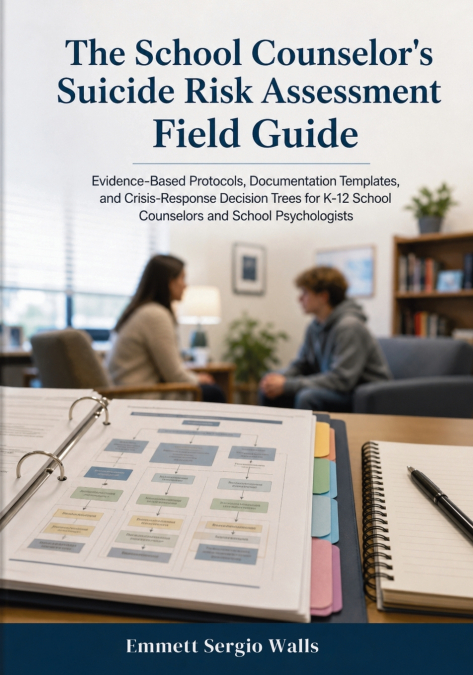
When a Student Says Something Alarming, You Have Minutes, Not Hours School counselors receive intensive training in general counseling and almost none in the specific mechanics of suicidal risk assessment as it occurs in a K-12 building, under a K-12 schedule, within K-12 legal and ethical constraints. When a student discloses suicidal ideation between second and third period, the resource most counselors reach for is either a half-remembered graduate course or a 300-page academic textbook that was never designed to be useful in that moment. A School-Specific System for Every Stage of the Crisis This guide helps K-12 school counselors, school psychologists, and school social workers build a complete, legally defensible suicide risk assessment practice grounded in the Columbia Suicide Severity Rating Scale (C-SSRS), aligned with ASCA ethical standards, and supported by FERPA-compliant documentation. It covers every stage of the crisis encounter: from the referral that triggers the assessment, through the parent notification call and the transportation decision, to the safety plan completed before the student leaves the building. What Readers Will Learn Administer the C-SSRS with verbatim interview scripts for high school, middle school, and elementary-age students Apply a structured three-tier triage system that determines the correct response level before the assessment begins Navigate the six most common parent notification scenarios using fully scripted call guidance Make a defensible transportation decision using a five-variable decision framework Replace no-harm contracts with an evidence-based collaborative safety planning process Document every crisis encounter at the level of specificity required to demonstrate professional standard of care Recognize and respond to digital-first disclosures and online risk indicators Apply population-specific assessment adaptations for LGBTQ+ students, elementary-age students, and students with developmental disabilities Lead a school community’s postvention response using safe messaging guidelines and a timeline-based protocol Build the peer consultation structures and debriefing practices that sustain crisis workers over time Built for Field Use, Not Coursework Unlike comprehensive academic references on youth suicide prevention, this guide is structured around the specific decisions a school counselor makes in real time: which tier applies, which script to use, which documentation field to complete, and which transportation option the clinical picture supports. Every chapter closes with a reproducible tool, and the appendices contain ten fill-in templates and quick-reference cards designed to be printed, laminated, and kept within reach during an actual encounter. The legal and ethical framework is explained in plain language, including what the courts have actually required of school counselors and what ASCA’s current position statements mandate. This book is for readers who: Are K-12 school counselors seeking a structured, school-specific assessment protocol for daily practice Are school psychologists or school social workers who conduct crisis assessments and want a documentation system that holds up under scrutiny Are counselor educators preparing pre-service graduate students for real-world crisis encounters Are district-level mental health coordinators building or revising a suicide prevention protocol Have experienced the gap between general crisis training and what a school-based assessment actually requires For school counselors who want a clear, practical, school-specific resource they can use with confidence before, during, and after a student crisis.