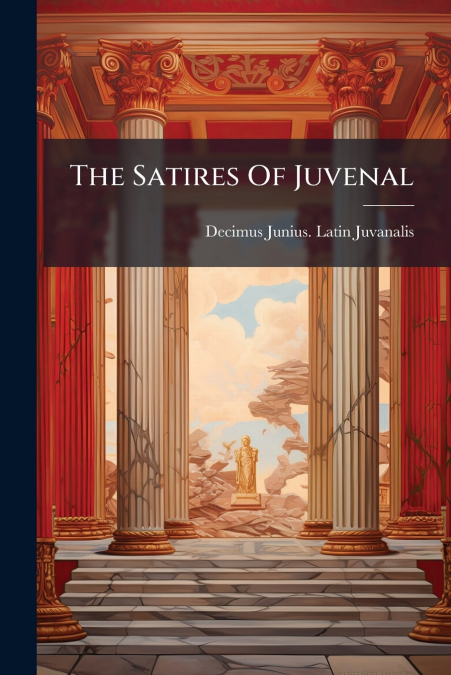
Decimus Junius. Latin Juvanalis
 Librería Samer Atenea
 Librería Aciertas (Toledo)
 Kálamo Books
 Librería Perelló (Valencia)
 Librería Elías (Asturias)
 Donde los libros
 Librería Kolima (Madrid)
 Librería Proteo (Málaga)
'The Satires of Juvenal' is a collection of satirical poems by the Roman poet Decimus Junius Juvenalis, known in English as Juvenal. Written in the late 1st and early 2nd centuries AD, these satires offer a biting critique of Roman society, exposing its vices, corruption, and moral decay. Juvenal’s sharp wit and vivid imagery paint a portrait of a world obsessed with wealth, power, and pleasure, where hypocrisy and injustice reign supreme. From attacks on the extravagance of the wealthy to condemnations of political corruption and the decline of traditional values, Juvenal’s poems remain remarkably relevant, providing insights into human nature and the timeless challenges of social order. This edition offers readers a chance to engage with a classic work of Roman literature and explore the enduring power of satire as a tool for social commentary.This work has been selected by scholars as being culturally important, and is part of the knowledge base of civilization as we know it. This work was reproduced from the original artifact, and remains as true to the original work as possible. Therefore, you will see the original copyright references, library stamps (as most of these works have been housed in our most important libraries around the world), and other notations in the work.This work is in the public domain in the United States of America, and possibly other nations. Within the United States, you may freely copy and distribute this work, as no entity (individual or corporate) has a copyright on the body of the work.As a reproduction of a historical artifact, this work may contain missing or blurred pages, poor pictures, errant marks, etc. Scholars believe, and we concur, that this work is important enough to be preserved, reproduced, and made generally available to the public. We appreciate your support of the preservation process, and thank you for being an important part of keeping this knowledge alive and relevant.