 Librería Samer Atenea
 Kálamo Books
 Librería Elías (Asturias)
 Librería Kolima (Madrid)
 Librería Proteo (Málaga)
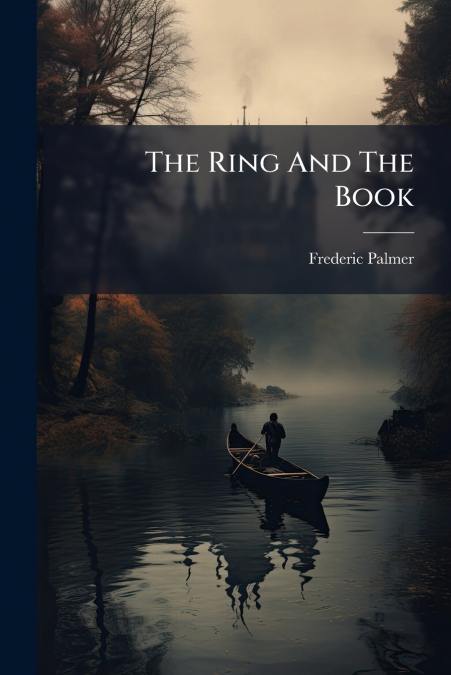
The Ring and the Book is Robert Browning’s most ambitious and arguably most impressive work. Published in 1868-69, this epic poem in twelve books recounts the story of a Roman murder trial in the 1690s. Through a series of dramatic monologues, Browning presents the perspectives of various characters involved in the case, including Guido Franceschini, Count and husband; Pompilia, his young wife; Caponsacchi, a priest; and several others who witnessed or were involved in the tragic events. Browning masterfully employs the dramatic monologue form to explore themes of truth, justice, and the complexities of human nature. The poem’s title refers to the process by which base metal (the ‘ring’) is alloyed with pure gold (the ‘book’), symbolizing the transformation of raw facts into a work of art that seeks a higher truth. With its intricate structure, vivid characterizations, and profound moral inquiries, 'The Ring and the Book' stands as a monumental achievement in Victorian literature, offering readers a compelling and enduring exploration of crime, law, and the human condition.This work has been selected by scholars as being culturally important, and is part of the knowledge base of civilization as we know it. This work was reproduced from the original artifact, and remains as true to the original work as possible. Therefore, you will see the original copyright references, library stamps (as most of these works have been housed in our most important libraries around the world), and other notations in the work.This work is in the public domain in the United States of America, and possibly other nations. Within the United States, you may freely copy and distribute this work, as no entity (individual or corporate) has a copyright on the body of the work.As a reproduction of a historical artifact, this work may contain missing or blurred pages, poor pictures, errant marks, etc. Scholars believe, and we concur, that this work is important enough to be preserved, reproduced, and made generally available to the public. We appreciate your support of the preservation process, and thank you for being an important part of keeping this knowledge alive and relevant.