 Librería Samer Atenea
 Kálamo Books
 Librería Elías (Asturias)
 Librería Kolima (Madrid)
 Librería Proteo (Málaga)
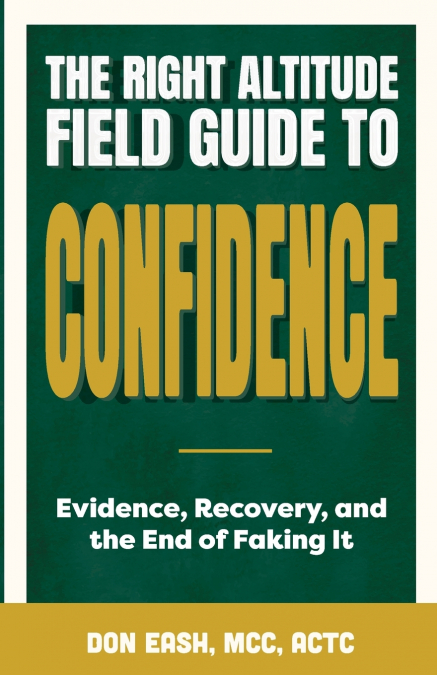
Confidence isn’t a feeling you wait for. It’s a practice you run.You do good work, and somehow the confidence never catches up to it. You replay the presentation you rated a disaster, the one the room barely remembers. You build 40 slides for a 15-minute update. You wait to feel ready, and the feeling arrives late or not at all.The gap isn’t your competence. It’s that your internal story is running on the weather instead of the record. Felt confidence rises after a win and collapses after a miss. Earned confidence is the record: what you’ve done, handled, and recovered from. When the stakes are high, most capable people consult the weather. This guide teaches you to consult the record.The order matters. Behavior first, then evidence, then belief. You can’t talk yourself into earned confidence. You can only build the file. So every practice here runs on paper and behavior, not on feelings you’re supposed to summon. Start with the Confidence Read, a 12-statement diagnostic that shows where your confidence breaks down and which practice to run first. Then name your counterfeit: the Costume, the Armor, the Wall of Credentials, the Perpetual Prep, or the Borrowed Kind. Each one dissolves under a different practice.The Evidence File. 1 document, 3 columns, kept forever: what happened, what I did, what it proves. Your memory files the misses and loses the wins. The file fixes that and includes your recoveries, because a file of only wins is one you won’t believe.The Story Audit. Everyone has a sentence. 'I was the political pick.' 'Any day now they’ll look closely.' 4 lines on paper, 10 minutes, to put the sentence on trial and write the accurate one.The Calibration Gap. Your self-read isn’t wrong at random. It runs low in some arenas and high in others. The Calibration Check uses 3 outside reference points (real feedback, your ask rate, and an effort audit) so you stop over-preparing where you’re strong and under-preparing where it counts.The First 90 Seconds. Rooms price you early, by behavior. The Entry Protocol is 4 moves: arrive 2 minutes early, sit where you can be seen, speak within the first 10 minutes, and prepare your first sentence. Then cut the softeners. No feeling required.The Recovery. The miss costs you once. Staying out of the arena costs you on a subscription. The Rebound Protocol runs on a clock: re-enter within 24 hours, debrief in 3 lines within 48, and take a full rep within 2 weeks.The Borrowed Confidence Problem. Confidence anchored to a title, a sponsor, or a boss’s approval holds until the reorg. The Anchor Audit sorts your anchors into portable and removable, then helps you fund the ones nobody can take.Every practice includes coaching questions, a 48-hour experiment you can run this week, and a 30-day build. Section Three shows how to run all of this on about 15 minutes a week, with the Evidence File as the spine and the other practices taken up by season. The stories are drawn from real coaching conversations.This is for the capable leader whose record is stronger than their doubt and who is tired of letting the doubt vote. The feeling comes later, after the room responds. The record keeps better books.Part of The Right Altitude Field Guide series: short, practical guides by executive coach Don Eash, MCC, ACTC.