
Inicio > Matemáticas y ciencia > Física > Mecánica clásica > Energía > The Resilience of the Electric Power Delivery System in Response to Terrorism and Natural Disasters
The Resilience of the Electric Power Delivery System in Response to Terrorism and Natural Disasters

The Resilience of the Electric Power Delivery System in Response to Terrorism and Natural Disasters

AA.VV

41,08 €
IVA incluido
Disponible
Editorial:
National Academies Press
Año de edición:
2013
Materia
Energía
ISBN:
9780309293952
41,08 €
IVA incluido
Disponible

Selecciona una librería:

  • Librería Samer Atenea
  • Librería Aciertas (Toledo)
  • Kálamo Books
  • Librería Perelló (Valencia)
  • Librería Elías (Asturias)
  • Donde los libros
  • Librería Kolima (Madrid)
  • Librería Proteo (Málaga)

The Resilience of the Electric Power Delivery System in Response to Terrorism and Natural Disasters is the summary of a workshop convened in February 2013 as a follow-up to the release of the National Research Council report Terrorism and the Electric Power Delivery System. That report had been written in 2007 for the Department of Homeland Security, but publication was delayed because of security concerns. While most of the committee’s findings were still relevant, many developments affecting vulnerability had occurred in the interval. The 2013 workshop was a discussion of the committee’s results, what had changed in recent years, and how lessons learned about the grid’s resilience to terrorism could be applied to other threats to the grid resulting from natural disasters. The purpose was not to translate the entire report into the present, but to focus on key issues relevant to making the grid sufficiently robust that it could handle inevitable failures without disastrous impact. The workshop focused on five key areas: physical vulnerabilities of the grid; cybersecurity; mitigation and response to outages; community resilience and the provision of critical services; and future technologies and policies that could enhance the resilience of the electric power delivery system. The electric power transmission and distribution system (the grid) is an extraordinarily complex network of wires, transformers, and associated equipment and control software designed to transmit electricity from where it is generated, usually in centralized power plants, to commercial, residential, and industrial users. Because the U.S. infrastructure has become increasingly dependent on electricity, vulnerabilities in the grid have the potential to cascade well beyond whether the lights turn on, impacting among other basic services such as the fueling infrastructure, the economic system, and emergency services. The Resilience of the Electric Power Delivery System in Response to Terrorism and Natural Disasters discusses physical vulnerabilities and the cybersecurity of the grid, ways in which communities respond to widespread outages and how to minimize these impacts, the grid of tomorrow, and how resilience can be encouraged and built into the grid in the future.
Artículos relacionados

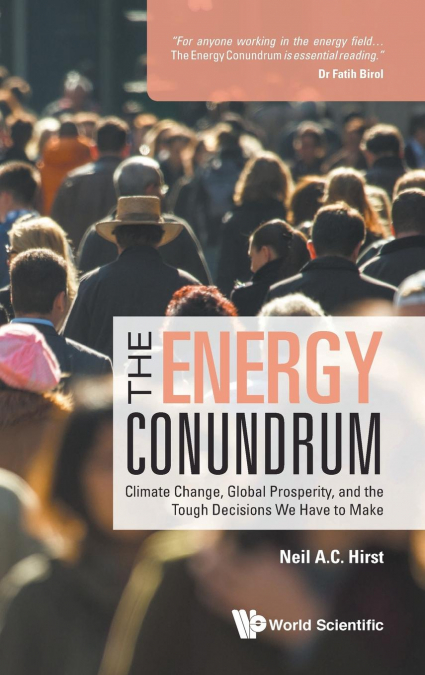
  • ENERGY CONUNDRUM, THE
    HIRST NEIL / NEIL A C HIRST / NEIL HIRST
    This book provides a comprehensive and balanced account of global energy policy; covering moral, political, social, technical and economic aspects of the subject. While The Energy Conundrum does not offer easy solutions, it provides the facts and evidence gathered from sources in government, industry, academia, and NGOs alike, for readers to understand the issues and make their...
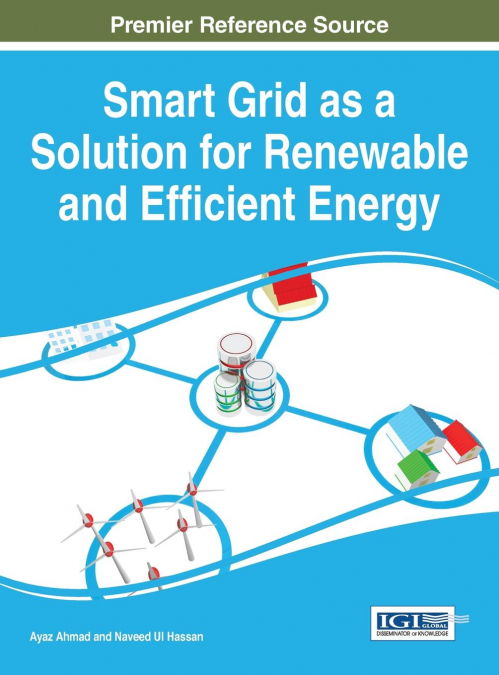
  • Smart Grid as a Solution for Renewable and Efficient Energy
    As the need for proficient power resources continues to grow, it is becoming increasingly important to implement new strategies and technologies in energy distribution to meet consumption needs. The employment of smart grid networks assists in the efficient allocation of energy resources. Smart Grid as a Solution for Renewable and Efficient Energy features emergent research and...
  • The Subterranean Forest
    Rolf Peter Sieferle / Michael Osmann
    The Subterrranean Forest studies the historical transition from the agrarian solar energy regime to the use of fossil energy, which has fuelled the industrial transformation of the last 200 years. The author argues that the analysis of historical energy systems provides an explanation for the basic patterns of different social formations. It is the availability of free energy t...
    Disponible

    50,93 €

  • Nanotechnology Applications for Improvements in Energy Efficiency and Environmental Management
    MAShah / Paulo Davim
    As nanoscale research continues to advance, scientists and engineers are developing new applications for many different disciplines, including environmental remediation and energy optimization. Nanotechnology Applications for Improvements in Energy Efficiency and Environmental Management combines up-to-date research findings and relevant theoretical frameworks on the subject of...
  • Operational Research for Renewable Energy and Sustainable Environments
    The application of contemporary and emerging operational research optimization methods in renewable energy is vital to creating and maintaining sustainable environments across the planet. More research is needed to understand how modern and innovative technological solutions can enhance accessible global energy. Operational Research for Renewable Energy and Sustainable Environm...
  • Emerging Materials, Technologies, and Solutions for Energy Harvesting
    In an era dominated by electronic devices and interconnected technologies, the weak point of this technology remains the limited lifespan and lengthy maintenance of conventional batteries. The pervasive use of wireless sensor networks and Internet of Things (IoT) applications has accentuated the inadequacies of battery technology, which has not kept pace with the miniaturizatio...
    Disponible

    314,33 €