 Librería Samer Atenea
 Kálamo Books
 Librería Elías (Asturias)
 Librería Kolima (Madrid)
 Librería Proteo (Málaga)
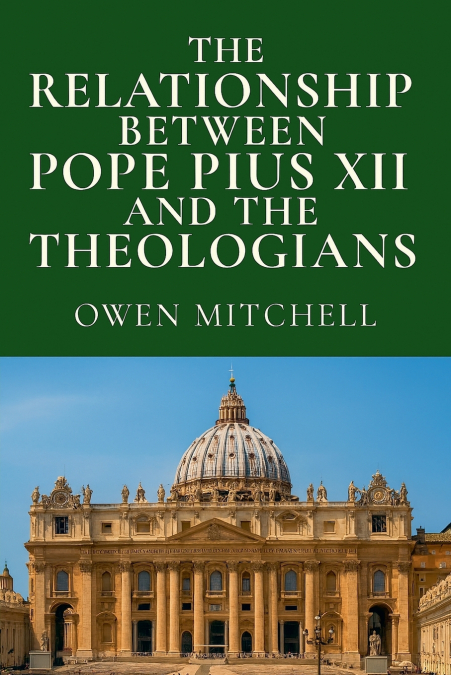
In this groundbreaking study, the complex and often misunderstood relationship between Pope Pius XII and the theologians who shaped modern Catholicism comes vividly to life. Drawing on previously unexplored Vatican archives, private correspondence, and firsthand accounts, the book reveals how Eugenio Pacelli-diplomat, scholar, and pontiff-navigated the unprecedented challenges of a world in turmoil while engaging the Church’s most brilliant minds.Far from the simplistic portrayals that have dominated both conservative and progressive narratives, this meticulously researched work uncovers a nuanced reality: a sophisticated pontiff whose approach to theological innovation combined doctrinal vigilance with surprising flexibility. Readers will discover the dramatic behind-the-scenes tensions surrounding landmark documents like Divino Afflante Spiritu, which revolutionized Catholic biblical studies, and Humani Generis, which addressed emerging theological currents with both caution and insight.The book takes us inside the Holy Office as it evaluated controversial works, into the private studies where theological giants like Henri de Lubac, Yves Congar, and Karl Rahner developed their groundbreaking ideas, and through the diplomatic channels where American theologian John Courtney Murray challenged traditional understandings of church and state. These parallel stories converge to reveal how the seeds of Vatican II’s renewal were both planted and pruned during Pius XII’s pivotal pontificate.This compelling narrative will fascinate anyone interested in Catholic history, religious authority, intellectual freedom, and how tradition encounters modernity. Beyond denominational boundaries, it offers profound insights into how religious institutions navigate change while preserving core identity-a tension that remains urgently relevant today. Neither hagiography nor critique, this balanced assessment illuminates a crucial chapter in modern religious history that continues to shape our world.