 Librería Samer Atenea
 Kálamo Books
 Librería Elías (Asturias)
 Librería Kolima (Madrid)
 Librería Proteo (Málaga)
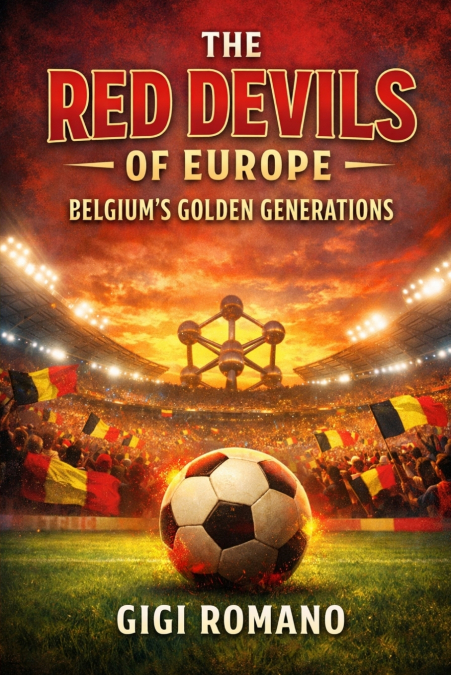
Belgium’s football story is often told as a riddle: how can a small country produce so many world-class players, stay among the elite for years, and still live under the ache of 'almost'? This book follows the Red Devils from the game’s earliest footholds in Belgium’s schools, clubs, and port cities, through the hard lessons of football’s first World Cups, and into the breakthrough years when Belgium learned to compete with Europe’s biggest powers. It tracks the moments when Belgium didn’t simply participate, but arrived-Euro 1980’s surge to the final, Mexico 1986’s drama, and the long middle decades when qualification alone could no longer satisfy a nation that sensed its ceiling was higher.The modern rise is shown for what it truly was: not a miracle of talent, but an institutional project. Belgium’s federation and clubs reshaped youth development, coaching education, and pathways into senior football, turning a fragmented culture into a coherent footballing pipeline. Out of that method came a new kind of Belgian player-technical, tactically fluent, export-ready-and a national team that climbed to the summit of global rankings and carried genuine title expectations through multiple tournament cycles.With match-by-match detail, managerial turning points, and the pressures of modern tournament football, the book explains what Belgium’s golden generations achieved, what they fell short of, and what their legacy means for European football. It is the story of a country that proved elite status can be engineered-then discovered how unforgiving the final step can be.