The process of risk management for projects

The process of risk management for projects

Marco Alexander Caiza Andresen

25,64 €
IVA incluido
Disponible
Editorial:
GRIN Verlag
Año de edición:
2007
ISBN:
9783638794619
25,64 €
IVA incluido
Disponible

Selecciona una librería:

  • Librería Samer Atenea
  • Librería Aciertas (Toledo)
  • Kálamo Books
  • Librería Perelló (Valencia)
  • Librería Elías (Asturias)
  • Donde los libros
  • Librería Kolima (Madrid)
  • Librería Proteo (Málaga)

Seminar paper from the year 2006 in the subject Business economics - Operations Research, grade: 1,7, University of Paderborn (Department of Business Information Systems ), course: Advanced Information Technolgy in Business, language: English, abstract: In consequence of the steadily increasing demand for projects there is an increasing demand for project risk management. Due to the high complexity of project work and its planning there are many possibilities where risks can endanger the success or even the practicability of a certain project. Hence, there cannot be enough emphasis on project risk planning for the smoothly flow of project progression. Within projects the term risk is defined as '[...] the cumulative effect of the chances of uncertain occurrences adversely affecting project objectives' (Wideman 1992, p. I-4). The thorough examination of possibilities for avoidance, elimination or at least for a significant reduction of these risks should lead to a better performance of the ultimate project. The question why some projects succeed while others fail is important to every business. To strengthen the possible future project success, project risk management has to be effectively applied to every project process. Identifying project risks and appropriately cope with them through the development of adequate strategies is the aim of the project risk management process. Having this in mind, the intention of this term paper is to analyze the process of project risk management. After a short introduction, by thorough study of literature in the second chapter the main steps of different approaches of the risk management process in projects will be indicated and compared. After that the most common tools to be used within this process will be indicated before, finally, possibilities for the extension of the project risk management process towards a broader management process will be discussed. In the last chapter a conclusion will be drawn and an answer given to t
Artículos relacionados

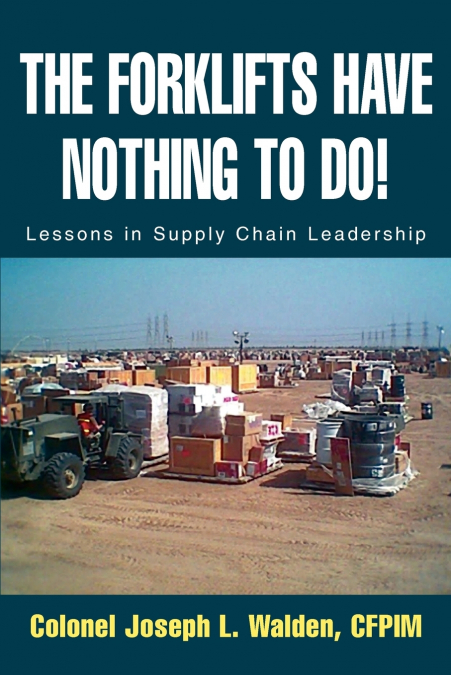
  • The Forklifts Have Nothing to Do!
    Joseph L. Walden / Joseph LWalden
    The Forklifts Have Nothing To Do! provides practical methods for improving supply chain operations. Colonel Joe Walden has spent more than 25 years leading supply chain operations. Improving your supply chain will improve your bottom line, regardless of your industry. His recommendations draw on examples in civilian industry and military operations, including his recent experie...
    Disponible

    11,33 €

  • Wettbewerbsanalyse im Bereich Werkstattinformationssysteme
    Christian Nitzl
    Studienarbeit aus dem Jahr 2005 im Fachbereich BWL - Unternehmensforschung, Operations Research, Note: 1,7, Ludwig-Maximilians-Universität München, 39 Quellen im Literaturverzeichnis, Sprache: Deutsch, Abstract: „Wenn Du den Feind kennst und Dich selbst, musst Du auch hundert Schlachten nicht fürchten. Wenn Du Dich selbst kennst aber den Feind nicht, wirst Du für jeden Sieg auc...
    Disponible

    20,99 €

  • Business Simulation
    Jörg Dickerboom / Marco Hackstein / Markus Baum
    Template, Example from the year 2010 in the subject Business economics - Operations Research, The University of Surrey (School of Management), language: English, abstract: Abstract Business simulation is simulation used for business training or analysis. It can be scenario-based or numeric-based. Most business simulations are used for business acumen training and development. L...
    Disponible

    27,32 €

  • RFID im öffentlichen Personennahverkehr im Bundesland Salzburg
    Markus Rotter
    Studienarbeit aus dem Jahr 2013 im Fachbereich BWL - Unternehmensforschung, Operations Research, Note: 1-, Fachhochschule Salzburg, Sprache: Deutsch, Abstract: Kurzfassung/Abstract: Im Jahr 2012 haben die öffentlichen Verkehrsmittel im Raum Salzburg 30 Millionen Fahrgäste befördert, mit dem Schülerverkehr sind es 67 Millionen. Da bei den Fahrgastzahlen weitere Steigerungen erwa...
    Disponible

    23,70 €

  • Der Coachingprozess des Herrn F. - Ein Fallbeispiel anhand der Karriereanker nach E. H. Schein
    Tim Diekmann
    Studienarbeit aus dem Jahr 2010 im Fachbereich BWL - Unternehmensforschung, Operations Research, Note: bestanden, Ev. Hochschule für Soziale Arbeit & Diakonie Hamburg, Sprache: Deutsch, Abstract: Coaching ist ein Personalentwicklungsinstrument, welches im deutschsprachigen Raum seitca. 1985 als Beratungsinstrument eingesetzt wird. In den mannigfaltig umstritten diskutiertenAnfa...
    Disponible

    28,24 €

  • Forschungs- und Entwicklungskooperationen im Netzwerk der Automobilindustrie
    Anton Frick
    Studienarbeit aus dem Jahr 2010 im Fachbereich BWL - Unternehmensforschung, Operations Research, Note: 1,3, Universität Konstanz, Sprache: Deutsch, Abstract: Kooperationen in Forschung und Entwicklung sind in der Automobilbranche nicht mehr wegzudenken, sind geradezu obligatorisch für Zulieferbetriebe und Automobilhersteller geworden, um im globalen Wettbewerb bestehen zu könne...
    Disponible

    23,52 €

Otros libros del autor