

 Librería Samer Atenea
 Kálamo Books
 Librería Elías (Asturias)
 Librería Kolima (Madrid)
 Librería Proteo (Málaga)
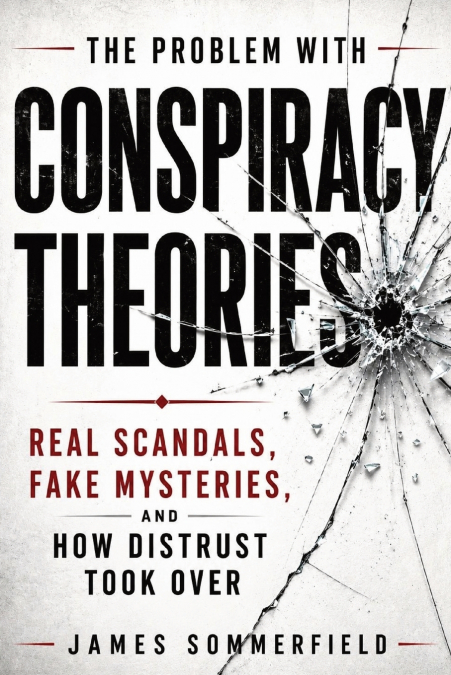
Why do conspiracy theories take hold? Why can hidden motives feel more believable than confusion, incompetence or chance? And what happens when governments, corporations and other institutions really have concealed the truth?The Problem with Conspiracy Theories examines how conspiracy thinking works, why certain explanations become culturally powerful and why they can be so difficult to dislodge.Across more than thirty short, accessible chapters, the book explores famous conspiracy theories, modern myths, misinformation, media panic, government secrecy, corporate cover-ups and real scandals that have damaged public trust.It looks at why uncertainty makes people uncomfortable, why emotionally satisfying stories often spread faster than complicated facts and how suspicion can grow when official explanations are incomplete or proven wrong. It also considers the influence of repetition, group identity, social media and declining confidence in traditional sources of authority.This is not a sensational collection of conspiracy claims. It is also not written to mock people for questioning powerful institutions. History contains genuine conspiracies, documented cover-ups and serious abuses of authority. The difficulty lies in separating justified suspicion from explanations built on weak evidence, selective facts or claims that cannot be disproved.Written in clear, direct language, The Problem with Conspiracy Theories offers a balanced examination of belief, evidence, secrecy and distrust. It shows why simply calling a claim ridiculous rarely changes anyone’s mind and why rebuilding trust requires more than telling people to trust the experts.For readers interested in conspiracy theories, psychology, misinformation, media, modern folklore, government secrecy, corporate misconduct and public distrust, this book provides a readable guide to one of the defining cultural forces of the modern world.





