The Proactionary Imperative

The Proactionary Imperative

Steve Fuller / Veronika Lipińska

145,48 €
IVA incluido
Consulta disponibilidad
Editorial:
Springer Nature B.V.
Año de edición:
2014
Materia
Ética y filosofía moral
ISBN:
9781137302977

Selecciona una librería:

  • Librería Samer Atenea
  • Librería Aciertas (Toledo)
  • Kálamo Books
  • Librería Perelló (Valencia)
  • Librería Elías (Asturias)
  • Donde los libros
  • Librería Kolima (Madrid)
  • Librería Proteo (Málaga)

The ’proactionary principle’ was introduced by transhumanists. Whereas precautionaries believe that we are on the brink on environmental catastrophe because we’re too willing to take risks, proactionaries believe that humans stand apart from the rest of nature by our capacity for successful risk taking. In terms of current environmental problems, therefore, solutions lie not in turning our backs on our love affair with technology but by intensifying it - through finding new energy sources or even looking at the possibility of inhabiting other worlds.In this fascinating new book, Steve Fuller and Veronika Lipinska explore attitudes towards the transformation of human nature. They point out that, politically, both those on the right and the left contribute to different sides of the precautionary-proactionary debate, and argue that it will be this distinction, between caution and action, that will come to dominate the political landscape and create new political divisions.Drawing on perspectives from both theology and biology, and completing a trilogy of works exploring ’Humanity 2.0’, Fuller and Lipinska ultimately endorse the proactionary position, which supports individuals taking risks - for example with new health treatments, as they try to expand their life chances. They accept that such a risk-taking culture may result in set-backs and failures, but argue that this simply requires a new conception of the welfare state. The results may be an incredibly diverse society that will challenge our notions of tolerance, creating a world where ’traditional’ humans live side by side with those who have artificial organs or have received substantial genetic modification. Humans have yet to treat all ’normal’ members of Homo sapiens with proper respect and dignity and the proactionary principle opens up new challenges to our conceptions of equality. The book ends with a Manifesto that draws together the arguments to present a challenging vision for the future.


Artículos relacionados

  • Ka Ab Ba Building The Lighted Temple
    Dr Terri R. Nelson / Dr Terri RNelson
    The book KaAbBa Building The Lighted Temple/Metaphysical Keys to the Tree of Life draws a circle that is inclusive of the Afrikan origin of the Ancient Kemetic/Egyptian wisdom. It reveals the undeniable root and link of Ancient Africa to all the religious systems that would develop worldwide. This book is explosive in its power to convey the meaning of KaAbBa, the Medu Neter  (...
    Disponible

    37,41 €

  • Technoethics and the Evolving Knowledge Society
    Rocci Luppicini
    Recently, there has been a major push to rediscover the ethical dimension of technology across the sciences, social sciences, and humanities. Technoethics and the Evolving Knowledge Society: Ethical Issues in Technological Design, Research, Development, and Innovation examines human processes and practices connected to technology embedded within social, political, and moral sph...
  • Kant
    Immanuel Kant
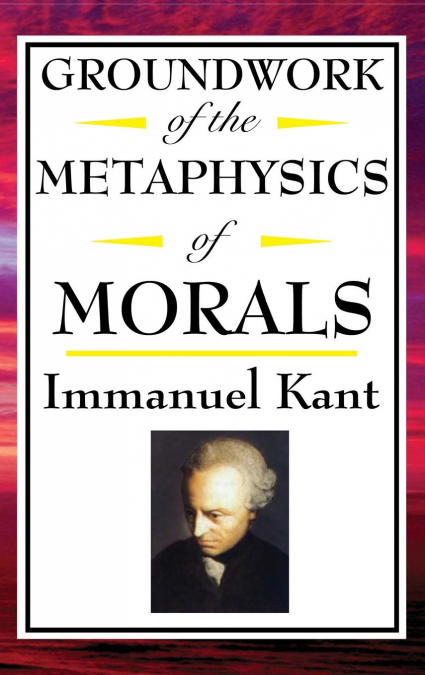
    Kant’s Groundwork of the Metaphysics of Morals is one of the most important works in modern moral philosophy. It belongs beside Plato, Aristotle, Machiavelli, and Hobbes. Here Kant sets out to articulate and defend the Categorical Imperative - the fundamental principle that underlies moral reasoning - and to lay the foundation for a comprehensive account of justice and human vi...
  • On the Duty of Civil Disobedience
    HENRY DAVID THOREAU
    Civil Disobedience argues that citizens should not permit their governments to overrule their consciences, and that they have a duty to avoid allowing their acquiescence to enable the government to make them the agents of injustice. Thoreau was motivated in part by his disgust with slavery and the Mexican-American War, but the sentiments he expresses here are just as pertinent ...
  • Beyond Good and Evil
    Friedrich Nietzsche
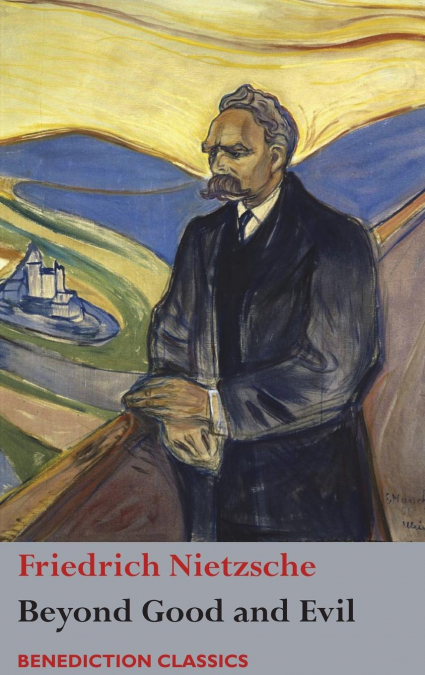
    Nietzsche, though primarily a philosopher, wrote widely on art, philology, history, religion, tragedy, culture, and science.  In 1886, at the height of his powers, he published Beyond Good and Evil.  Here he examines much of the best of human thought--dogmatic philosophy, Judeo-Christian morality, science and democracy – and finds it lacking.  Rejecting “slave-morality” he pres...
  • Beyond Good and Evil
    Friedrich Nietzsche
    Nietzsche, though primarily a philosopher, wrote widely on art, philology, history, religion, tragedy, culture, and science.  In 1886, at the height of his powers, he published Beyond Good and Evil.  Here he examines much of the best of human thought--dogmatic philosophy, Judeo-Christian morality, science and democracy – and finds it lacking.  Rejecting “slave-morality” he pres...
    Disponible

    9,99 €

Otros libros del autor

  • The Proactionary Imperative
    Steve Fuller / Veronika Lipińska
    The ’proactionary principle’ was introduced by transhumanists. Whereas precautionaries believe that we are on the brink of environmental catastrophe because we’re too willing to take risks, proactionaries believe that humans stand apart from the rest of nature by our capacity for successful risk taking. In terms of current environmental problems, therefore, solutions lie not in...
    Disponible

    109,94 €