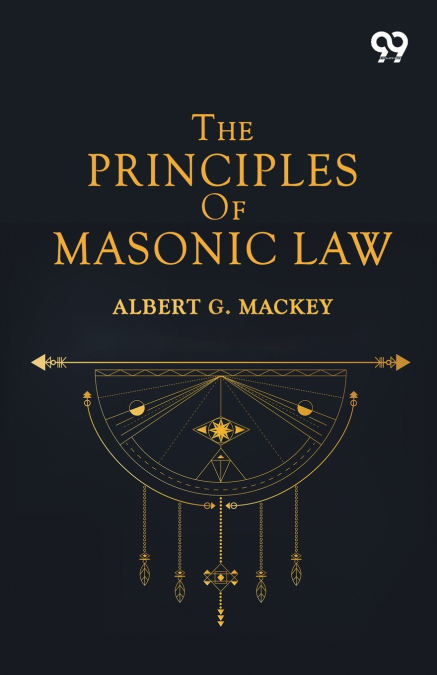

The Principles Of Masonic Law

The Principles Of Masonic Law

Albert G. Mackey

14,50 €
IVA incluido
Disponible
Editorial:
Double9 Books LLP
Año de edición:
2026
Materia
Ética y filosofía moral
ISBN:
9789378300684
14,50 €
IVA incluido
Disponible

Selecciona una librería:

  • Librería Samer Atenea
  • Kálamo Books
  • Librería Elías (Asturias)
  • Librería Kolima (Madrid)
  • Librería Proteo (Málaga)

The principles of Masonic law presents a structured examination of the constitutional foundations, usages, and recognized landmarks that govern Freemasonry. The treatise seeks to clarify the rights, duties, and obligations of members within the fraternity, offering systematic guidance on internal governance and disciplinary standards. It outlines the philosophical basis of Masonic authority while distinguishing between ancient customs and evolving administrative practice. Through organized analysis, the work explains how laws are interpreted, how jurisdiction is maintained, and how harmony is preserved within lodges. Attention is given to precedent, procedural order, and the balance between individual conduct and collective regulation. The text emphasizes education as essential to responsible membership, encouraging informed participation in institutional life. By defining legal terminology and outlining structural principles, the volume serves as both instruction and reference. It underscores continuity between tradition and codified order. The treatise reinforces accountability within fraternal bonds. It ultimately affirms structured governance as vital to unity and ethical conduct.
Artículos relacionados

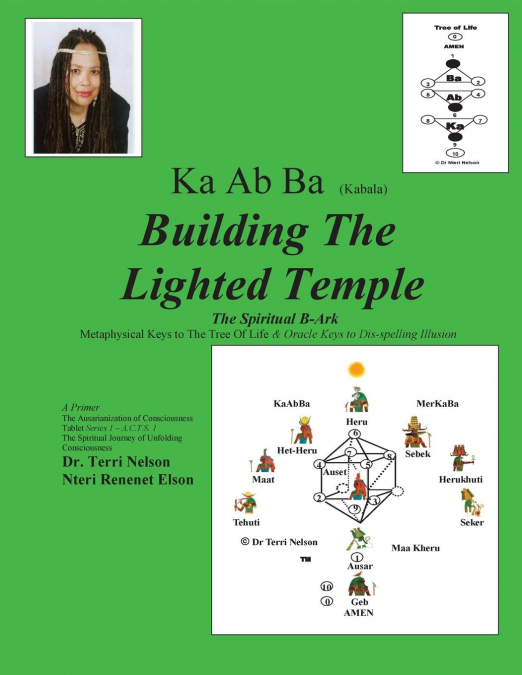
  • Ka Ab Ba Building The Lighted Temple
    Dr Terri R. Nelson / Dr Terri RNelson
    The book KaAbBa Building The Lighted Temple/Metaphysical Keys to the Tree of Life draws a circle that is inclusive of the Afrikan origin of the Ancient Kemetic/Egyptian wisdom. It reveals the undeniable root and link of Ancient Africa to all the religious systems that would develop worldwide. This book is explosive in its power to convey the meaning of KaAbBa, the Medu Neter  (...
    Disponible

    37,41 €

  • Technoethics and the Evolving Knowledge Society
    Rocci Luppicini
    Recently, there has been a major push to rediscover the ethical dimension of technology across the sciences, social sciences, and humanities. Technoethics and the Evolving Knowledge Society: Ethical Issues in Technological Design, Research, Development, and Innovation examines human processes and practices connected to technology embedded within social, political, and moral sph...
  • Kant
    Immanuel Kant
    Kant’s Groundwork of the Metaphysics of Morals is one of the most important works in modern moral philosophy. It belongs beside Plato, Aristotle, Machiavelli, and Hobbes. Here Kant sets out to articulate and defend the Categorical Imperative - the fundamental principle that underlies moral reasoning - and to lay the foundation for a comprehensive account of justice and human vi...
  • On the Duty of Civil Disobedience
    HENRY DAVID THOREAU
    Civil Disobedience argues that citizens should not permit their governments to overrule their consciences, and that they have a duty to avoid allowing their acquiescence to enable the government to make them the agents of injustice. Thoreau was motivated in part by his disgust with slavery and the Mexican-American War, but the sentiments he expresses here are just as pertinent ...
  • Beyond Good and Evil
    Friedrich Nietzsche
    Nietzsche, though primarily a philosopher, wrote widely on art, philology, history, religion, tragedy, culture, and science.  In 1886, at the height of his powers, he published Beyond Good and Evil.  Here he examines much of the best of human thought--dogmatic philosophy, Judeo-Christian morality, science and democracy – and finds it lacking.  Rejecting “slave-morality” he pres...
  • Beyond Good and Evil
    Friedrich Nietzsche
    Nietzsche, though primarily a philosopher, wrote widely on art, philology, history, religion, tragedy, culture, and science.  In 1886, at the height of his powers, he published Beyond Good and Evil.  Here he examines much of the best of human thought--dogmatic philosophy, Judeo-Christian morality, science and democracy – and finds it lacking.  Rejecting “slave-morality” he pres...
    Disponible

    9,99 €

Otros libros del autor

  • The Principles of Masonic Law
    Albert G. Mackey
    In The Principles of Masonic Law, Albert G. Mackey outlines the structure, duties, and rights governing Freemasonry. A foundational text for Masons and scholars alike, it offers a clear and authoritative exposition of Masonic jurisprudence, shedding light on the ancient fraternity’s legal and ethical framework. ...
    Disponible

    17,38 €

  • The Principles of Masonic Law
    Albert G. Mackey
    The Principles of Masonic Law is one of the greatest works in the field of science by the Albert Gallatin Mackey.This treatise on the Constitutional Laws, Usages and Landmarks of Freemasonry' is doubtless one of the most important and invaluable works in a Freemasonic library. ...
    Disponible

    12,53 €

  • The Symbolism of Freemasonry
    Albert G. Mackey
    Albert Mackey’s revered works on Masonic history, law and symbolism are considered the classics of the 1800’s. In this work, Albert Mackey explains the various symbols used in Masonic teaching and provides indispensable Masonic education to all students of Freemasonry. This work should be considered required reading for all Freemasons. Photographic reproduction of the 1869 edit...
    Disponible

    19,41 €