
Inicio > Humanidades > Historia > Historia: primitiva hasta la actualidad > Historia antigua: hasta c. 500 e. c. > The Power of Technology in the Bronze Age Eastern Mediterranean
The Power of Technology in the Bronze Age Eastern Mediterranean

The Power of Technology in the Bronze Age Eastern Mediterranean

Brysbaert

72,98 €
IVA incluido
Disponible
Editorial:
Equinox Publishing
Año de edición:
2015
Materia
Historia antigua: hasta c. 500 e. c.
ISBN:
9781781792537
72,98 €
IVA incluido
Disponible

Selecciona una librería:

  • Librería Samer Atenea
  • Librería Aciertas (Toledo)
  • Kálamo Books
  • Librería Perelló (Valencia)
  • Librería Elías (Asturias)
  • Donde los libros
  • Librería Kolima (Madrid)
  • Librería Proteo (Málaga)

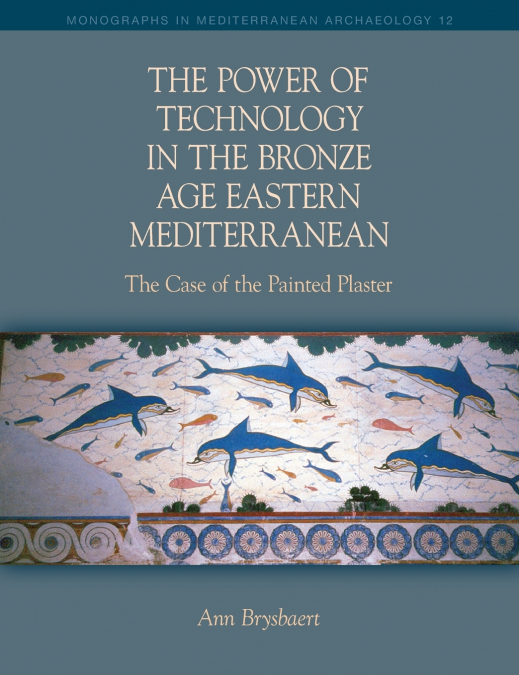
In the past, Bronze Age painted plaster in the Aegean and the Eastern Mediterranean has been studied from a range of different but isolated viewpoints. One of the current questions about this material is its direction of transfer. This volume brings both technological and iconographic (and other) approaches closer together: 1) by completing certain gaps in the literature on technology and 2) by investigating how and why technological transfer has developed and what broader impact this had on the wider social dynamics of the late Middle and Late Bronze Age in the eastern Mediterranean.This study approaches the topic of painted plaster by a multidisciplinary methodology. Moreover, when human actors and their interactions are placed in the centre of the scene, it demonstrates the human forces through which transfer was enabled and how multiple social identities and the inter-relationships of these actors with each other and their material world were expressed through their craft production and organization.The investigated data from sixteen sites has been contextualized within a wider framework of Bronze Age interconnections both in time and space because studying painted plaster in the Aegean cannot be considered separate from similar traditions both in Egypt and in the Near East.This study makes clear that it is not possible to deduce a one-way directional transfer of this painting tradition. Furthermore, by integrating both technology and iconography with its hybrid character, a clear ‘technological style’ was defined in the predominant al fresco work found on these specific sites. The author suggests that the technological transfer most likely moved from west to east. This has important implications in the broader politico-economic and social dynamics of the eastern Mediterranean during the LBA. Since this art/craft was very much elite-owned, it shows how the smaller states in the LBA, such as the regions of the Aegean, were capable of staying within the large trade and exchange network that comprised the large powers of the East and Egypt. The painted plaster reflects a very visible presence in the archaeological record and, because it cannot be transported without its artisans, it suggests specific interactions of royal courts in the East with the Aegean peoples. The painted plaster as an immovable feature required at least temporary presence of a small team of painters and plasterers. Exactly this factor forms an argument in support of travelling artisans, who, in turn, shed light onto broader aspects of contact, trade and exchange mechanisms during the late MBA and LBA.
Artículos relacionados

  • Iron Age Societies in the Severn-Cotswolds
    Tom Moore
    The central theme of this study is an examination of the processes of change in Iron Age social organisation and identity on a regional scale using the Severn-Cotswolds area in England as a case study. It aims to provide a coherent narrative of the period in the region based on the wealth of current data now available, providing a basic storyboard against which future studies c...
    Disponible

    144,57 €

  • Somewhere Beyond The Sea Les îles bretonnes (France)
    The Seminar on the Archaeology of Western France, which focused on the islands of Brittany, was held on 1 April 2014 at the University of Rennes 1. The desire to organize this seminar arose spontaneously from the dynamism which currently animates archaeological research on island spaces of the western seaboard of France. Indeed, the seminar took place during a pivotal period of...
    Disponible

    86,11 €

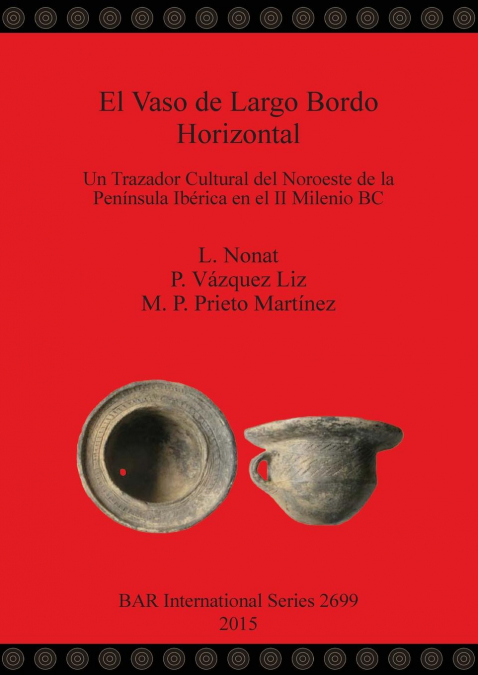
  • El Vaso de Largo Bordo Horizontal
    L. Nonat / LNonat / M. P. Prieto Martínez / MPPrieto Martínez / P. Vázquez Liz / PVázquez Liz
    In this paper the authors study a specific type of pottery from the northwest Iberian Peninsula, known as the Wide Horizontal Rim (WHR) vessel. One of its distinctive aspects is precisely the fact that it is exclusively found in this region, which now comprises the Spanish region of Galicia and northern Portugal, as far south as the River Duero. This type of pottery, of which t...
    Disponible

    115,71 €

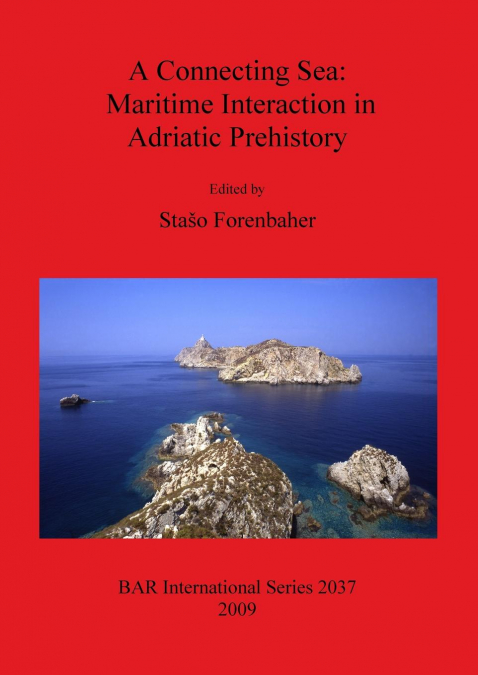
  • A Connecting Sea
    Stašo Forenbaher
    This book includes papers stemming from a session at the EAA conference held in Zadar in September 2007.                          ...
    Disponible

    79,97 €

  • The Roman Pottery Production Site at Wickham Barn, Chiltington, East Sussex
    Chris Butler / Malcolm Lyne
    The excavations undertaken at Chiltington in East Sussex revealed two Roman pottery kilns, as well as remains from prehistory and from medieval period.The kilns are well documented, and all the finds were examined and catalogued. Three phases were identified. The pottery produced on the site indicate a strong New Forest influence. ...
    Disponible

    55,62 €

  • Kurgans, Ritual Sites, and Settlements
    Edited by: Jeannine Davis-Kimball, Eileen M. Murphy, Ludmila Koryakova and Leonid T. YablonskyThis richly illustrated volume adds immensely to the small but growing corpus of Eurasian Archaeology published in the English language. Comprised of thirty articles, the authors have focused on the Bronze Age, continuing to include the first millennium BC Early Iron Age, with a termin...
    Disponible

    158,26 €