 Librería Samer Atenea
 Kálamo Books
 Librería Elías (Asturias)
 Librería Kolima (Madrid)
 Librería Proteo (Málaga)
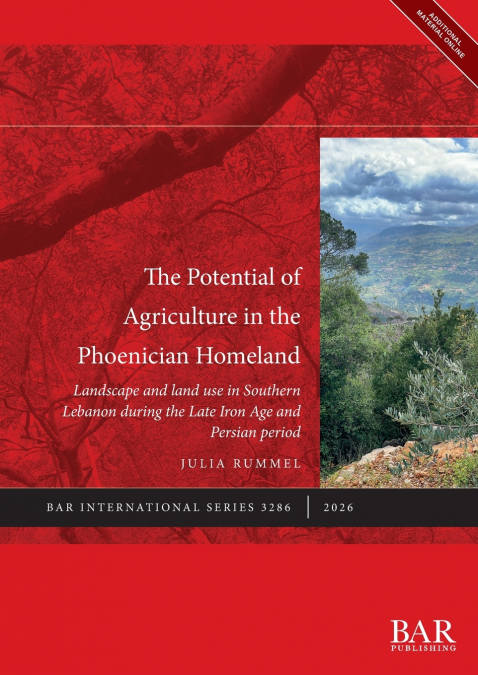
Phoenician research has long assumed that the natural environment of the Central Levant was too challenging to sustain its population, forcing people into maritime trade and economic dependence. This assumption, rooted in biblical and classical accounts, has gone largely unchallenged.This book tests this narrative through a case study in southern Lebanon, applying a systematic, interdisciplinary methodology for the first time. By integrating archaeological, archaeobotanical, archaeozoological, geological, and spatial data, the models produced quantified results on the agricultural potential of the Phoenician homeland.The results reveal that under realistic levels of agricultural intensity, arable land extended well beyond the narrow coastal strip and was sufficient to support a substantial population. Evidence from Tell el-Burak further demonstrates that surplus production of certain key crops was possible and actively practiced.The methodology and supplemental material provided with this book are designed to encourage researchers to adapt the model to their own region- and period-specific contexts. 6