
The Politics of Nuclear Power

The Politics of Nuclear Power

D. P. McCaffrey

207,74 €
IVA incluido
Disponible
Editorial:
Springer Nature B.V.
Año de edición:
2012
Materia
Política y gobierno
ISBN:
9789401054713
207,74 €
IVA incluido
Disponible

Selecciona una librería:

  • Librería Samer Atenea
  • Librería Aciertas (Toledo)
  • Kálamo Books
  • Librería Perelló (Valencia)
  • Librería Elías (Asturias)
  • Donde los libros
  • Librería Kolima (Madrid)
  • Librería Proteo (Málaga)

Several individuals noted the potentially important civilian uses of atomic energy shortly after the bombings of Hiroshima and Nagasaki in 1945. That year J. Robert Oppenheimer told a national radio audience that 'in the near future' it would be possible to generate profitable electric power from 'controlled nuclear chain reaction units' (reactors). It was suggested that, after fIfteen to twenty-five years of development, mature nuclear technology could provide virtually inexhaustible, cheap energy given the abundance of nuclear fuel. Admiral Lewis Strauss, the Chairman of the Atomic Energy Commission, stated that atomic power would generate electricity 'too cheap to meter' (A statement that, according to Brookhaven National Laboratories’ physicist Herbert Kouts, immediately 'caused consternation among his technical advisors' [Kouts, 1983: 3)). For a brief period it was thought that airplanes would fly using atomic power, and homes would install small nuclear reactors for heat and hot water. 1950s and early 1960s a small number of prototype nuclear In the reactors came on line in the United States. The first power plant protoype reactor began operation in Shippingport, Pennsylvania in 1957. It was followed by the Dresden 1 unit near Chicago in 1959, the Yankee plant in Rowe, Massachusetts (1960), and the Indian Point (New York) and Big Rock Point (Michigan) plants in 1%2. These five plants had a combined 800 megawatts (800 MW), or less than one generating capacity ofless than percent of the total American electricity generating capacity in 1962.
Artículos relacionados

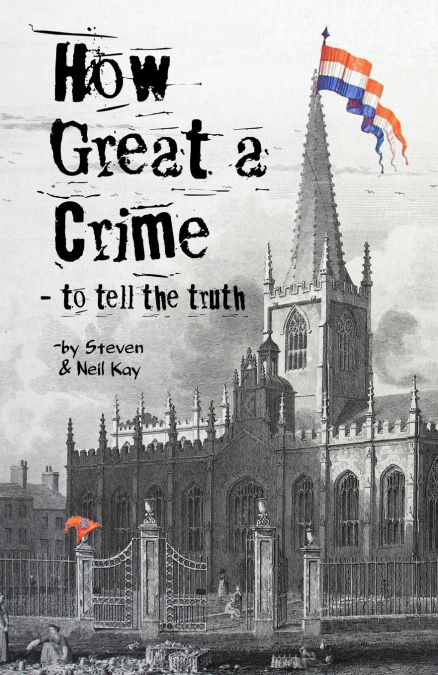
  • How Great a Crime - to tell the truth
    Neil Kay / Steven Kay
    Joseph Gales was one of the all-time great Sheffielders – forget Joe Cocker, Jessica Ennis-Hill, Sean Bean or Michael Palin. These are all minnows compared to Joseph Gales – and their stories are boring besides that of the Galeses. The Galeses story has been forgotten and has not been brought together in one place before – it is not just something dredged up from history – an i...
    Disponible

    10,33 €

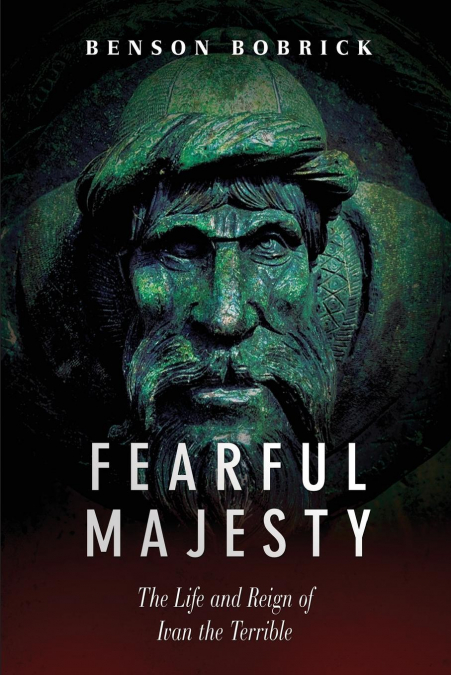
  • Fearful Majesty
    Benson Bobrick
    Ivan the Terrible - the name evokes the legend of a cruel and dangerously insane tyrant. Fearful Majesty explores that legend and exposes the man, his nature, and his time.This acclaimed biography of one of Russia’s most important and tyrannical rulers is not only a rich, readable biography, it is also surprisingly timely, revealing how many of the issues Russia faces today hav...
    Disponible

    19,27 €

  • Economic Optimization of Innovation & Risk
    Robert Shuler
    A Theory of Crash Rate for Private & Public Projects with Critical or non-Critical systems.Analyzing & managing risk has been a quest for 5000 years, and is essential to everything from water supplies, finance, and agriculture to computers and space travel. At last there is a quantitative theory and a simple equation that allows you to: - choose your failure rate - get there...
    Disponible

    13,02 €

  • The System
    Lincoln Steffens
    The 'muckraker' Lincoln Steffens dug deep into business criminality and political corruption in a powerful series of articles written for McClure's magazine. Establishment newspapers and 'System' politicians dismissed his work as just another example of the decrepit modern journalism that could never pass for genuine writing. But Steffens' dogged quest for truth and justice set...
    Disponible

    23,66 €

  • Digital Activism in Asia Reader
    The digital turn might as well be marked as an Asian turn. From flash-mobs in Taiwan to feminist mobilisations in India, from hybrid media strategies of Syrian activists to cultural protests in Thailand, we see the emergence of political acts that transform the citizen from being a beneficiary of change to becoming an agent of change. In co-shaping these changes, what the digit...
    Disponible

    22,19 €

  • The New Freedom
    Woodrow Wilson
    In 1912, Woodrow Wilson was the Democratic nominee for President of the United States. He campaigned against the Republican incumbent, William Howard Taft, and Taft’s predecessor, Theodore Roosevelt, who had split off from the Republican Party to form his own Progressive, or Bull Moose, Party. Much of the campaign focused on the US economy, particularly the candidates’ views of...
    Disponible

    8,67 €