
The Political Economy of Ancient India

The Political Economy of Ancient India

Ratan Lal Basu

17,59 €
IVA incluido
Disponible
Editorial:
Kautilya
Año de edición:
2023
Materia
Historia de la economía
ISBN:
9798201835149
17,59 €
IVA incluido
Disponible

Selecciona una librería:

  • Librería Samer Atenea
  • Librería Aciertas (Toledo)
  • Kálamo Books
  • Librería Perelló (Valencia)
  • Librería Elías (Asturias)
  • Donde los libros
  • Librería Kolima (Madrid)
  • Librería Proteo (Málaga)

The Political Economy of Ancient India is an analytical study of the economic and political concepts embedded in three major ancient Indian texts, viz., the great epic Mahābhārata, Arthaśāstra of Kauṭilya and the most important Dharmaśāstra viz., Manusmṛti. This volume is distributed over three parts with 10 chapters along with an Introduction to start with. Part-I, consisting of two chapters, deals with economic and political concepts respectively as scattered in the gigantic epic Mahābhārata, chapters 3 to 8 of part-II deal with economic, political and espionage concepts delineated in Arthaśāstra of  Kauṭilya, and chapters 9 and 10 of part-III deal with economic and political concepts respectively of Manusmṛti.  In fact, there are many common aspects pertaining to economic and political concepts embedded in the three great ancient Indian texts. The likely reason, as highlighted in introduction of this volume, is that all these three texts derived their basic concepts pertaining to political economy from a common source that had originated through comprehensive research and studies of great post Vedic scholars. In this volume we have gone into the detail of the concepts pertaining to ancient Indian political economy as embedded in the three texts highlighting the common aspects and differences on account of the varying objective conditions at the time of composition of each text. This essence of ancient Indian political economy lies in the concept of trivarga (three basic objectives of mundane life), viz., dharma, artha and kāma. In fact, harmonious and sustainable development of human society with equity and social-economic-political justice can be ensured only if there is a perfect balance between the three basic objectives of mundane life, viz., dharma (ethics and noble human values), artha (means to fulfill earthly desires) and kāma (earthly desires). The imbalance in human civilization and all the consequent maladies like inequality, exploitation, poverty etc. arise because of imbalance between the three basic objectives, to be specific emphasis on artha and kāma keeping aside dharma. So, the essence of teachings of ancient Indian śāstras is that while pursuing the objectives pertaining to artha and kāma, we ought to restore dharma to its rightful place to bring about a world free from all its maladies. The present volume endeavours, in essence, to bring to the fore this salient feature of ancient Indian world outlook.
Artículos relacionados

  • Foreign Banks and Global Finance in Modern China
    Ghassan Moazzin
    ...
    Disponible

    41,39 €

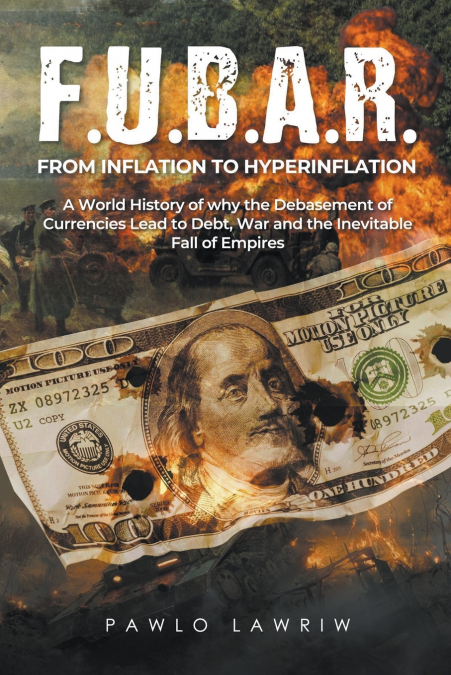
  • F.U.B.A.R. From Inflation to Hyperinflation
    Pawlo Lawriw
    Inflation and hyperinflation results in F.U.B.A.R on an epic scale. It can cause social and economic collapse and war and in short, change history- for the worse. If you are worried about inflation, who is not, then F.U.B.A.R. (F****d Up Beyond All Recognition) FROM INFLATION TO HYPERINFLATION is a work that you need to read.Some observers now wonder as society suffers from hig...
    Disponible

    18,47 €

  • Scarce and Valuable Economical Tracts
    John Ramsay McCulloch
    This volume, Scarce and Valuable Economical Tracts, was edited by John Ramsay McCulloch and originally published in 1859. It contains essays on political economy written by: Nicholas Barbon, Daniel Defoe, Henry Elking, Thomas Wise, Benjamin Franklin, Anne Robert Jacques Turgot, James Anderson, Alexander Schomberg, Joseph Townsend, Edmund Burke, and Archibald Bell.In her entry o...
    Disponible

    17,77 €

  • The Winding Road to the Welfare State
    George R. Boyer
    How did Britain transform itself from a nation of workhouses to one that became a model for the modern welfare state? The Winding Road to the Welfare State investigates the evolution of living standards and welfare policies in Britain from the 1830s to 1950 and provides insights into how British working-class households coped with economic insecurity. George Boyer examines the ...
    Disponible

    46,98 €

  • Joseph Alois Schumpeter
    Wolfgang F. Stolper
    In this major scholarly study of the life of Joseph A. Schumpeter, one of the great intellectual figures of the twentieth century, the distinguished economist Wolfgang Stolper delves into the mind of his former teacher, exploring the development of his ideas and, especially, their influence on politics and public policy. After reflecting briefly on Schumpeter the man, Stolper e...
    Disponible

    110,15 €

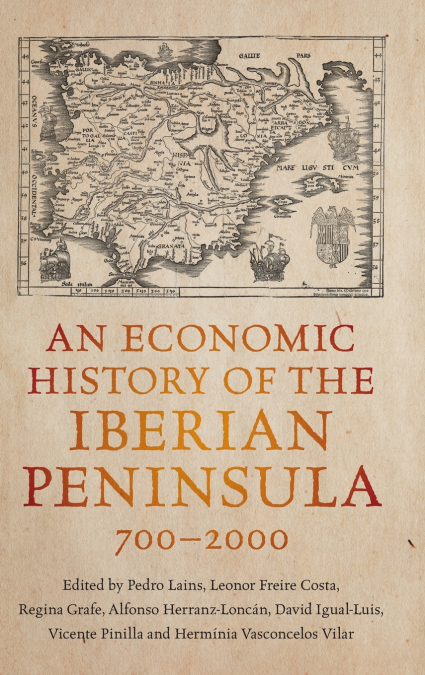
  • An Economic History of the Iberian Peninsula, 700-2000
    ...

Otros libros del autor

  • Ethics of Kautilya
    Ratan Lal Basu
    Ethical principles of Kautilya (alias Chanakya), the Chief Minister and Chief adviser of Chandragupta Maurya, the founder of the great Mauryan Empire, are embedded in his two minor works (the major work being Arthasastra) ’Chanakya Niti’ and ’Chanakya Sutram’. Written around 300 B. C. in aphorisms, i.e. pithy sentences providing ethical guidelines for people in all walks of lif...
    Disponible

    5,98 €

  • Espionage Mechanism in the Arthasastra of Kautilya
    Ratan Lal Basu
    The science of espionage has a long history of evolution and probably it originated ever since the emergence of state as the supreme form of governance in clan societies. The science, in course of emergence of larger states achieved high level of development in Egypt, Syria, Persia, China, Greece and India. By the 4th century B. C. the science of espionage in India achieved a s...
    Disponible

    9,47 €

  • Economic Concepts Ancient and Modern
    Ratan Lal Basu
    The book, consisting of six chapters, is divided into three parts.The first three chapters are on the economic concepts embedded in the ancient Indian Sanskrit treatise the Arthaśāstra of Kautilya, written around 300 B.C.Kautilya (also known as Chanakya and Vishnu Sharma) was the Prime Minister of Chandragupta Maurya, the first king of the Maurya Dynasty. Artha in the narrow se...
    Disponible

    7,68 €

  • Material Progress Ethics and Human Development
    Ratan Lal Basu
    This book is a collection of six articles on economic topics of current interest presented in six chapters.The first chapter, ’Eco Ethical Views of Tagore and Amartya Sen’, is a comparative study of the views on Ethics and Ecology of Rabindranath Tagore and Amartya Sen, the two Bengali Nobel laureates from India.The second chapter, ’Poverty and Ethics’, deals with the Ethical r...
    Disponible

    6,04 €

  • Glimpses of the Indian Economy
    Ratan Lal Basu
    This book highlights variegated aspects of the economy of India, ancient and modern, in four chapters.The first chapter looks into the adverse impact on the poor of diversification of agriculture, especially in North-East India, in order to meet the demands of the big farmers. Chapter two flights back to early Christian era, and looks into India’s flourishing trade relations wi...
    Disponible

    5,89 €

  • Espionage Agencies and Remarkable Spies
    Ratan Lal Basu
    This book depicts the adventures of some remarkable spies and blood chilling activities of some modern espionage agencies.  ...
    Disponible

    14,46 €