

 Librería Samer Atenea
 Kálamo Books
 Librería Elías (Asturias)
 Librería Kolima (Madrid)
 Librería Proteo (Málaga)
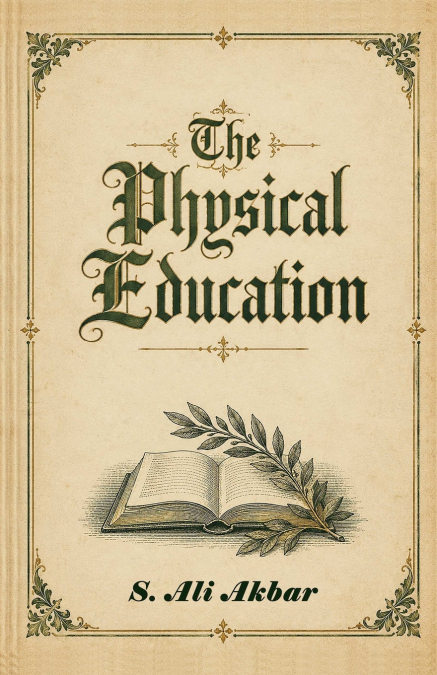
What place should play hold in a youngster’s education? How do games shape character, habits and the capacity to live with others? The Physical Education brings together historical reflections on these questions from the educational world of Hyderabad State. Edited by S. Ali Akbar and compiled by Mukarram Niyaz, this collection preserves a view of education in which bodily activity, intellectual growth and social responsibility belong to the same endeavour.Originating in a special physical education issue of 'The Hyderabad Teacher', the volume contains an Editorial by F. Weber and eleven contributions, including two verse pieces. Its writers approach the playground as a place of learning, where children encounter freedom and restraint, individual effort and common purpose. The school and its playground emerge as closely connected settings for the education of the whole child. Their discussions connect the conduct of games with wider questions about useful living, personal satisfaction, service and the development of character.Weber’s opening essay examines the relationship between educational programmes and the purposes of life. Health, social efficiency, economic efficiency and culture provide the framework for an argument that physical education reaches beyond muscular training. Kishandas J. Kadve’s historical survey then traces changing attitudes towards bodily training, showing how the demands of different societies helped shape its military, religious and educational functions.The essays on play explore both ideas and everyday practice. Bhaskar Narayan considers the relationship between recreation and economic habits, while M. G. Ghatala discusses the organisation of play, including grounds, equipment, supervision and leadership. A. Majid examines play as an influence on children’s confidence, capacities and social learning. Together, these contributions ask how teachers can direct activity thoughtfully while preserving the enjoyment that gives it meaning.Team games introduce questions of loyalty, emotional balance, co-operation and shared responsibility. K. S. Raghvan challenges an excessive concern with winning and considers what schools should seek in collective activity. T. N. Sivan broadens the recreational programme to include athletics, crafts, music and clubs, with attention to stages of development. Masud-ul-Hasan explores the philosophy of play, its relation to work and drudgery, and the balance between adult guidance and the child’s freedom.The closing contributions turn to posture and the physical habits of school life. Weber discusses sitting, standing, furniture and bodily bearing through the educational and health assumptions of his period. 'Ode to Posture' and 'Posture Precepts' carry related themes into verse, adding a memorable literary element to the collection. Their presence reflects an effort to make instruction part of the language and habits of everyday life.With a new preface by the compiler, this edition offers teachers, students of education and readers of educational history a record of how earlier educators understood play and physical development. Its interest lies in the meeting of practical observation, educational philosophy and literary expression. Read in its historical setting, The Physical Education invites reflection on the purposes of schooling and on the experiences through which children learn to act, participate and grow.





